The technology landscape underwent a tectonic shift on April 14, 2026, as a series of massive acquisitions, leadership changes, and infrastructure breakthroughs converged to redefine the competitive map of the late 2020s. From the depths of orbital space to the political fallout of rising utility costs, the day’s developments signaled a transition from the experimental phase of the artificial intelligence boom into a more aggressive, capital-intensive era of deployment and consolidation.
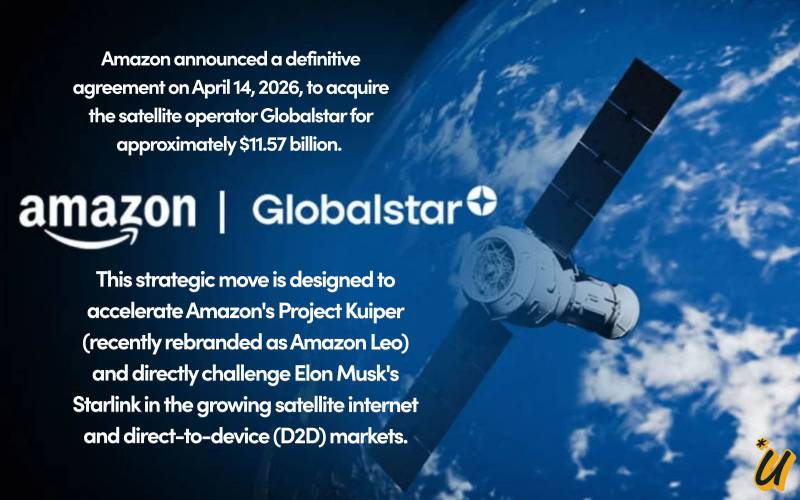
At the center of the day’s headlines was Amazon’s decisive move to challenge the hegemony of SpaceX’s Starlink. In a deal valued at $11.6 billion, the e-commerce and cloud giant announced its acquisition of satellite operator Globalstar. While Globalstar has long been a player in the satellite communications space, the true prize of the acquisition is the company’s extensive portfolio of licensed spectrum. By absorbing Globalstar’s assets, Amazon is bypassing years of regulatory hurdles to accelerate its direct-to-cell satellite capabilities. This strategic pivot ensures that Amazon’s Project Kuiper can offer seamless connectivity directly to consumer smartphones, effectively turning the sky into a massive extension of its existing digital infrastructure. Analysts suggest that this $11.6 billion bet is less about the hardware currently in orbit and more about securing the invisible lanes of communication necessary to compete in a world where dead zones are no longer acceptable to consumers or enterprise clients.
The Amazon-Globalstar deal provided further fuel to an already white-hot market. The NASDAQ 100 marked a historic milestone today, completing its tenth consecutive day of gains. This rally has added a staggering $3 trillion in market capitalization over the last two weeks, a surge driven by a rare alignment of macroeconomic and geopolitical factors. Beyond the relentless momentum of Big Tech, investors have been buoyed by growing optimism surrounding international peace talks, which have begun to ease the risk premiums that have dogged the markets for months. This combination of geopolitical stabilization and robust earnings from the semiconductor and cloud sectors has created a "perfect storm" of bullish sentiment, pushing valuations to levels that once seemed unreachable.
However, the euphoria of the public markets stood in stark contrast to the internal restructuring currently underway at one of the world’s largest media empires. Disney announced today that it is cutting approximately 1,000 jobs, representing the first major labor reduction under the leadership of its new CEO, Josh D’Amaro. These layoffs are being viewed by industry observers as a necessary, albeit painful, recalibration of the company’s cost structure as D’Amaro seeks to prioritize profitability in the streaming sector while managing the massive capital expenditures required for theme park expansions. The move marks a definitive end to the transition period following the previous administration and signals a leaner, more focused Disney for the latter half of the decade.
The electric vehicle sector also saw a leadership shakeup, as Lucid Motors sought to regain its footing in an increasingly crowded luxury EV market. The company named Silvio Napoli, the former chief of Schindler Holding, as its new CEO. Napoli’s background in high-precision engineering and global industrial management is expected to bring a new level of operational discipline to the California-based automaker. Accompanying the leadership change is a $750 million capital injection, much of it sourced from the Saudi Public Investment Fund. This fresh influx of cash provides Lucid with a critical runway to scale production and refine its next generation of vehicles, ensuring the brand remains a viable competitor against both legacy manufacturers and newer tech-driven rivals.
As the physical footprint of the tech industry expands, the challenge of powering the AI revolution has reached a breaking point. Oracle, facing a significant power bottleneck that threatened to stall the expansion of its data center network, announced a landmark agreement with Bloom Energy. Oracle will purchase fuel cell power directly from Bloom to bypass the strained traditional electrical grid. This move highlights the desperate scramble for energy among cloud providers; as AI models become more computationally intensive, the ability to secure reliable, "behind-the-meter" power has become as important as the chips themselves. The deal underscores a growing trend of tech giants becoming de facto utility operators to sustain their growth.
This insatiable appetite for AI is also drawing the attention of the federal government, though for reasons of national security rather than energy. The U.S. Treasury Department is reportedly seeking exclusive access to Anthropic’s new "Mythos" AI model. The Treasury intends to use the model’s advanced reasoning capabilities to proactively hunt for vulnerabilities within the nation’s financial systems. While Anthropic’s Mythos is being hailed as a major leap forward in proactive cybersecurity, the move has sparked an intense debate among experts. Some argue that the model represents a unique capability that justifies such a close partnership with the state, while others contend that open-source alternatives could achieve similar results without the risks of centralization or the potential for proprietary models to create "black box" security protocols.
Ultimately, the rapid expansion of these technologies is no longer confined to the boardroom or the laboratory; it is now a kitchen-table issue. The massive electricity requirements of AI data centers have contributed to a significant spike in residential utility prices across the country. As voters see their monthly bills climb to accommodate the infrastructure of the digital age, energy costs have rapidly transformed into a potent anti-incumbent issue. With the 2026 midterms on the horizon, the intersection of AI energy demands and consumer inflation is expected to be a central battleground, forcing policymakers to balance the desire for technological leadership with the immediate economic realities of their constituents. The events of this day serve as a reminder that while the digital future is being built at lightning speed, its foundations remain tethered to the very real constraints of energy, labor, and public opinion.