CUPERTINO, California — In a landmark presentation delivering what tech analysts are calling a foundational shift for the ecosystem, Apple hosted its Worldwide Developers Conference (WWDC) keynote address. The showcase served as a comprehensive unveiling of the tech giant's highly anticipated software and hardware platforms. While the company introduced deep structural refinements across its operating systems, the unmistakable centerpiece of the multi-hour event was a aggressive leap into consumer artificial intelligence, driven by the next generation of Apple Intelligence and a fundamentally re-engineered Siri AI.
The keynote signal-boosted a distinct philosophical departure from industry rivals racing to deploy abstract web chatbots. Instead, executive leadership positioned Apple’s new intelligent ecosystem as a deeply personal, contextual, and hyper-private architecture. By grounding advanced machine learning models directly into the hardware and routing complex workloads through custom server infrastructure, the company aimed to demystify artificial intelligence for billions of users worldwide. The approach focuses heavily on functional utility, safety, and an uncompromising stance on user privacy.
Before diving into the core AI architecture, the presentation detailed a series of substantial platform refinements built to improve day-to-day user experiences. A chief visual highlight of this effort is the evolution of the Liquid Glass design language. Addressing the mixed visual feedback from its initial rollout, the interface iteration introduces sophisticated depth, cleaner text separation, and advanced refraction layers embedded directly into system app icons. A highly anticipated system-wide slider now empowers users to manually adjust the interface transparency from completely opaque to fully clear, mitigating contrast and legibility issues.
Beneath the visual surface, Apple engineered dramatic performance enhancements. Under-the-hood efficiency tunings to the central processing scheduler yield up to a 30 percent improvement in application launch times. This speed optimization extends comprehensively across the ecosystem, boosting file transfer metrics, external drive discovery, and local data compilation. Crucially, these efficiency gains do not leave legacy users behind; the underlying optimizations ensure backward compatibility extending all the way to devices launched in 2019, marking the longest system compatibility list in the company’s history.
Complementing this performance leap is a completely rearchitected search infrastructure. Rewritten from the ground up, the new system-wide indexing engine transforms how native tools like Spotlight, Photos, and Mail handle user requests. Instead of relying on rigid keyword matches, the upgraded search layer securely sifts through multi-modal on-device content, allowing users to find fragmented text snippets, buried mail threads, or complex visual subjects within their personal libraries with unprecedented speed and accuracy.
Shifting focus to family dynamics, Apple introduced major enhancements focused on trust, child safety, and parental control. Recognizing the growing challenges parents face in managing digital habits, the updated platform deploys intuitive dashboard tools to govern young users' interactions seamlessly. Parents can now configure precise content restrictions, set specific daily app time allowances, and orchestrate detailed screen time schedules tailored around school hours or bedtime routines.
Developed in cooperation with child development experts, including the American Academy of Pediatrics, the system offers data-backed age recommendations for social media, streaming, and gaming boundaries. A new automated "Ask to Browse" feature prompts children under 13 to request web permissions directly through Messages, providing parents with direct contextual information before granting access. Additionally, expanded communication safety protocols automatically blur potential nudity and warn minors before they view or send sexually explicit or violent media. Developers are also receiving an expansive suite of APIs to integrate these identical age-appropriate safeguards directly into third-party experiences.
The true inflection points of the presentation arrived with the formal debut of the next-generation Apple Intelligence framework. Described as an overarching system orchestrator, the architecture functions by pairing specialized on-device foundation models with a new data processing standard known as Private Cloud Compute. When a request requires heavy computational lifting beyond local hardware limits, the system dynamically routes variables to remote servers running on proprietary Apple silicon. Leadership repeatedly emphasized that data processed via Private Cloud Compute is never stored, remains entirely inaccessible to Apple, and features a transparent, verifiable cryptographic code layout open to independent audits by outside security experts.
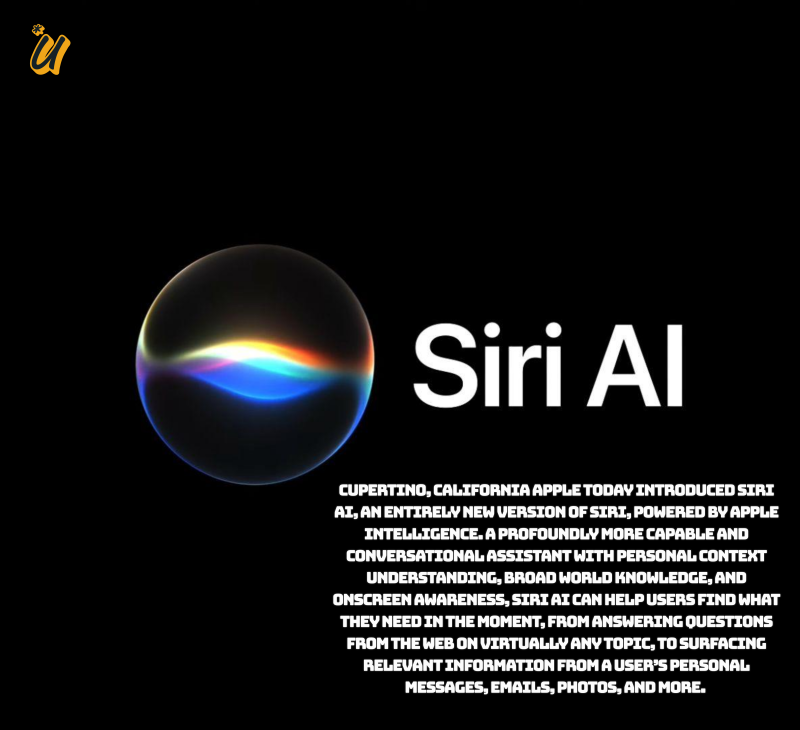
This secure framework acts as the vital powerhouse behind Siri AI, a total reimagining of Apple’s virtual assistant. Moving far beyond basic voice commands, Siri AI is equipped with deep on-screen awareness and personal context understanding. The assistant can evaluate live data displayed on a screen, decipher conversational histories across various threads, and cross-reference a user's location or schedule against the broader world knowledge base.
A standalone Siri conversation hub, backed by private iCloud synchronization, allows users to maintain a persistent, interactive text or voice dialogue seamlessly across iPhone, iPad, Mac, Apple Watch, and Vision Pro. During live demonstrations, Siri effortlessly performed complex cross-app operations, such as extracting a flight confirmation code from a chaotic Mail inbox, identifying a specific location from a photo, drafting a context-aware message, and logging it securely into Notes—all from a single, conversational prompt.
System-wide integration of Apple Intelligence extends directly into a host of primary applications, starting with a significant makeover for the Safari web browser. To combat digital clutter, Safari introduces an automated tab organization system that instantly segments open web windows into cleanly categorized topic folders based on their content. Additionally, a new "Smart Page Monitoring" feature allows the browser to autonomously watch specific web pages for changes, alerting users to price cuts, inventory updates, or schedule shifts without manual refreshing.
In a massive blow to procedural complexity, the Shortcuts application now utilizes natural language automation. Users no longer need to manually piece together intricate command variables; instead, they can simply type or speak their desired outcome in plain English—such as instructing the device to activate specific smart home lighting upon receiving a delivery notification. The system orchestrator handles the backend programming automatically.
The Photos application also reaps the benefits of advanced spatial models, introducing a suite of powerful generative editing features. The updated "Cleanup" utility utilizes pixel-matching algorithms to erase distracting background objects flawlessly. A new "Extend" tool allows editors to artificially expand image boundaries and alter aspect ratios without cropping away vital subjects. Furthermore, a groundbreaking "Spatial Reframing" feature analyzes depth data, allowing users to alter photo compositions and shift focal perspectives long after the shutter has been clicked. To ensure creative transparency, any image altered with these tools automatically embeds a hidden, permanent digital watermark identifying it as AI-modified.
To sustain this ecosystem evolution, Apple revealed an array of advanced developer utilities. Chief among them is the new Foundation Models framework, which opens the floodgates for engineers to harness Apple's native text, speech, and image intelligence models within their independent software. Accompanying this is the "Device Hub," a specialized environment designed to help developers build hyper-intelligent, privacy-first applications that communicate cleanly across multi-device networks.
The keynote presentation concluded with an immediate rollout schedule for the upcoming software generation. Developer betas for iOS 27, macOS Golden Gate, and corresponding operating systems were made available to the engineering community immediately following the address. Public beta variations are scheduled to arrive next month, paving the way for a polished, comprehensive global launch to the public this fall.