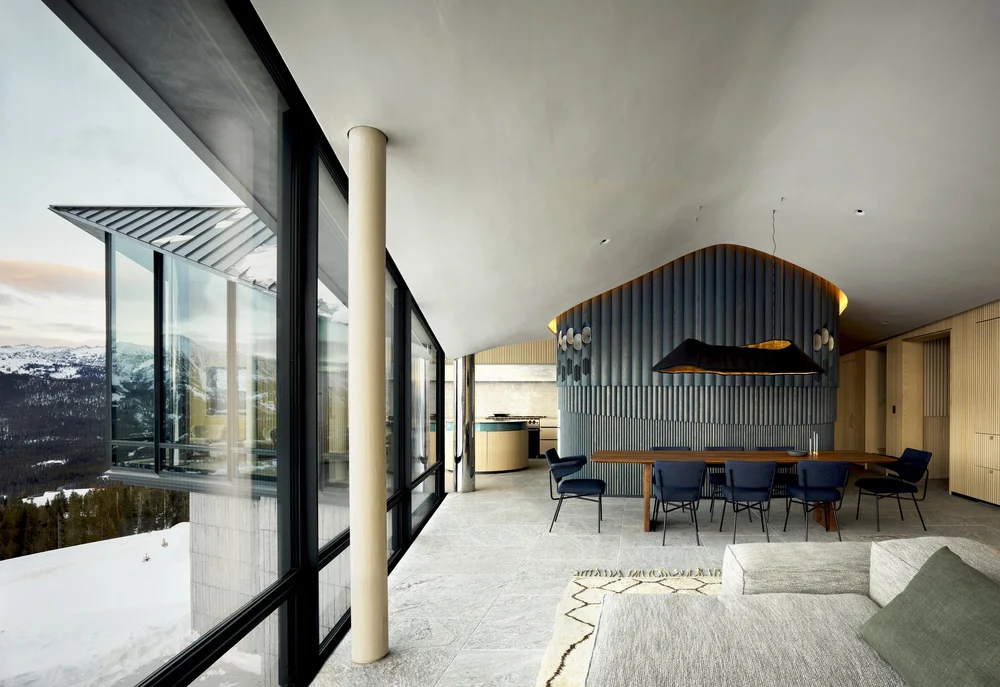
At 8,400 feet above sea level, the "Cowboy Heaven" residence in the mountains of Montana stands as a masterclass in resilient, high-altitude modernism. This project, featured in Architectural Digest, saw architects Devon and Faith navigate the brutal realities of 50 mph winds and heavy snow to create a home that balances lightness and airiness with deep, protective textures. The structure’s unique "boomerang" shape is a strategic response to the landscape, allowing it to capture dual panoramas of dramatic mountain peaks and the sprawling Valley of Ennis. From the entrance, the house appears as a modest cabin, but it expands as one move around it, utilizing Shou Sugi Ban (charred wood) to provide a weather-protected finish that catches light snow in its weave like delicate filigree.
Inside, a minimalist material palette emphasizes serenity and place, anchored by Silver Cloud granite that flows from the base of the building into the living spaces. This specific stone was chosen for its patterns that evoke snow drifts and its mica content, which causes the surface to sparkle like the night sky when evening falls. A central "blue pantry" acts as an architectural "hinge," layering the interior much like the lodgepole pines of the surrounding forest to reveal mountain views slowly rather than all at once. This design philosophy ensures that the house feels like it "envelopes" its inhabitants in materiality while maintaining the clean lines of modernism.
Related article - Uphorial Shopify
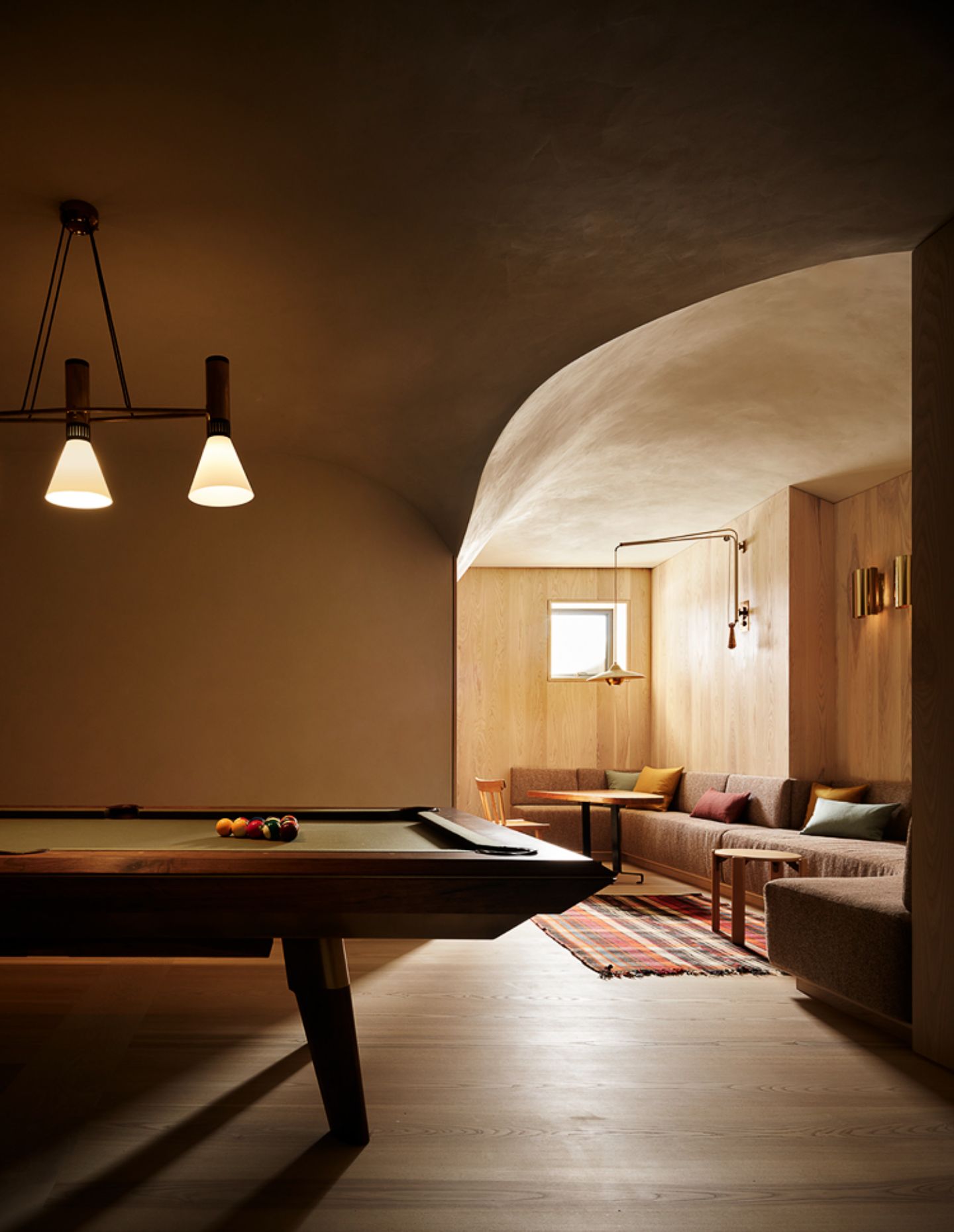
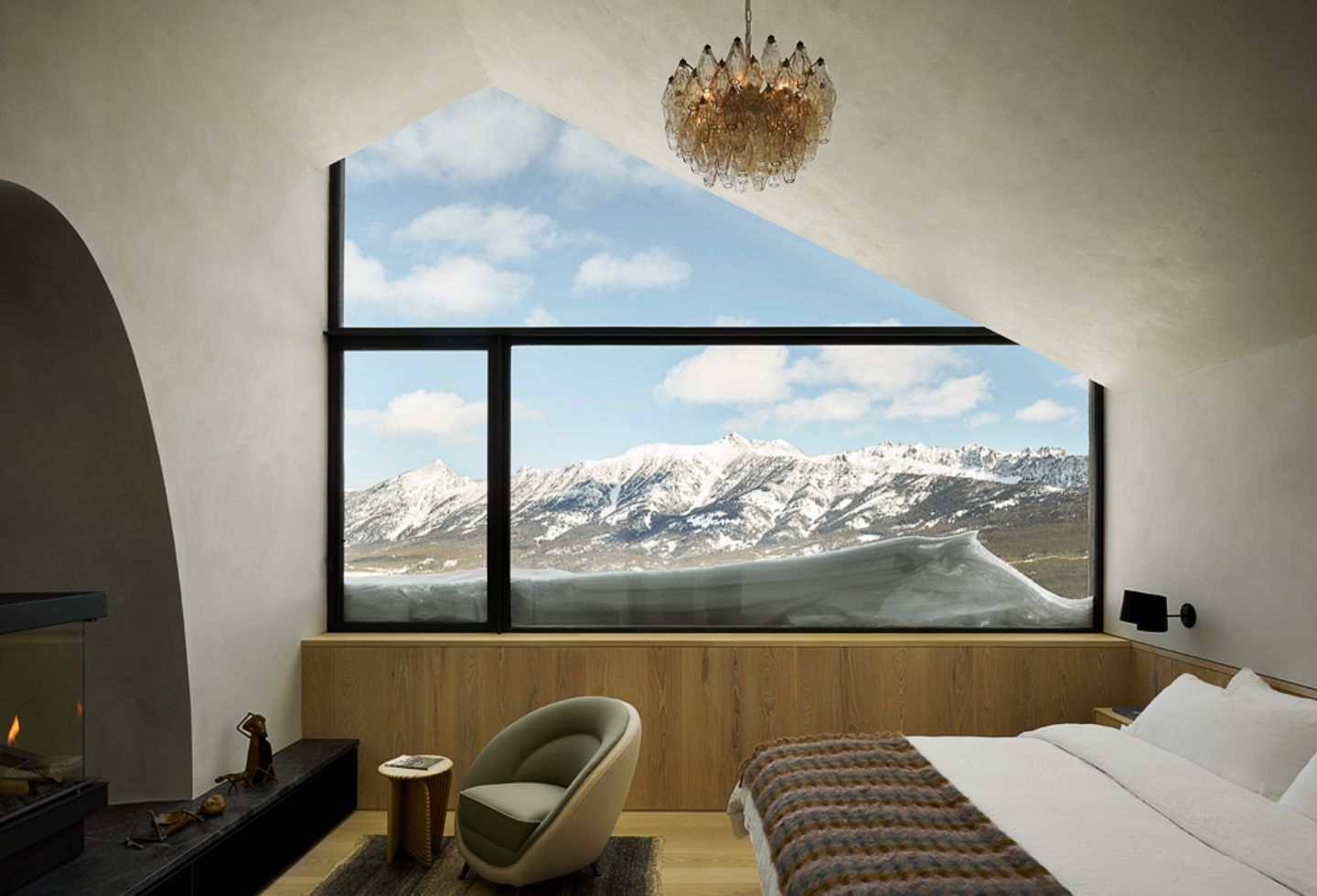

Functionality is tailored specifically to the lifestyle of the peaks, featuring a kitchen centered around a pizza oven where residents gather to recover after a day on the slopes. The home is designed for seamless activity, including a ski-in/ski-out room where stone floors are cut into small, 4x4 blocks to provide necessary traction for slippery boots. In the primary suite, cozier, intimate scales are achieved through varied fireplaces and a bathroom featuring a copper soaking tub, selected specifically for its ability to retain heat during the long, restorative soaks required after hours in the cold. Even the zinc counters reflect this attention to detail, featuring a custom texture developed through months of experimentation with lemon juice to mimic the patterns of a cherished family heirloom.
For the architects, the project is a deeply personal endeavor that reflects their belief that buildings are defined by movement rather than static form. This is perhaps most evident in the lower-level bunk room, which connects to an outdoor amphitheater via a massive pivot door, creating a playful "house within a house" that fosters community and connection to the outside. Ultimately, "Cowboy Heaven" proves that environmental limitations can be transformed into moments of inventiveness and warmth, resulting in a sanctuary that remains responsive to the human spirit despite the harshness of the Montana elements. By spending time in the finished space, the architects have confirmed that the home has become its own living entity, where the relationship between the inhabitant and the view is constantly shifting.