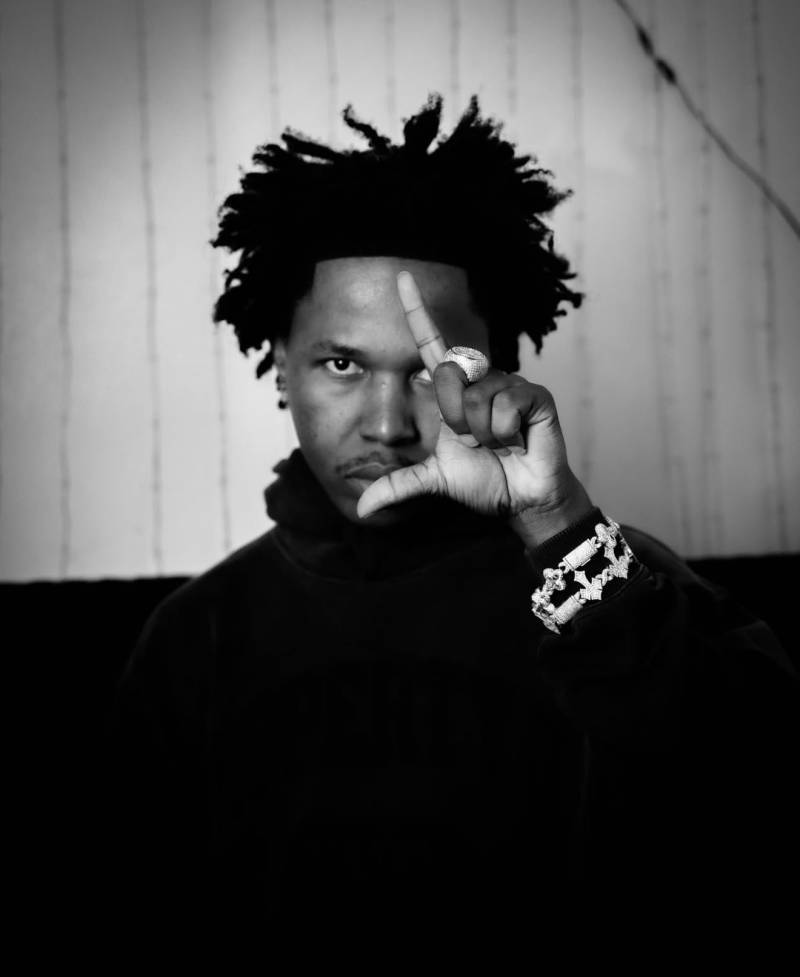
LONDON - The trajectory of Riley Jason Davies, better known to the world as ArrDee, is a study in the volatile alchemy of fame. Rising from the seaside streets of Brighton to the pinnacle of the UK charts, the young rapper became a symbol of a new generation’s digital-first ascent. Yet, behind the "cheeky chappy" persona that captivated millions—the nimble flows, the swaggering bars, and the infectious energy that turned tracks like "Body (Remix)" and "Oliver Twist" into cultural landmarks—lay a complex, fractured reality. In a recent, deeply vulnerable conversation, ArrDee pulled back the curtain on the boy behind the bravado, detailing a life defined by the pursuit of validation, the crushing weight of sudden success, and the eventual, transformative power of fatherhood.
Born into a life marked by the absence of his father, ArrDee speaks of his childhood with a piercing clarity that contextualizes his later hunger for the spotlight. Growing up in Brighton, raised by his mother, the young Riley Davies felt a void that demanded to be filled. Music became more than an artistic outlet; it was a mechanism for survival, a way to command the attention that he felt had been denied to him in his domestic life. This drive, fueled by a self-described need for approval, manifested in the charismatic, confident character that eventually burst onto the scene during the height of the COVID-19 lockdown. It was a time of surreal, rapid-fire success: writing hits in an ADHD-fueled haze, performing songs he had once mimicked as a child, and navigating the dizzying transition from a local talent to a national household name.

Related article - Uphorial Shopify

However, the rapid acceleration of his career brought with it a shadow that few of his fans could have perceived. As ArrDee moved into the rarefied air of chart-topping success at just nineteen, he found himself trapped in the "dark side" of the industry. The isolation that often accompanies fame was exacerbated by a burgeoning battle with substance abuse. ArrDee speaks openly about utilizing ketamine, alcohol, and other substances to numb the dissonance between the rockstar image he was projecting and the profound emptiness he was experiencing internally. He describes a period of intense fragmentation, where the pressure to maintain a certain "brand" left him feeling disconnected from his own humanity. Throughout this period, he was also forced to contend with industry-plant accusations—a criticism he counters by emphasizing the years of pre-work and organic, Brighton-bred hustle that preceded his breakthrough.
Perhaps the most poignant aspect of his reflection is the evolution of his relationship with his family. ArrDee discusses the profound guilt he has carried regarding his brother’s struggles with psychosis, a heavy burden that colored his perception of his own mental health and professional responsibilities. The complexity of navigating a relationship with his father, whom he encountered much later in his life, added another layer of internal friction. For a long time, these dynamics dictated the terms of his existence, tethering him to a cycle of trauma and performative bravado that ultimately became unsustainable.

The turning point for ArrDee was not a chart position or a platinum plaque, but the arrival of his daughter. Becoming a father fundamentally recalibrated his identity, acting as the catalyst for a radical shift in his priorities. The man who once sought validation from millions began to find it in the quiet, foundational reality of parenthood. This new chapter has been characterized by a commitment to sobriety and an intentional dismantling of the coping mechanisms that had governed his earlier years. By moving away from the need to define himself through his past trauma, he is now actively charting a course toward healing and genuine self-pride.
The conversation serves as more than just a retrospective of a music career; it is a profound testament to the power of self-confrontation. Culminating in emotional messages from his mother and his partner, Ocean, the dialogue captures a man in the midst of a significant metamorphosis. ArrDee is no longer merely the Brighton boy chasing the next viral moment; he is a man striving to break the cycles of his past. By stripping away the layers of public expectation, he has begun the process of becoming the man he wants to be for his child. It is a transition from the noise of the industry to the stillness of personal growth—a reminder that for even the most recognizable faces in music, the most important work is often that which is done off-stage, away from the glare of the camera, and in the service of one’s own well-being.