BELIZE — Nestled between the dense jungles of Guatemala and the turquoise expanse of the Caribbean Sea, Belize stands as a unique geographical and cultural anomaly in Central America. As the region’s only English-speaking nation, it serves as a vibrant bridge between Caribbean island sensibilities and the deep, ancient roots of the Mayan mainland. In a comprehensive exploration of the country, traveler and creator Malini Angelica recently documented a week-long road trip that traversed the nation’s diverse landscapes, offering a definitive report on a country that remains one of the world's most pristine and culturally complex destinations.
The journey commenced in Belize City, the country’s bustling cultural and economic heartbeat. While no longer the nation’s capital, it remains the essential starting point for understanding the Belizean identity. The exploration began at historical landmarks such as Battlefield Park, a site that has served as a podium for political movements and public discourse for over a century. To truly understand the city, one must engage with its culinary staples; the trip highlighted the traditional Belizean meat pie—a flaky, savory handheld pastry that serves as the quintessential morning fuel for locals navigating the city’s humid streets. This urban introduction established the baseline for a country defined by its accessibility and the warmth of its people.
Moving westward toward the Guatemalan border, the landscape transitioned from coastal plains to the rugged, tropical terrain of the Cayo District. Here, the focus shifted to the architectural and spiritual legacy of the Maya. San Ignacio served as the base for an excursion to the Xunantunich ruins, an impressive archaeological site reachable by a hand-cranked ferry across the Mopan River. The climb to the top of "El Castillo," the site’s primary pyramid, provided a panoramic view that underscores the Maya's strategic dominance of the region. The exploration extended into the Mountain Pine Ridge Forest Reserve, a unique ecosystem where pine forests surprisingly replace tropical broadleaf trees. Within this reserve, the trip documented the massive limestone entrance of the Rio Frio Caves and the cascading beauty of Big Rock Falls and Rio on Pools, highlighting Belize's status as a premier destination for inland water exploration.

Related article - Uphorial Shopify


The transit through the heart of the country was facilitated by the Hummingbird Highway, widely regarded as one of the most spectacular driving routes in the Americas. This winding corridor through the Maya Mountains is punctuated by dense jungle canopies and sudden, breathtaking vistas. Strategic stops along this route allowed for immersion into the country’s national park system, including the inland Blue Hole—a sapphire-colored cenote formed by the collapse of an underground limestone cave. Additionally, the journey included Billy Barquedier National Park, where refreshing jungle swims provided a necessary respite from the tropical heat, further emphasizing the nation's commitment to preserving its "wild" spaces.
As the road trip turned toward the coast, the narrative shifted from ancient history to the living, breathing traditions of the Garifuna people in the village of Hopkins. This segment of the journey offered a deep dive into a culture descended from West African, Island Carib, and Arawak people. In Hopkins, the experience was defined by the rhythm of the drums and the richness of the local cuisine. At the Queen Bean, the trip featured staples like conch and perfectly seasoned fried chicken, serving as an entry point into the Garifuna story of resilience and cultural preservation. This stop underscored that Belize is not a monolith, but a tapestry of distinct ethnic groups—including the Maya, Garifuna, Mestizo, and Creole—living in a harmonious, multi-lingual society.
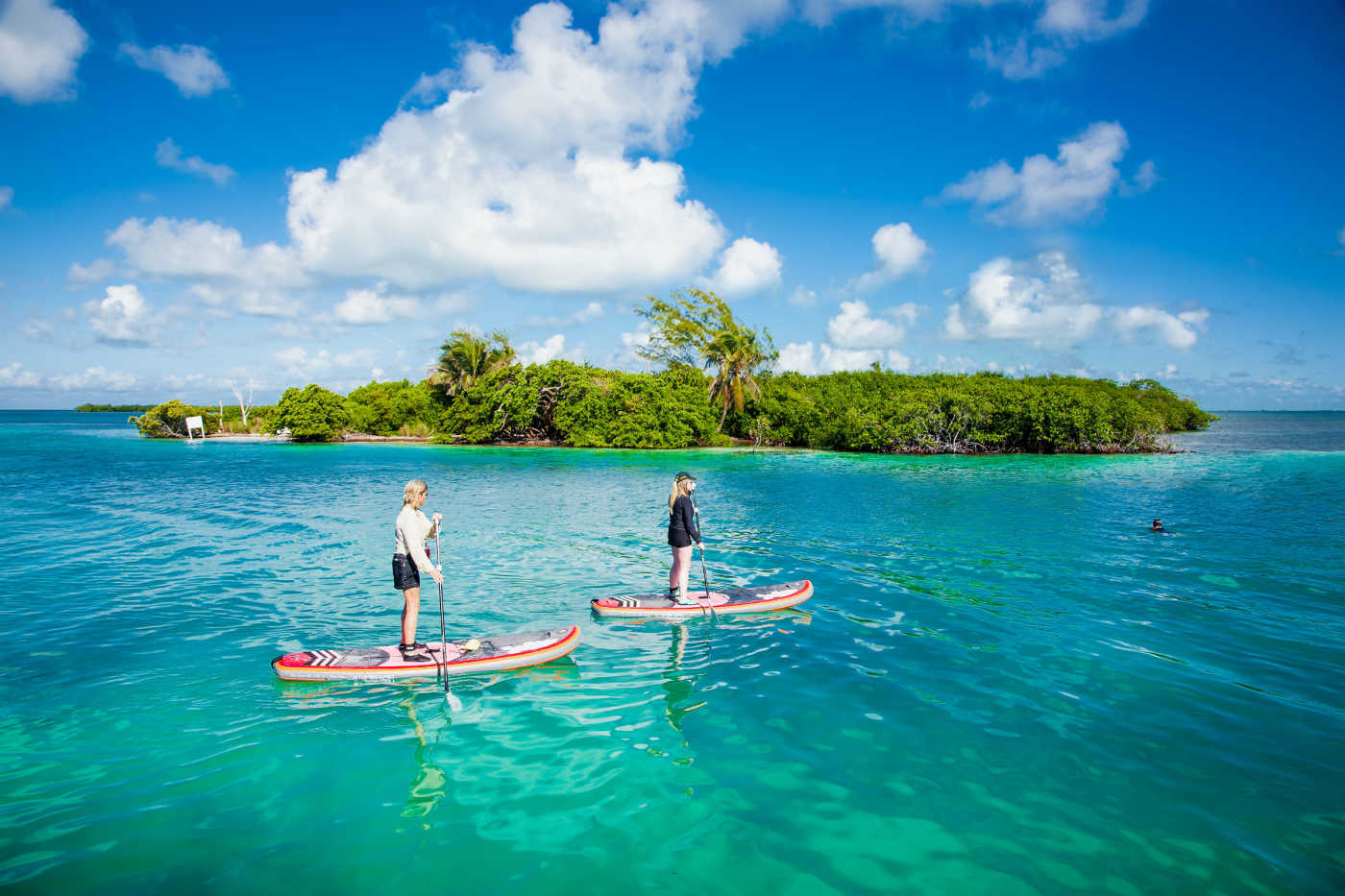
The coastal exploration reached its peak on the Placencia Peninsula, a narrow strip of land known for its "barefoot luxury" and proximity to the Belize Barrier Reef, the second-largest reef system in the world. From Placencia, a snorkeling expedition to Laughing Bird Caye National Park revealed the staggering biodiversity of the Caribbean. The underwater report captured intimate encounters with stingrays and nurse sharks, showcasing a marine environment that remains remarkably healthy due to strict local conservation efforts. The peninsula serves as a vital reminder of the delicate balance Belize maintains between its growing tourism industry and the protection of its natural world.
The expedition concluded in the southernmost Toledo District, often referred to as the "forgotten district" due to its remote location and untouched beauty. Staying in a jungle lodge nestled within the rainforest, the final days were spent kayaking along the Rio Grande. This experience provided a quiet, reflective end to the trip, surrounded by the sights and sounds of a lush ecosystem teeming with howler monkeys and tropical birds. The Toledo District represents the frontier of Belizean travel—a place where the modern world feels distant and the raw power of the rainforest takes center stage. Ultimately, this week-long journey provides a blueprint for understanding Belize in 2026. It is a country that offers a rare combination of historical depth, cultural diversity, and ecological integrity. By traversing the nation from the urban center of Belize City to the remote rivers of the south, the trip demonstrated that the true essence of Belize lies in its variety. It is a destination where one can stand atop a thousand-year-old pyramid in the morning and snorkel with sharks in the afternoon, all while navigating a society that prides itself on its English-speaking heritage and Caribbean soul. As Belize continues to grow in popularity, its challenge will be to maintain this "pristine" quality that makes it a standout in Central America.