In the quiet, deliberate space of a Les Mills CORE™ session, the focus is never on the superficial pursuit of a specific aesthetic; it is an exploration of the body’s primary engine. This workout is a rigorous, functional training session designed with a singular purpose: to build the structural integrity, stability, and athletic power that emanate from the powerhouse of the human form—the abdominals, the obliques, the glutes, and the lower back. By deconstructing movement into its most essential parts, the program serves as a transformative reminder that strength is not merely an external display, but the ability to move through the world with grace, control, and resilience.
The journey begins with a meticulous warm-up, a series of deliberate actions meant to wake the dormant muscles and prepare them for the load to come. Double toe taps and triple C crunches serve as the initial spark, gently but firmly activating the abdominal walls, while knee drops engage the obliques in a subtle, preparatory dance. The hip bridge, a foundational movement, shifts the focus to the posterior chain, ensuring that the glutes and lower back are fully integrated into the process. It is a vital start, not just for safety, but for establishing the mind-body connection necessary to navigate the more intense sequences that follow, creating an immediate sense of alignment and readiness.

Related article - Uphorial Shopify
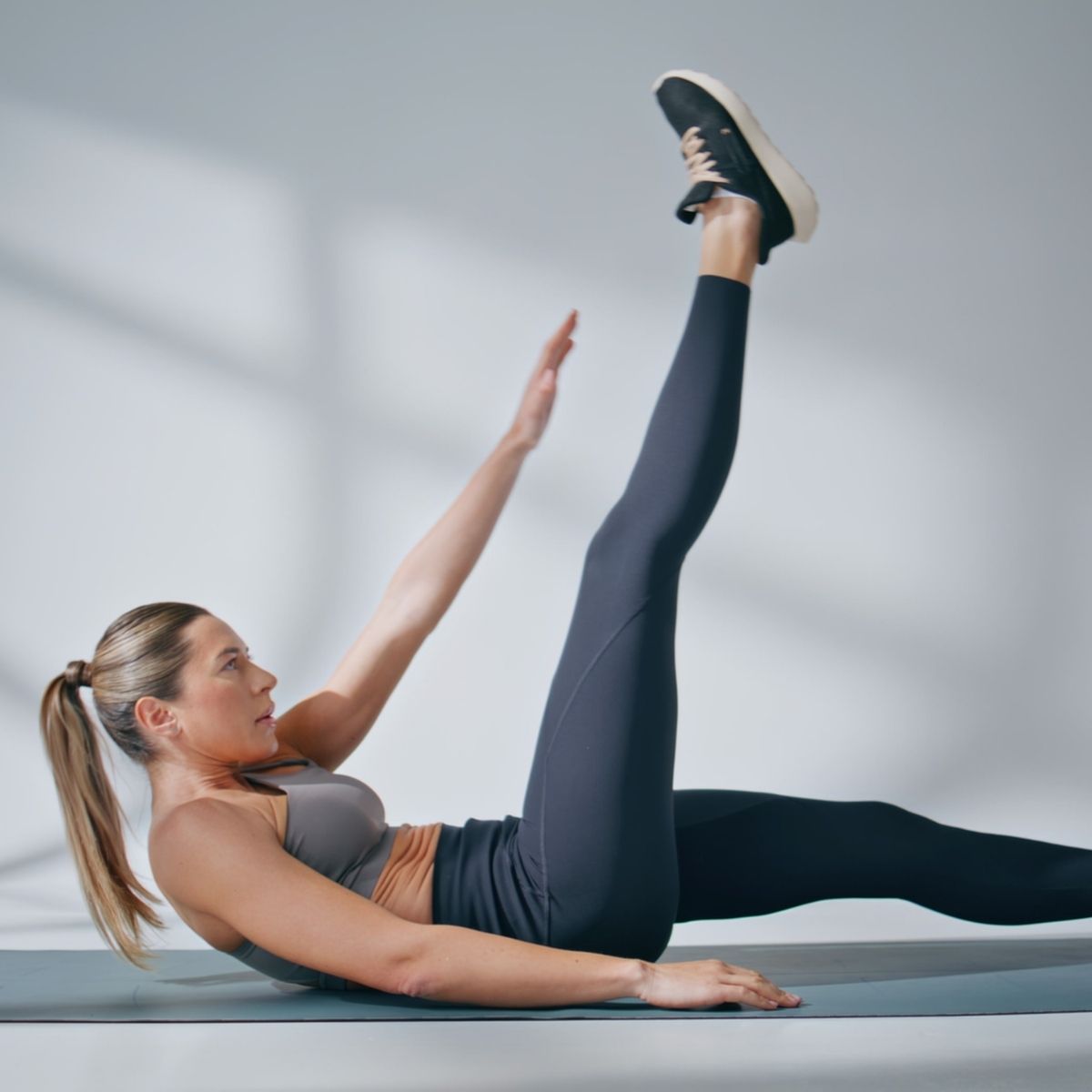
As the body warms, the session pivots toward the core of its philosophy: the necessity of stability. Here, the focus transitions to the art of the hold. Through a sequence of hovering holds, moving hovers, and alternating knee lifts, participants are pushed to maintain a neutral spine under tension. This is the true crucible of the workout, where the instruction to brace the abdominals takes on a deeper meaning. It is not about holding one's breath or creating artificial hardness, but about finding a structural, active engagement that keeps the spine safe and the torso rigid against the force of gravity. In these moments, the workout becomes a lesson in endurance, where the shaking of a muscle is not a signal to quit, but a sign that the body is being recalibrated to hold itself together with greater competence.
The complexity of the session increases with the introduction of resistance bands, a simple tool that acts as a profound multiplier of effort. During leg extensions and crunches, the band adds a consistent, unrelenting tension that forces the lower abdominal muscles to work significantly harder than they would against body weight alone. This component of the training is an exercise in intelligent curation; by isolating these specific muscles and forcing them to contend with external resistance, the workout ensures that the weakest links in the kinetic chain are identified and strengthened. It is an honest confrontation with one's own limitations, providing the necessary stimulus for the muscle fibers to adapt, recover, and grow stronger.

Beyond the linear strength of the abs, the workout demands rotational stability—the ability to resist and create force in multiple planes. The oblique training section, which features kneeling wood chops with weight plates, is a departure from the monotonous repetition of traditional core work. It requires a level of coordination and focus that forces the obliques to function as they would in the real world: stabilizing the spine while the limbs generate force. This is further challenged by 'stealth mode' plank variations, movements that are as demanding as they are precise. In these dynamic holds, the body learns to fight the urge to compensate, forcing the obliques to remain steadfast even as the base of support becomes increasingly unstable.
The final act of the session is a blend of control and kinetic energy, integrating abdominal stability with the complexities of rotation. By combining cross-crawl movements with handheld weight plates, the workout pushes the participant to harmonize the upper and lower halves of the body. This is where the training transcends the mat. It is a simulation of the functional demands of daily life—the reach, the twist, the stabilization of the torso during a sudden movement—all executed with an emphasis on perfection of form. It is the culmination of everything that preceded it, a final push that tests whether the muscles engaged in the warm-up, reinforced by the planks, and isolated by the bands can now function as a single, cohesive unit.
When the session concludes, the lingering sensation is one of quiet, humming strength. This is the transformational framing of Les Mills CORE™: it does not promise a shortcut to a destination, but rather an investment in the foundation. It teaches that the strength of the core is the prerequisite for all other athletic movement, and that the time spent in these deliberate, focused cycles is an investment in the longevity and capability of the human machine. By the time the final movement is finished, the participant leaves not just with exhausted muscles, but with a renewed awareness of their own capacity for control, stability, and power—a reminder that a strong core is the anchor upon which the rest of our physical life is built.