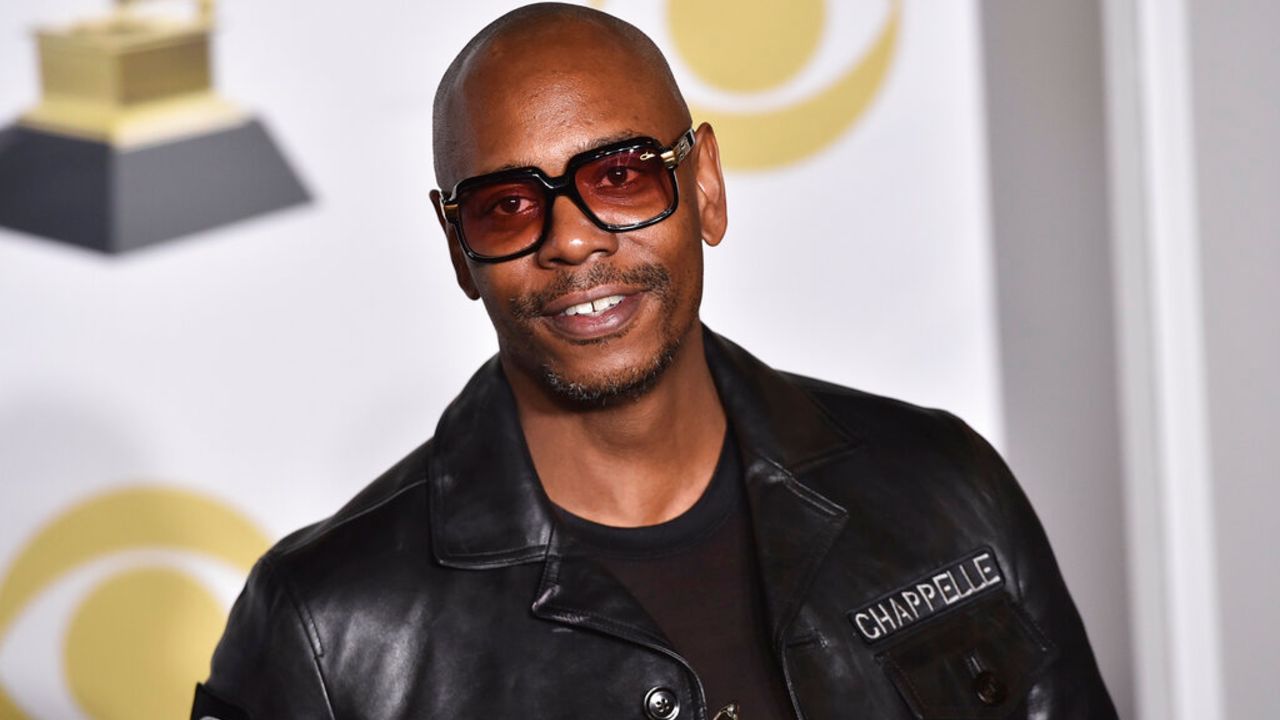
LOS ANGELES – In a rare and reflective dialogue, legendary comedian Dave Chappelle sat down with NPR’s Michel Martin for a "Newsmakers" session that peeled back the layers of his provocative public persona. The conversation, which functioned less like a standard press junket and more like a philosophical inquiry, offered a deep dive into the values that govern Chappelle’s life away from the spotlight. Throughout the exchange, Chappelle moved seamlessly between the personal and the political, illustrating how his rural lifestyle, his philanthropic efforts, and his often-debated creative choices are all part of a single, cohesive worldview centered on authenticity and community resilience.
A central theme of the discussion was Chappelle’s enduring commitment to Yellow Springs, Ohio. In an industry that often demands its stars reside in the cultural hubs of Los Angeles or New York, Chappelle has famously chosen a different path. He described the small Ohio town not just as a place of residence, but as a sanctuary where he can maintain his privacy and foster genuine, meaningful connections. For Chappelle, Yellow Springs offers a sense of "normalcy" that is impossible to achieve within the high-pressure vacuum of the entertainment industry. In the village, he is not merely a celebrity; he is a neighbor, a father, and a member of a community that values him for his character rather than his box-office draw.
This deep-seated sense of place has translated into tangible action, most notably through his decision to fund the renovation of the local NPR affiliate, WYSO. When asked about his interest in public media, Chappelle characterized the station as the "connective tissue" of Yellow Springs. He argued that supporting local outlets is essential for maintaining the health of a community, as they provide a shared platform for local voices and stories. To Chappelle, the gift to WYSO was not just a philanthropic gesture but an investment in the social fabric that keeps the town together. It highlights a belief that in an increasingly globalized world, the most impactful work often begins at the local level.
Related article - Uphorial Shopify
The conversation eventually turned to the craft of comedy itself, where Chappelle offered a striking anatomical metaphor. He defined comedians as the "nation’s kidneys," explaining that their fundamental purpose is to help society "metabolize" and process difficult facts, uncomfortable truths, and complex emotions. By taking the toxic elements of public discourse and transforming them into humor, Chappelle believes comedians provide a necessary outlet for a healthy society. In his view, comedy is not just about the laugh; it is a vital biological function of democracy that allows people to navigate the "unknown unknowns" of the human experience together.

This philosophy naturally leads to the friction that often surrounds his work. Addressing his reputation for being a provocateur, Chappelle clarified a significant distinction: he does not actively seek out controversy, but he fundamentally refuses to avoid it. He pushed back against the media’s characterization of his recent specials and international performances as "rage baiting," suggesting that such labels are unfair and reductive. To Chappelle, his work is a pursuit of honesty, and if that honesty happens to be controversial, it is a byproduct of the times rather than a deliberate strategy to offend. He argued that the public’s ability to engage with challenging ideas is being eroded by a media landscape that prioritizes conflict over nuance.
Reflecting on his career trajectory, Chappelle spoke candidly about the most famous turning point in his life: walking away from Chappelle’s Show at the height of its success. While many at the time viewed the decision as a breakdown or a failure, he now views it as a crucial step in his personal and artistic evolution. He explained that leaving the show was an act of self-preservation that allowed him to grow into the person and artist he is today. By stepping back from the fame and the corporate machinery, he was able to reclaim his voice and ensure that his future work would always be on his own terms.
The interview concluded with a discussion on the simple but profound message that has become a staple of his live performances. Chappelle often ends his shows with a plea for the audience to "stay sane together." In a time he describes as turbulent and deeply divisive, he sees the act of people from different backgrounds coming together in a shared physical space as a form of healing. For Chappelle, the resilience of society lies in these moments of communal experience. Even if people disagree with the jokes or the politics, the mere fact that they can sit in a room together and share a moment of levity is, in his eyes, a powerful victory for sanity. In the end, the interview revealed a man who is as committed to his community as he is to his craft, navigating the complexities of modern fame with a grounded, rural sensibility.