The continent of Europe is often narrated through the prism of its cities—the iron spine of the Eiffel Tower, the marble heartbeat of Rome, or the bustling avenues of London. Yet, beneath the veneer of its urban achievements lies a far older, more enduring reality: a geography of raw, untamed majesty. From the frozen cathedrals of Iceland to the sun-dappled limestone terraces of Croatia, Europe possesses a collection of natural wonders that challenge the observer to redefine their understanding of beauty. These are not merely scenic backdrops; they are the living, breathing archives of a continent’s geological history, shaped by ice, time, and the relentless persistence of water.
The journey begins in the heart of the continent, where the Alps rise as a jagged, monumental wall separating the northern plains from the Mediterranean south. Spanning eight countries, this vast range is the defining icon of European topography. It is a world of stark contrasts: where thin, crystalline air meets the heavy, ancient stillness of glaciers, and where deep, verdant valleys cradle histories that feel as enduring as the rock itself. Here, the Matterhorn stands as an obsidian sentinel against the sky, while the Zugspitze offers a vantage point above the clouds. Yet, the Alps are more than just a mountain range; they are a cultural landscape. The sight of Neuschwanstein Castle, clinging to its precipice like a dream frozen in stone, or the glass-like surface of the Königssee reflecting the surrounding peaks, reveals a unique synergy between human aspiration and natural grandeur. Whether traversed on skis in the biting winter or hiked under the golden light of summer, the Alps remain the quintessential European wild—a place that demands both respect and reverence.
Moving north, the narrative shifts from the stone of the mountains to the volatile, crystalline beauty of ice. In Vatnajökull National Park, Iceland, the landscape feels less like a part of the Earth and more like a remnant of a primordial age. This is the realm of Europe’s largest glacier, a sprawling expanse of white and blue that exerts a glacial pressure on the island’s tectonic soul. The park is defined by its mesmerizing ice caves, where the sunlight filters through walls of compressed, sapphire-hued ice, creating a subterranean light show that defies description. Perhaps most haunting is the Jökulsárlón glacier lagoon, where colossal icebergs, having broken free from the parent glacier, drift silently toward the Atlantic. Watching these fractured sculptures of ice move with the slow, deliberate pace of centuries is a humbling experience, a reminder of the fragility of the natural world and the immense, shifting power of a changing climate.

Related article - Uphorial Shopify

In contrast to the frigid silence of the north, the Plitvice Lakes of Croatia present a symphony of movement and color. Nestled within a limestone landscape, this system of sixteen interconnected lakes is a testament to the patient artistry of water. The lakes are famous for their vibrant, shifting hues—turning from emerald to azure and back again—as minerals in the water interact with the ever-changing sunlight. These bodies of water are bound together by a labyrinth of waterfalls, the most magnificent of which is Veliki Slap, a thunderous veil of water that marks the transition between the upper and lower lake tiers. Walking the wooden boardwalks that wind through this aquatic garden, one is struck by the sense of a world in constant flux. The landscape is quite literally growing; the accumulation of travertine barriers is a living process, ensuring that the geography of Plitvice is never exactly the same from one year to the next.
Further west, the Scottish Highlands offer a different sort of theater—a landscape characterized by a brooding, melancholic beauty that has inspired poets and wanderers for generations. This is a region of untamed wilderness, where the earth is scarred by mountains and carved deep by dark, silent lochs. There is a primal quality to the Highlands, an untouched stillness that stands in sharp opposition to the polished stone of Edinburgh, the gateway city that sits at the edge of this vast expanse. Highlights like the valley of Glen Co, with its steep, shadowed flanks, tell a story of ancient volcanic activity and subsequent glacial erosion. It is a landscape that feels soaked in memory; the fog that clings to the heather-clad slopes and the wind that whistles through the empty glens carry the weight of a history that is as rugged and unpredictable as the terrain itself.
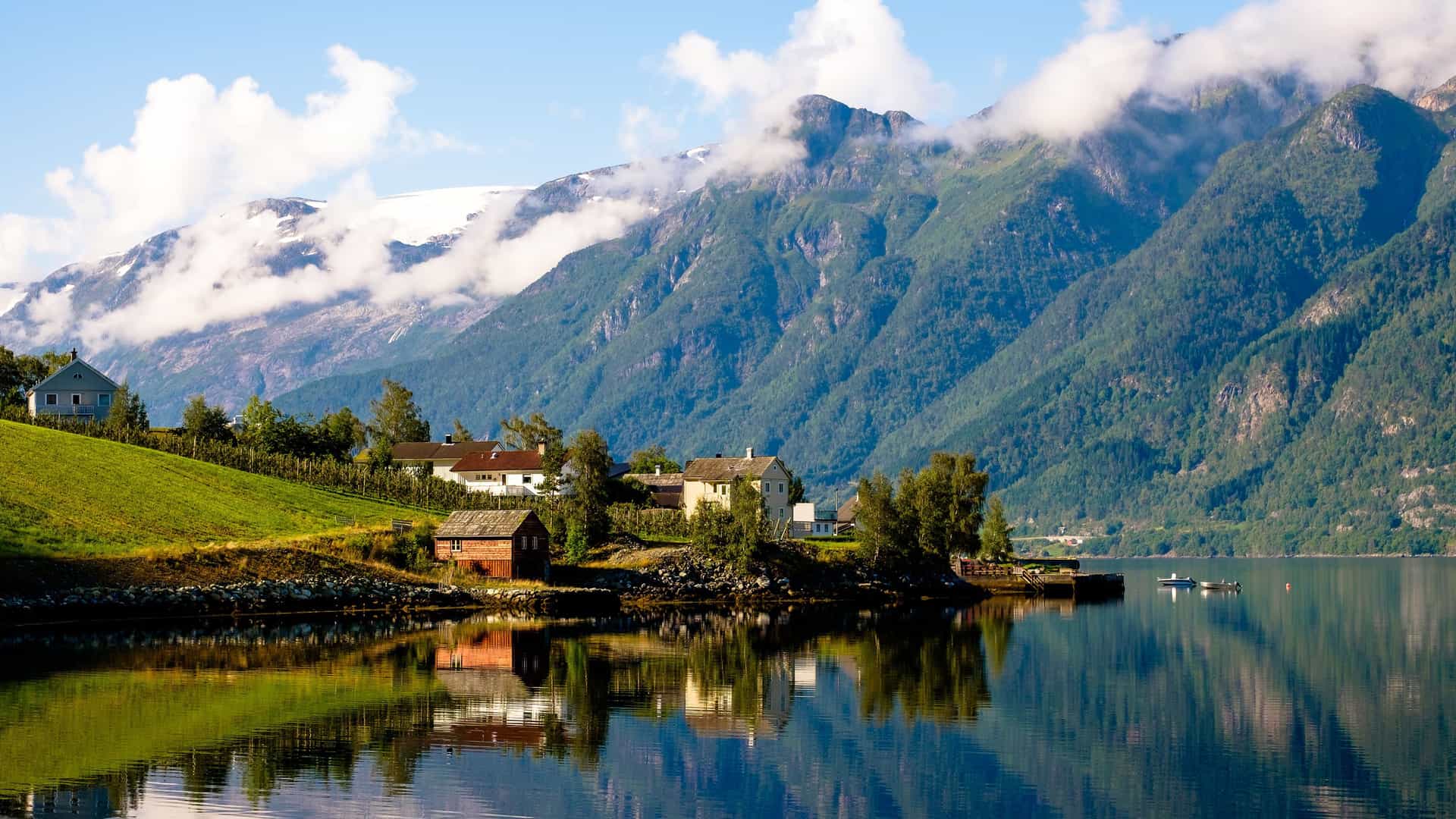
Finally, the journey concludes in the deep, fjord-carved incisions of the Norwegian coast. Hardangerfjord is a colossal geological signature of the last ice age, a massive waterway that cuts deep into the mountain ranges of Norway. To stand at the edge of the fjord is to confront the sheer scale of the landscape—a scale that dwarfs the human perspective. Renowned for its spectacular waterfalls, such as the plummeting Vøringsfossen, the area is a masterclass in vertiginous beauty. The Hardanger Bridge, a feat of modern engineering that spans the expanse, provides a panoramic view that encapsulates the marriage of the ancient fjord and the modern world. Here, the water is dark, deep, and impossibly calm, hemmed in by sheer cliffs that rise like fortress walls. It is a place that feels distant from the world of cities and industry, a cathedral of stone and sea that has remained fundamentally unchanged even as the tides of human history have ebbed and flowed around it.Taken together, these five landscapes represent the essential diversity of Europe’s natural heritage. They are a reminder that the continent’s identity is not solely a product of its historical monuments or its political evolution. Instead, it is anchored in the deep, resonant power of its geography. Whether it is the glacial ice of Iceland, the limestone terraces of Croatia, or the brooding glens of Scotland, these environments serve as a necessary anchor for the human spirit. They offer a space for reflection, a challenge to our perception of scale, and a profound, quiet evidence of the Earth’s capacity to create and sustain beauty that exists entirely outside the framework of human endeavor. In an age of rapid change, these enduring landscapes offer a sense of permanence, standing as silent witnesses to the passage of time.