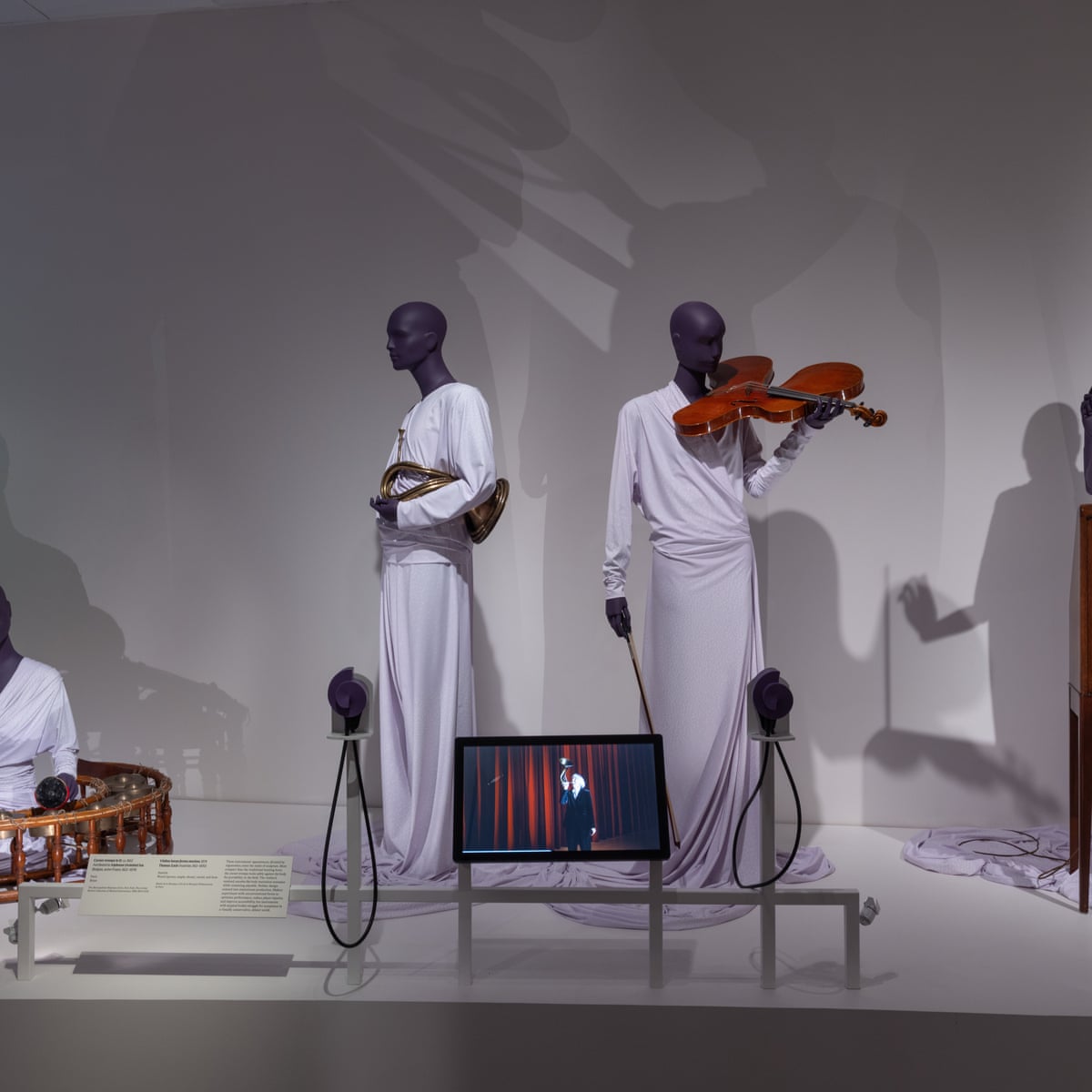
At The Metropolitan Museum of Art, a quiet but profound transformation is unfolding within the hallowed halls of Gallery 199. The exhibition Musical Bodies, which opened earlier this month, invites visitors to reconsider the fundamental nature of music-making, posing a deceptively simple question that belies the vast complexity of human history: Why are so many instruments shaped and decorated like the human body? This ambitious project, four millennia in the making and encompassing over 130 works, serves as an "art history X-ray" of our species, scanning the anatomy of musical expression to reveal the inextricable link between the tool and the maker.
The exhibition is built upon the recognition that the body itself is the primal instrument—the first drum, the first flute, the first resonance chamber. From the rhythmic snap of fingers and the primal beat of feet against the earth to the intricacies of beatboxing and whistling, Musical Bodies insists that music is not a distant, academic discipline, but something rooted in our biological DNA. As visitors traverse the galleries, they are guided through a sensory journey that illuminates how cultures across time have sought to externalize the human form through craftsmanship. Whether it is an ancient Egyptian rattle carved from hippopotamus ivory in the likeness of an arm, or a nineteenth-century fiddle from eastern India that stands in the shape of a smiling figure, the exhibition showcases how we have consistently mirrored our own anatomy in the objects we create to give voice to our internal lives.

Related article - Uphorial Shopify


The curatorial vision, spearheaded by Bradley Strauchen-Scherer of the Department of Musical Instruments, moves beyond mere classification to explore how these objects embody human values and complex identities. This is particularly evident in the exhibition’s exploration of the "superhuman synthesis" between performer and instrument. The curated selection includes works that challenge traditional notions of gender and identity, such as the Lira da braccio, a stringed instrument featuring both male and female forms, and the iconic "Love Symbol" guitar played by Prince, which transcends its function as a tool of sound to become a powerful, gender-defying extension of the performer’s persona. In these artifacts, the boundary between the person playing and the object being played begins to dissolve, suggesting that the instrument is not merely an accessory, but a physical extension of the performer’s soul.A centerpiece of this experience is the Body Music installation, designed by the Museum’s Senior Project Manager of Emerging Technologies, Brett Renfer. Here, the exhibition breaks out of the static confines of traditional museum display. Through intuitive physical movement, participants can generate sound and visuals, effectively blurring the lines between the observer and the observed. This interactive space captures the core philosophy of the exhibition: that music is not just something to hear, but something to vibrate to, something to inhabit. By merging historical artifacts with contemporary interactive media, Renfer’s installation demands that visitors actively participate in the act of creation, reinforcing the idea that music is an ongoing, living tradition rather than a preserved relic of the past.
As the exhibition winds toward its conclusion, the narrative pivots toward the transience of life. The final gallery addresses the cycle of existence, juxtaposing the joy of performance with the inevitable silence of death. Among the most poignant pieces on display is the drum kit of Alejandro González of the band Maná, which incorporates Día de los Muertos symbolism to represent the legacy of the performer. Standing near the casket-shaped sculpture For A Musician by Ghanaian artist Paa Joe, these objects frame the musical experience within the broader context of the human life cycle. They remind us that while the performer may eventually fade, the instrument—and the music it once channeled—remains as a monument to their existence.
Musical Bodies is a triumph of intelligent curation, drawing from 17 of the Museum’s curatorial departments to bridge the gap between ancient antiquity and modern pop culture. By bringing together pieces as diverse as Titian’s masterpieces, Degas’ studies of movement, and contemporary fashion ensembles inspired by musical motifs, the show effectively de-specializes music, stripping away the elitist veneer that often surrounds the study of instruments. It reminds the audience that for much of human history, music has been a central, non-negotiable pillar of survival, spirituality, and social bonding.In an era where technology often alienates us from our own physical presence, this exhibition serves as a necessary recalibration. It invites us to stop, listen, and recognize our own anatomy in the craftsmanship of the past. As visitors emerge from the galleries, they carry with them a renewed awareness of the vibrations that make us human. Musical Bodies does not simply show us instruments; it shows us ourselves, reflected in the wood, metal, and strings that have accompanied our journey through 4,000 years of history. It is a powerful testament to the idea that music is, and will always be, the most intimate reflection of who we are, what we value, and what we believe.