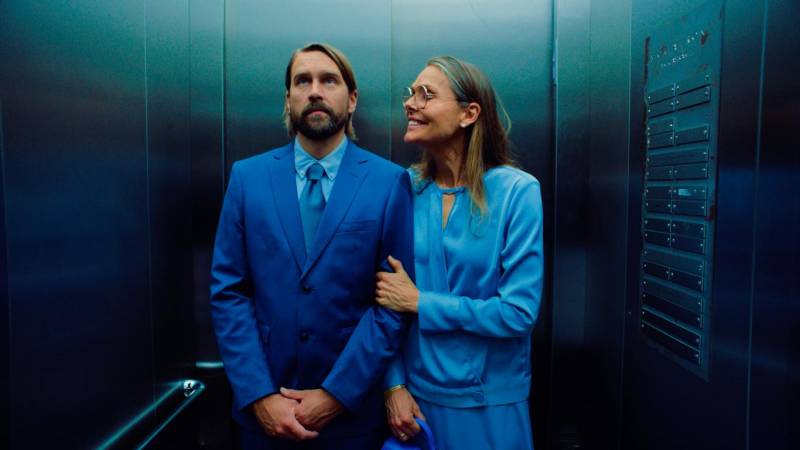
The urban landscape often hides its most profound tragedies behind the closed doors of nondescript flats, where the walls absorb the weight of grief long before the world takes notice. In the short film Far From The Plains (2025), directors Luigi Sibona and Niellah Arboine craft a harrowing yet tender portrait of this domestic isolation. The film functions as a masterclass in emotional precision, utilizing a haunting visual metaphor to articulate the suffocating reality of severe depression: in the home of the young protagonist, Frankie, his mother’s internal collapse is manifested as an expansive, creeping black mould. It is a brilliant, unsettling piece of production design, turning a clinical symptom of damp housing into a visceral symbol of a mind, and a household, being slowly consumed by darkness.
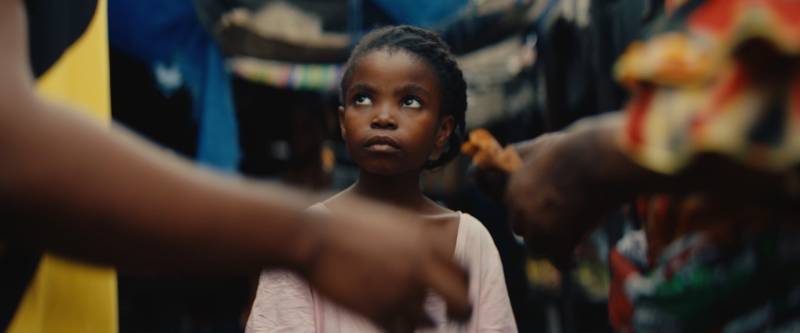
The narrative follows Frankie, a devoted teenager whose life is defined by the heavy, silent labor of caring for a mother whose vitality has been siphoned away by profound despair. This is strategic storytelling at its most potent; by focusing on the boy’s perspective, the filmmakers avoid the voyeuristic trap of over-explaining the mother’s illness. Instead, we see the ripple effects: the lost childhood, the quiet vigilantism of care, and the deep, abiding ache of a family unit fractured by the death of the father. The loss of the patriarch looms over the flat like a permanent shadow, providing the necessary cultural and emotional context for why the mother has drifted so far from the shores of her own life.
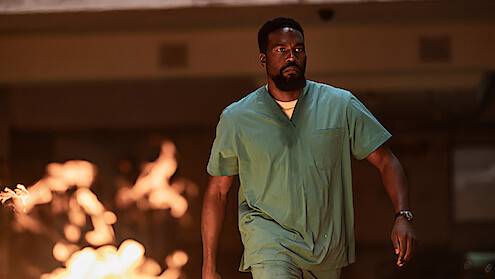
Against this claustrophobic domesticity, the film offers a sanctuary in the form of a rare, green city space—a stable tucked away amidst the grey sprawl of London. Here, the film shifts its visual tone, trading the suffocating blacks and greys of the flat for the organic, earthy textures of the stable. It is here that Frankie encounters James, a nurturing, steady-handed mentor played with quiet gravitas by Kojey Radical. In the presence of a horse named Atlas, Frankie finds the only thing his home cannot provide: peace. This connection to the animal is not merely a hobby; it is a transformational framing of the boy's survival mechanism. Through his bond with Atlas, Frankie is allowed to step out of the role of "caregiver" and into the role of a child, finding a flicker of freedom that exists far from the suffocating plains of his own lived reality.

The filmmakers cleverly braid this internal tragedy with the broader instability of the external world. Throughout the film, fragments of news reports regarding severe flooding and climate anxiety in the UK permeate the background. This choice is an example of highly intelligent curation; it draws a sharp, undeniable parallel between the fragility of the mother and son's life and the environmental instability of the planet. Just as the earth outside is being overwhelmed by water, the life inside the flat is being overwhelmed by an intangible, creeping rot. This motif suggests that Frankie and his mother are not suffering in a vacuum, but are part of a world that feels fundamentally unsafe, where the very foundations—of both the climate and the family—are eroding.

Related article - Uphorial Shopify

Drawing inspiration from the surreal, imaginative resilience found in cinematic touchstones like Life of Pi and Pan’s Labyrinth, Sibona and Arboine explore how young people instinctively use their imagination to navigate the disasters that define their lives. Frankie does not have the tools to fix his mother, nor does he have the language to articulate his grief, but he does have the capacity to dream of the plains, to find a mythical quality in a horse, and to hold onto the green spaces that keep him tethered to the possibility of joy. The film does not offer the false solace of a "happy ending" or a miracle cure; the mother’s struggle remains ongoing, a testament to the stubbornness of clinical depression.
The film concludes with an emotional sequence that captures the cycle of sadness with devastating honesty. We are left with the image of a mother caught in the tide of her own psyche, while Frankie remains anchored to his refuge. It is a powerful, understated ending that honors the complexity of the human condition. Far From The Plains is a reminder that peace is not always a permanent state, but often a series of fleeting, hard-won moments. It is a profound meditation on the love that survives even the deepest, darkest growth of despair, and a quiet, persistent plea to protect the spaces—both green and human—that allow us to survive when the walls around us begin to close in.