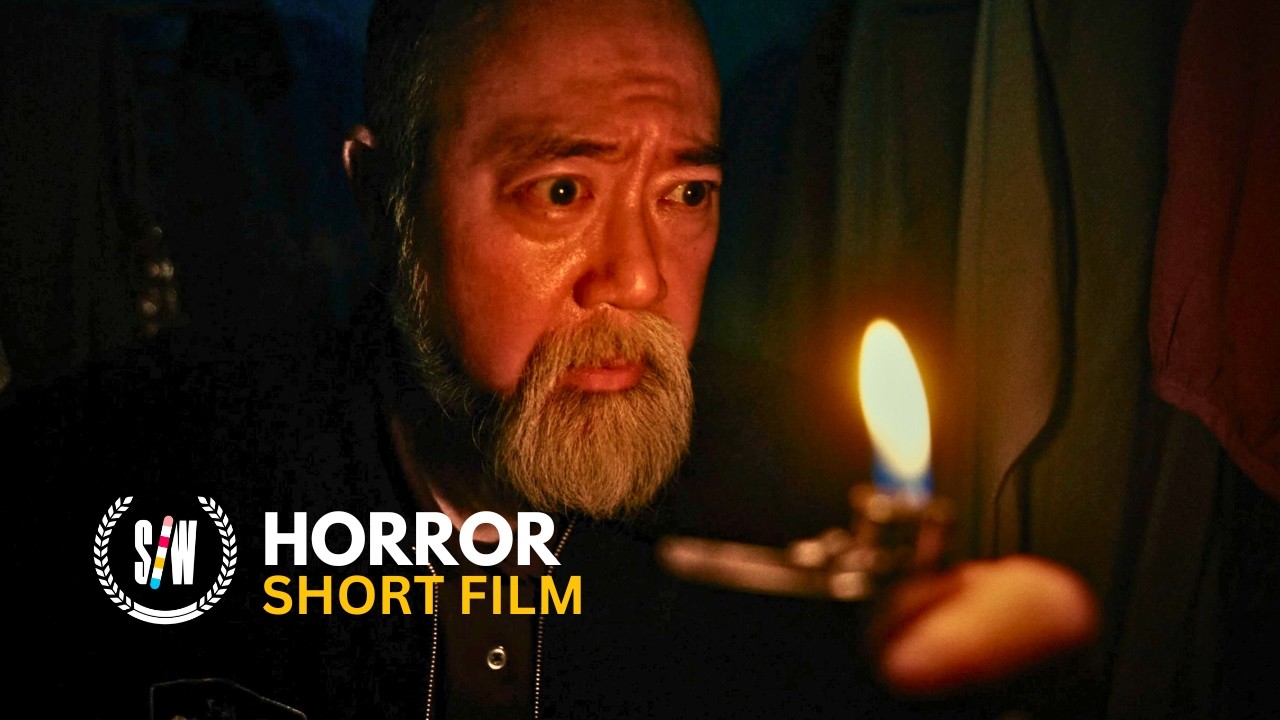
In the hyper-saturated landscape of modern gig-economy cinema, where every transaction is mediated by a digital rating system, the short film Five Star emerges as a chilling, darkly comedic meditation on the absurdity of professionalism in the face of the unimaginable. Directed by Kai Hasson and anchored by a masterful, deadpan performance from Paul Sun-Hyung Lee, the film manages to balance the tension of a supernatural horror with the biting satire of a society obsessed with feedback. At its heart, the story follows Soung Kang, a dedicated late-night locksmith who approaches the paranormal not with existential dread, but with the weary, single-minded focus of a man protecting his online reputation.
The premise is deceptively simple, echoing the classic setups of suburban terror. A client, visibly shaken and convinced her home has been invaded by forces beyond the physical realm, summons Kang to address a door that inexplicably, and persistently, creeps open despite her best efforts to keep it latched. It is the kind of domestic disturbance that would send most individuals fleeing for the nearest place of worship or a police station. Yet, Kang enters the frame with the sturdy, pragmatic tools of his trade and an unwavering commitment to his identity as the "number one best in LA." He is a craftsman in an age of automated convenience, and his professional pride is the armor that protects him from the encroaching darkness.
As the film progresses, the tension escalates into a masterclass of atmospheric horror. The client, unraveling under the weight of her fear, desperately pleads for an alternative to a simple lock—suggesting the presence of spirits, demons, or at the very least, an intruder requiring law enforcement. Kang, however, remains remarkably, almost infuriatingly, steadfast. He treats her mounting terror as a minor inconvenience, a distraction from the task at hand. His refusal to acknowledge the supernatural is not merely a sign of skepticism; it is an act of willful professional denial. To Kang, a ghost is an inefficiency, a logical error in the machine of his service that can be resolved with the right deadbolt and sufficient torque.
Related article - Uphorial Shopify
The climax of the film strips away the veneer of normalcy as the forces behind the door finally reveal themselves. They are not merely cold, hauntological entities, but something far more unsettling—supernatural manifestations of loneliness and an insatiable, metaphysical hunger. The struggle that ensues is visceral and chaotic, a jarring intersection of physical labor and cosmic horror. Kang finds himself in a literal tug-of-war with a shadow that defies Newtonian physics, his locksmithing tools pitted against the encroaching void. It is in this moment that the audience realizes the true absurdity of the situation: the man who fixes doors is now the sole line of defense against an existential threat, and he is doing so with the focus of a man working on a clock.
The resolution of the threat—a triumph of sheer, stubborn human willpower over the supernatural—serves as the film’s most transformational turn. Once the door is secured, once the darkness has been pushed back and the client is safe from the entity that sought to consume her, the audience expects a moment of catharsis, a reflection on the terrifying ordeal they have just survived. Instead, the film veers sharply into a dark, satirical denouement. Kang, his clothes disheveled and his nerves clearly frayed, does not seek comfort or validation for his heroism. He does not ask if the client is okay, nor does he express shock at the nightmare he has just witnessed.
Instead, he pulls out his phone with the practiced ease of a gig-worker closing out a shift. He turns to the trembling, traumatized client and insists, with a desperate, wide-eyed sincerity, on the importance of a five-star review. This final, biting image serves as the film’s thesis: in a world where everything—from our food delivery to our brushes with the afterlife—is subject to a star-rating system, our capacity for genuine human connection has been replaced by the pursuit of digital metrics. Kang’s "number one best in LA" status is a hollow victory, a badge of honor that means nothing when measured against the abyss.
Five Star succeeds precisely because it refuses to let the horror overshadow its commentary. It is a film about the armor of the modern worker, the ways in which we use our jobs to distance ourselves from the chaos of reality. By focusing on Kang’s obsession with his review, Hasson forces the viewer to confront the uncomfortable reality that we are all, in some capacity, locked into systems that prioritize service over sanity. The locksmith eventually gets his five stars, but the silence that follows the client’s final tap on the screen is louder than any ghost. It is a haunting conclusion to a film that understands that the most terrifying things in life aren't necessarily the things that go bump in the night—they are the things we continue to fix, ignore, and rate, long after the nightmare has ended.