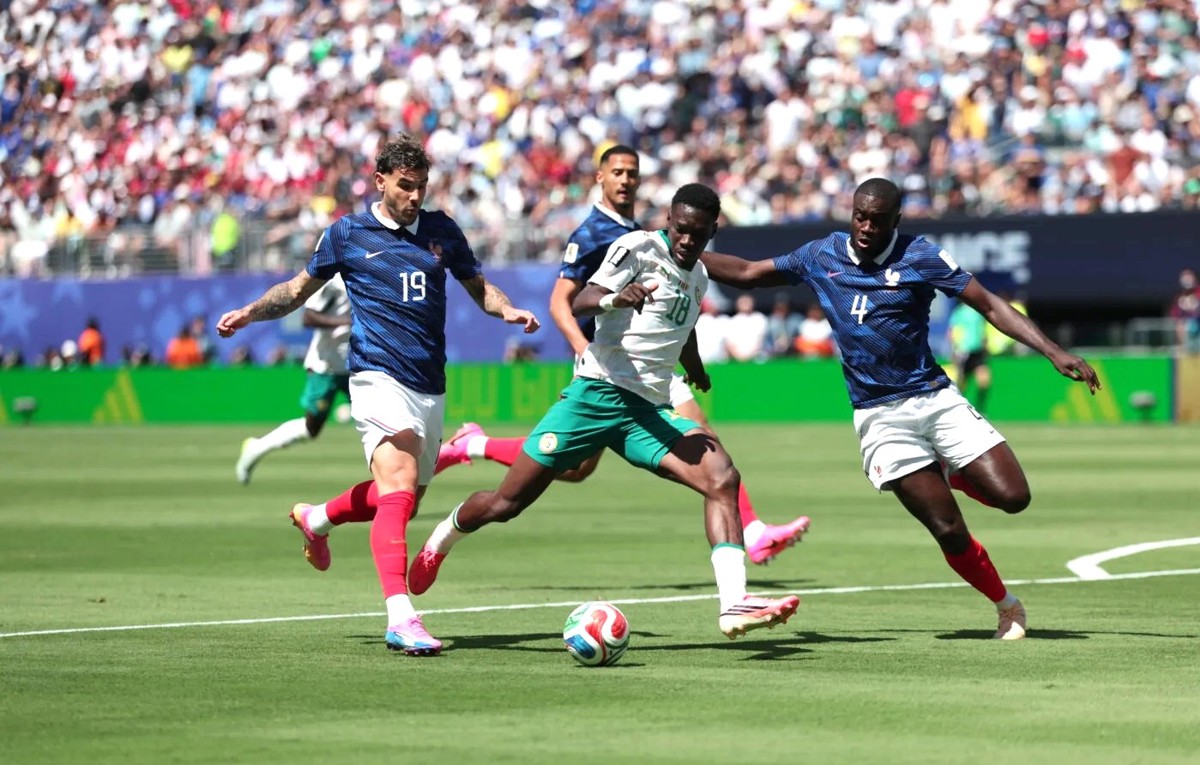
NEW YORK — The grand stage of the New York New Jersey Stadium became the setting for a collision of footballing philosophies on a humid afternoon, where the tactical rigor of France met the relentless, spirited ambition of Senegal in a Group I clash that pulsed with the nervous energy of the 2026 FIFA World Cup. For the hundreds of thousands gathered in the arena and the millions watching across the globe, this was a contest that promised high-stakes drama. What transpired, however, was a masterclass in the fine margins that define elite sport—a match defined not just by the brilliance of the victors, but by the agonizing, millisecond-long deviations that ultimately shifted the trajectory of the tournament.
The opening phase of the game saw a Senegal side that was neither intimidated by their European counterparts nor content to play on the defensive. With a direct, aggressive approach, they pushed the French backline into moments of uncharacteristic discomfort. The first major heartbeat of the match came when Nicholas Jackson, spearheading the Senegalese attack, unleashed a strike that seemed destined for the bottom corner. The sound of the ball rattling against the post, rather than rippling the net, echoed through the stadium like a collective intake of breath from the Senegalese supporters—a moment of "what could have been" that set the tone for a match defined by near-misses and high-voltage tension.
Related article - Uphorial Shopify

As the intensity mounted, the role of officiating emerged as a central protagonist. In a moment that encapsulated the modern game’s scrutiny, Kylian Mbappé found himself in the box, tangled in a defensive challenge that sparked an immediate, fervent appeal for a penalty. The stadium went silent as referee Alireza Faghani stepped toward the pitch-side monitor to review the incident. The deliberation felt like an eternity, but the judgment was ultimately decisive: the official determined that the contact had been initiated by the attacker, not the defender. The decision, resulting in a goal kick for Senegal, was a victory for tactical discipline, yet it only fueled the burgeoning rivalry between the two sides.The drama refused to subside, even as the halftime interval approached. When Nicholas Jackson again found himself behind the French defense to slot home what appeared to be the opening goal, the stadium erupted. It was a goal that felt like a reward for Senegal’s bravery, but the jubilation was abruptly silenced as the referee signaled for an offside review. The subsequent ruling, confirming the infringement, was a devastating blow to the Senegalese momentum. It was a sequence of events that highlighted the psychological toll of the VAR era, where the exhilaration of a goal is held in a state of fragile suspension, waiting for the cold, clinical verification of technology.
/https%3A%2F%2Fmedia.afrik-foot.com%2Fmain%2F2026%2F06%2FICONSPORT_368404_0490.jpg)
With the deadlock persisting and the heat of the New Jersey afternoon beginning to weigh heavily on the legs of the players, the managers turned to their benches to alter the game’s narrative. It was here that the strategic brilliance of the French depth became apparent. Bradley Barcola, brought into the fray as a substitute with instructions to stretch the tiring Senegalese defense, provided the breakthrough. His finish was a study in poise—a stylish, calculated effort that bypassed the goalkeeper and finally broke the resolute Senegalese wall. The goal was a testament to the tactical luxury at the disposal of the French side, where the bench holds as much threat as the starting eleven.The final act of the match, however, belonged to the undisputed protagonist of the global game. With Senegal pouring forward in a desperate, last-gasp effort to find an equalizer, the space behind them became a canvas for Kylian Mbappé’s individual brilliance. In a moment of pure sporting theater, he picked up the ball, drove at the remaining defenders, and unleashed a strike that defied the geometry of the situation. It was a glorious goal—a reminder that in the hyper-analyzed, tactical, and technological world of modern football, the sheer, unadulterated genius of a world-class athlete can still provide the final word.
As the final whistle blew, the scoreboard reflected a French victory, but the match’s legacy remained in the lingering echoes of what might have been. For Senegal, the defeat was a bitter lesson in the cruel reality of narrow margins; they had rattled the post, seen a goal disallowed, and challenged one of the tournament favorites at every turn. For France, it was a display of resilience, confirming their ability to absorb pressure and capitalize on their moments with cold-blooded efficiency.The image of the players walking off the field, exhausted and physically spent, mirrored the emotional toll of a World Cup match where the difference between a heroic performance and a frustrating loss was measured in inches. In the grand narrative of Group I, this evening in New Jersey will be remembered as a night where technology, talent, and sheer willpower converged. It was a match that captured the transformational framing of the World Cup—where history, pride, and the unpredictable, beautiful bounce of a ball create a story that stays with us long after the lights at the stadium dim, reminding us that at the highest level of sport, the line between glory and near-miss is thinner than a breath of air.