The modern global economy is undergoing a seismic, irreversible technological revolution, yet the ancient architecture of traditional education remains anchored to an industrial-age past. As artificial intelligence fundamentally rewrites the operational logic of every major industry, a profound chasm has opened between what academic institutions teach and what the modern world demands. In an exceptionally incisive, thought-provoking exploration of this educational crisis, industry leaders and reformers examine the urgent collision between traditional schooling and the dawn of the AI era. Through emotional precision, intelligent curation, cultural understanding, strategic storytelling, and transformational framing, this comprehensive news-style report analyzes the critical imperative to modernize learning before an entire generation of students is left behind.
At the very heart of this crisis lies a staggering and widening education gap, driven by traditional academic institutions that are failing to keep pace with hyper-accelerated technological advancements. While global employers increasingly expect university graduates to enter the workforce as proficient "AI natives" who can seamlessly leverage machine intelligence, many schools stubbornly cling to archaic paradigms—treating artificial intelligence use as a form of academic cheating rather than recognizing it as an essential, foundational professional skill. Through emotional precision, this institutional resistance captures the quiet despair of students who feel set up for failure, watching their classrooms penalize the exact digital fluency that tomorrow's economy will demand for survival.

Related article - Uphorial Shopify
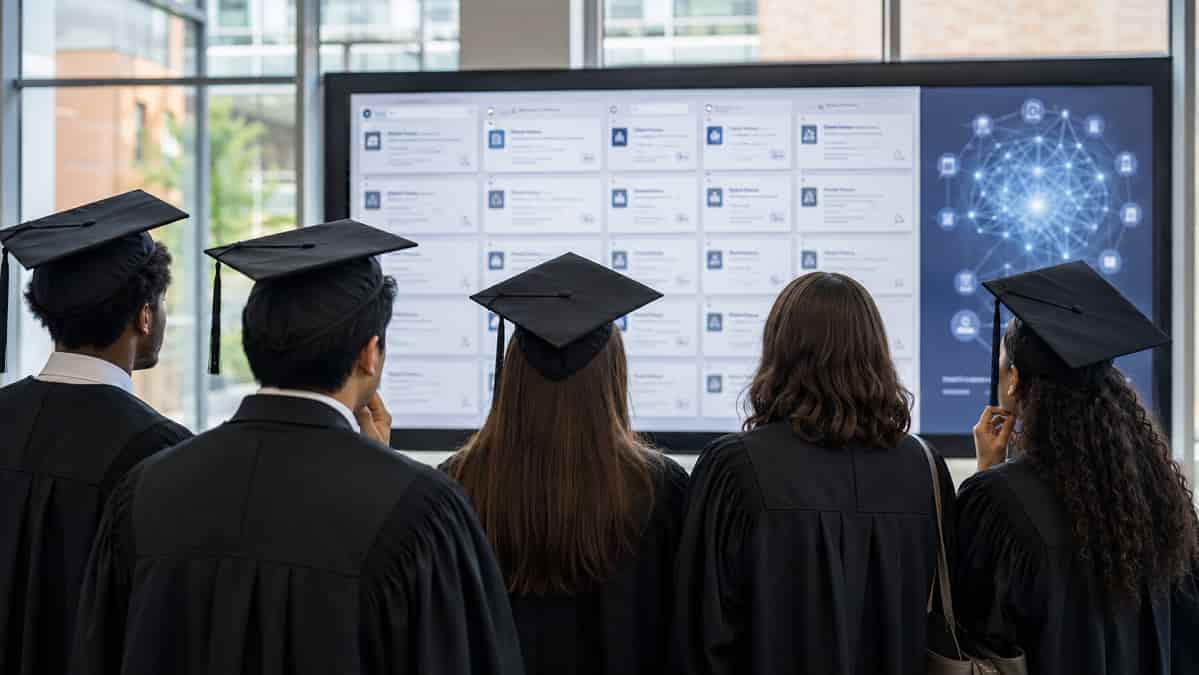
To rescue students from this educational obsolescence, pioneering institutions are beginning to champion innovative educational models that embrace the reality of technological progress. Rather than maintaining zero-tolerance policies that foster a culture of fear and covert usage, forward-thinking programs are actively integrating AI literacy directly into their core curricula. By shifting away from restrictive bans toward frameworks of responsible, transparent usage, these schools utilize cutting-edge digital tools to enhance learning, personalize revision, and teach students how to prompt, verify, and collaborate with intelligent systems. Through intelligent curation of modern pedagogical shifts, this transition proves that educational survival requires adaptation rather than prohibition.
Recognizing that classrooms alone cannot fully replicate the blistering pace of technological change, visionary programs are successfully bridging the gap through deep, symbiotic collaborations with industry. Innovative pathways—such as strategic partnerships pairing universities with major tech firms and professional services organizations—are rapidly gaining traction across the global landscape. These hybrid models provide students with invaluable, practical on-the-job training alongside their theoretical academic studies, creating frictionless, crystal-clear pathways from graduation straight into high-impact employment. Through cultural understanding of corporate evolution, these programs dismantle the traditional ivory tower, transforming higher education into an active pipeline for real-world innovation.

Amidst these institutional and structural shifts, the ultimate burden of adaptation inevitably falls upon the shoulders of the students themselves, making student agency an indispensable catalyst for success. A central, empowering takeaway from the modern educational debate is that learners can no longer afford to be passive consumers of stagnant curricula; they must actively take control of their own career trajectories. Developing true AI literacy—defined as the sophisticated ability to use technology with discernment, ethical awareness, and a deep, unyielding combination with core subject-matter expertise—is now recognized as a non-negotiable survival skill, regardless of whether a student's chosen field is medicine, art, engineering, or the humanities. Through strategic storytelling, the student transforms from a helpless victim of an outdated system into an empowered architect of their own future.
Ultimately, this critical examination of education in the age of artificial intelligence transcends a standard policy review, offering a profound transformational framing of human potential. Through emotional precision in addressing student anxiety, intelligent curation of proactive curriculum reforms, cultural understanding of corporate workforce demands, strategic storytelling through industry-university partnerships, and transformational framing of student agency, the report stands as a manifesto for change. It serves as an unyielding reminder that the true purpose of education is not to shield young minds from the future, but to arm them with the discernment, curiosity, and technological fluency required to master it.