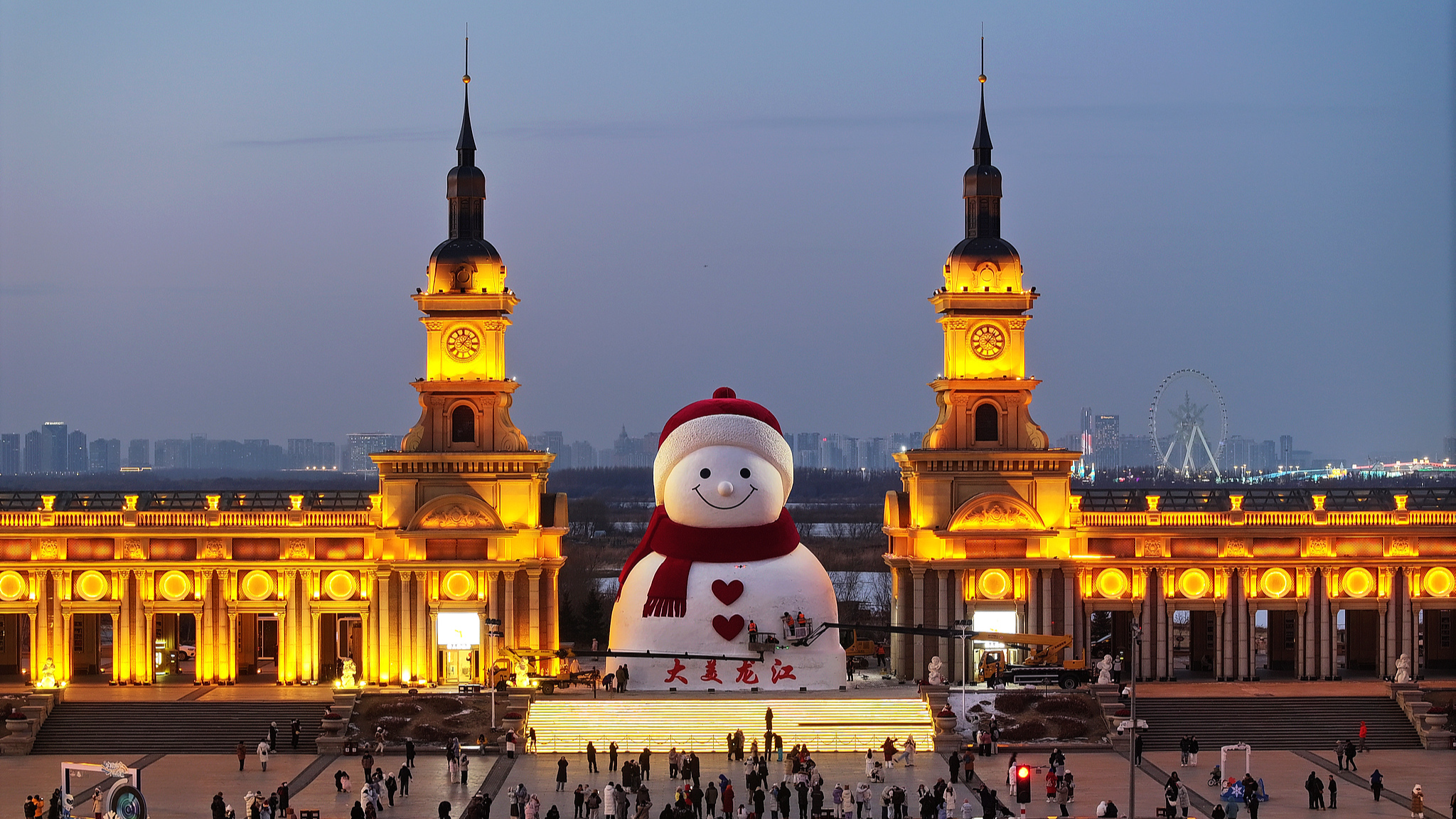
HARBIN CHINA - In the far reaches of Northeast China, the "Ice City" of Harbin has become a global case study in urban resilience and economic transformation. Operating in a landscape where winter temperatures routinely plummet below -30°C, the city has successfully pivoted its extreme climate from a logistical burden into a multi-billion dollar "ice and snow" economy. In early 2026, Harbin hosted a world mayoral dialogue, where leaders from cold-climate cities like Edmonton, Canada, praised the metropolis for turning its brutal winters into a sustainable, year-round gold mine.
Survival in Harbin’s deep freeze is made possible through a sophisticated district heating infrastructure and a suite of "low-tech" local adaptations. The city’s residential blocks are kept habitable via centralized heating networks, while the streets remain active through the use of heavy, insulated door curtains and oversized handlebar gloves for delivery drivers. Even as the mercury drops, the modern subway system and heated public facilities ensure that Harbin's industrial backbone—manufacturing helicopters, heavy machinery, and aerospace equipment for China’s expanding space program—continues to operate at full capacity.
Related article - Uphorial Shopify

The city’s identity is inextricably linked to its Russian heritage, a legacy of its founding as a railway outpost in 1898. This influence is most visible at the Saint Sophia Cathedral, a green-domed Orthodox landmark that now serves as an architectural museum. Nearby, Central Street remains one of the world’s longest pedestrian thoroughfares, lined with European-style facades that house both local Northeast Chinese restaurants and historic Russian bakeries. This cultural blend extends to the local cuisine, where residents stave off the cold with hearty Hulenbur mutton soup, grilled cold noodles, and traditional Russian borscht.

The centerpiece of the city's winter season is the Harbin Ice and Snow World, which expanded to a record-breaking 1.2 million square meters for its 2026 edition. Utilizing 400,000 cubic meters of ice harvested from the frozen Songhua River, the park features massive, LED-lit pagodas and the world’s longest ice slide, which now measures over 520 meters. Beyond the spectacle, the city maintains a somber connection to its 20th-century history. The Unit 731 Museum, located at the site of a former Japanese germ warfare base, provides a sobering educational counterpoint to the winter festivities, documenting the resilience of the local population through the horrors of wartime experimentation.
As Harbin prepares to host the 9th Asian Winter Games, the city's ability to balance its heavy-industrial strength with a booming tourism sector has cemented its status as a premier global destination. By integrating heritage conservation with high-tech urban planning, Harbin has proven that even at -30°C, life and industry do not merely survive—they thrive.