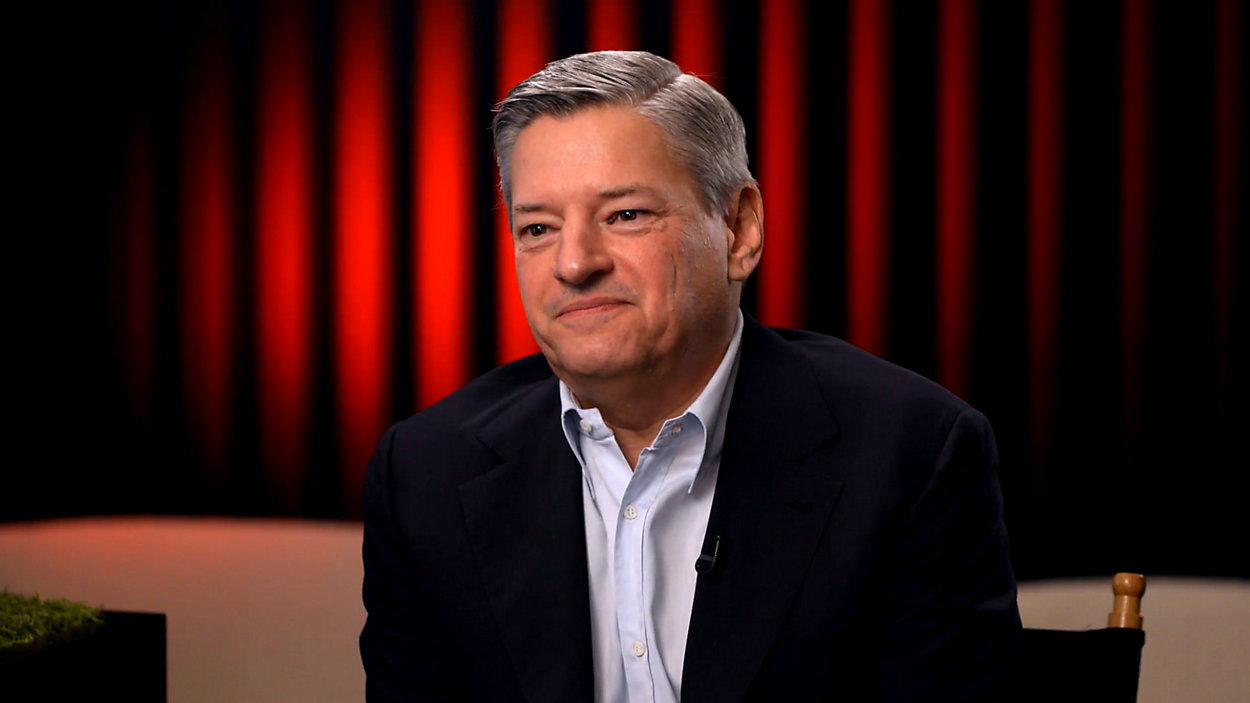
The dramatic evolution of Netflix from a DVD-by-mail service to the world's premier entertainment platform was recently explored in a segment on Microsoft’s Tools and Weapons, featuring a conversation with Netflix co-CEO Ted Sarandos. Sarandos detailed how technological disruption and an unwavering focus on storytelling have driven the company's sustained success over two decades.
Sarandos began by referencing The Innovator’s Dilemma, a book he considers essential for every Netflix employee but is "glad no Blockbuster employee knew about". This philosophy of constant change is central to Netflix's existence; Sarandos noted that the company always saw itself as an "internet digital business, not a DVD-by-mail business". He emphasized the rarity of companies successfully moving from one technology to the next, asking why Greyhound, for instance, didn't become an airline.
Sarandos’s deep understanding of consumer behavior, which began during his early days as a video store clerk in a "second or third-tier movie market" in Phoenix, proved pivotal. He watched "everything ever made," realizing that "all movies are in conversation with each other". This experience taught him the importance of choice, observing that the movie a customer selected was a reflection of "who they are" to their friends and family. Sarandos's self-developed "game" was to find small, "interesting, beautiful art films" and only show them to people who would "love it" and "create word of mouth". This early curation skill helped him realize that Netflix, by achieving a national trade radius, could support "increasingly interesting small things at scale," overcoming the financial constraints faced by small-radius video stores.
Related article - Uphorial Shopify

The monumental leap from content distribution to producing original programming was, according to Sarandos, driven by both conviction and necessity. When Netflix first started streaming, content was limited to very old movies because new films were tied up in "very long pay-tv windows". Furthermore, as networks began to see Netflix not as a customer but as a competitor for people's attention, it became "very hard to get upstream" and license new content. Sarandos argued in 1999 that he didn't know of "any network that exists that doesn't have some form of original differentiating program". He realized that if everyone had the same programming, it would become a "gigantic race to the bottom". Therefore, producing original content was deemed necessary for "more control of our destiny" and served as a hedge to prevent suppliers from cutting them off.
Sarandos also addressed the necessary tension between intuition and data, a key discussion points on the Microsoft program Tools and Weapons. He noted that while data is excellent for analyzing what happened in the past ("six weeks ago, six months ago, six years ago"), it is "not a very good indicator of what is likely to happen six weeks from now". He cited the global success of Squid Game as proof, noting there was "no data to predict that was going to come". Sarandos maintains that "all the answers are not in the data" and that big decisions require "good intuition". This blend of creativity and technology is embodied in Netflix’s co-CEO structure, with Sarandos (creative side) and Greg Peters (data and technology side) representing the "left and right brain".
The impact of Netflix’s storytelling extends beyond the platform. Sarandos highlighted how the documentary series Drive to Survive turned Formula One from a niche U.S. sport into a global conversation by focusing on the "storytelling underneath the sport" and the drama of the players. Other examples include the show Bridgerton causing book sales to jump by more than 500%, and Emily in Paris being credited with a 38% growth in tourism to France. Sarandos concluded that professional storytelling is "incredibly resilient" and steady despite competition from technical inventions like tablets and TikTok.
Looking forward, Sarandos believes the next massive disruption will not be on the distribution side, as the internet has already played that role, but rather on the creation side. He pointed to tools like virtual production, which make storytelling "safer, more scalable". This innovation allows creators to bring things to the screen that "used to only reside in your imagination," fulfilling the fantasies of both creators and the audience. Sarandos believes that deepening the bond with people through storytelling holds "unlimited upside".