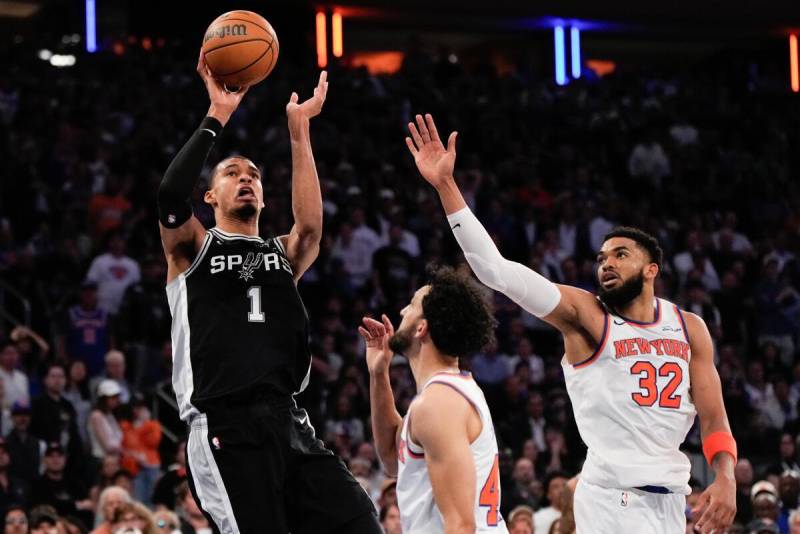
The air at the Frost Bank Center in San Antonio was thick with the weight of expectation on the evening of June 5, 2026. As the stage for Game 2 of the 2026 NBA Finals, the arena became the site of a high-stakes encounter that tested the limits of both the San Antonio Spurs and the New York Knicks. In a sport often defined by the cold arithmetic of scoring, this particular night proved to be an exercise in emotional precision—a contest where every possession was treated with the gravity of a season-defining moment, and the outcome remained shrouded in suspense until the final horn. The Spurs, looking to impose their will early, opened the game with a sharp, aggressive energy that momentarily shifted the momentum in their favor. Led by the towering, versatile presence of Victor Wembanyama and the reliable floor spacing of Devin Vassell, the home team established an early rhythm that kept the crowd in a state of constant, vocal engagement. Wembanyama’s influence on both ends of the floor was immediately apparent, his reach and anticipation serving as a constant deterrent to the Knicks' interior attacks. It was the kind of start that a young, hungry team craves—a statement of intent that signaled their readiness for the highest level of competition.
However, the championship pedigree of the New York Knicks was never in doubt. Facing the pressure of the Spurs’ initial run, the visitors responded with the methodical, efficient poise that has become their hallmark. Jalen Brunson emerged as the orchestrator of the Knicks' counter-attack, using his gravity as a playmaker to draw the Spurs' defense out of position and create high-percentage opportunities for his teammates. Alongside him, Mikal Bridges and OG Anunoby provided a masterclass in two-way basketball. Their ability to hit perimeter shots with high efficiency not only kept the Knicks within striking distance but slowly eroded the Spurs’ early cushion, turning the game into a tense, back-and-forth battle of wills.
The defining narrative of the game, however, was anchored by the defensive brilliance of OG Anunoby. While the headlines often chase the spectacle of the scoreboard, those watching closely saw a defensive performance of rare intelligence and tenacity. Anunoby’s coverage was transformative; he acted as a flexible barrier against the Spurs' most potent offensive threats, providing the kind of versatile, lock-down defensive coverage that is essential to winning championships. His late-game blocks were not merely tactical plays; they were decisive interventions that stripped the momentum from the Spurs at the moments they needed it most, a testament to his ability to curate success through sheer force of will on the less glamorous end of the court. As the clock ticked down into the final quarter, the game shifted into the territory of legends. Every trip down the floor felt like a referendum on the players' resolve. The Spurs, refusing to bow to the pressure of the moment, launched a final, desperate rally that brought the crowd to its feet. Wembanyama’s continued aggression, attacking the rim and battling for every loose ball, served as a rallying cry for the home side. The energy in the building was electric, a raw, unfiltered tension that only a Finals game can produce, as both teams fought for the right to control their own destiny in this historic series.
)
Related article - Uphorial Shopify

In those final, breath-shortening seconds, the Knicks’ strategic experience shone through. Despite the intensity of the Spurs' push, New York maintained their composure under fire. They executed with a clinical, almost eerie, calm, navigating the Spurs' defensive traps and managing the game clock to ensure they could survive the rally. As the buzzer finally signaled a 105–104 victory for the Knicks, the immediate aftermath was a study in contrasts—the exhaustion and frustration of a team that had given everything, balanced against the quiet, professional relief of a group that had done exactly what was required to secure the win. Looking back on the game, it is clear that this was not merely a contest of skill, but a profound demonstration of the transformational power of pressure. For the Knicks, the win served as an affirmation of their identity as a team built for the grueling environment of the Finals. For the Spurs, while the result was a bitter pill to swallow, the game proved that they possess the core talent and the emotional resilience to stand toe-to-toe with the league’s elite. It was a game that will be remembered not for one singular highlight, but for the sustained, high-level intensity that pushed both teams to the very edge of their capabilities.
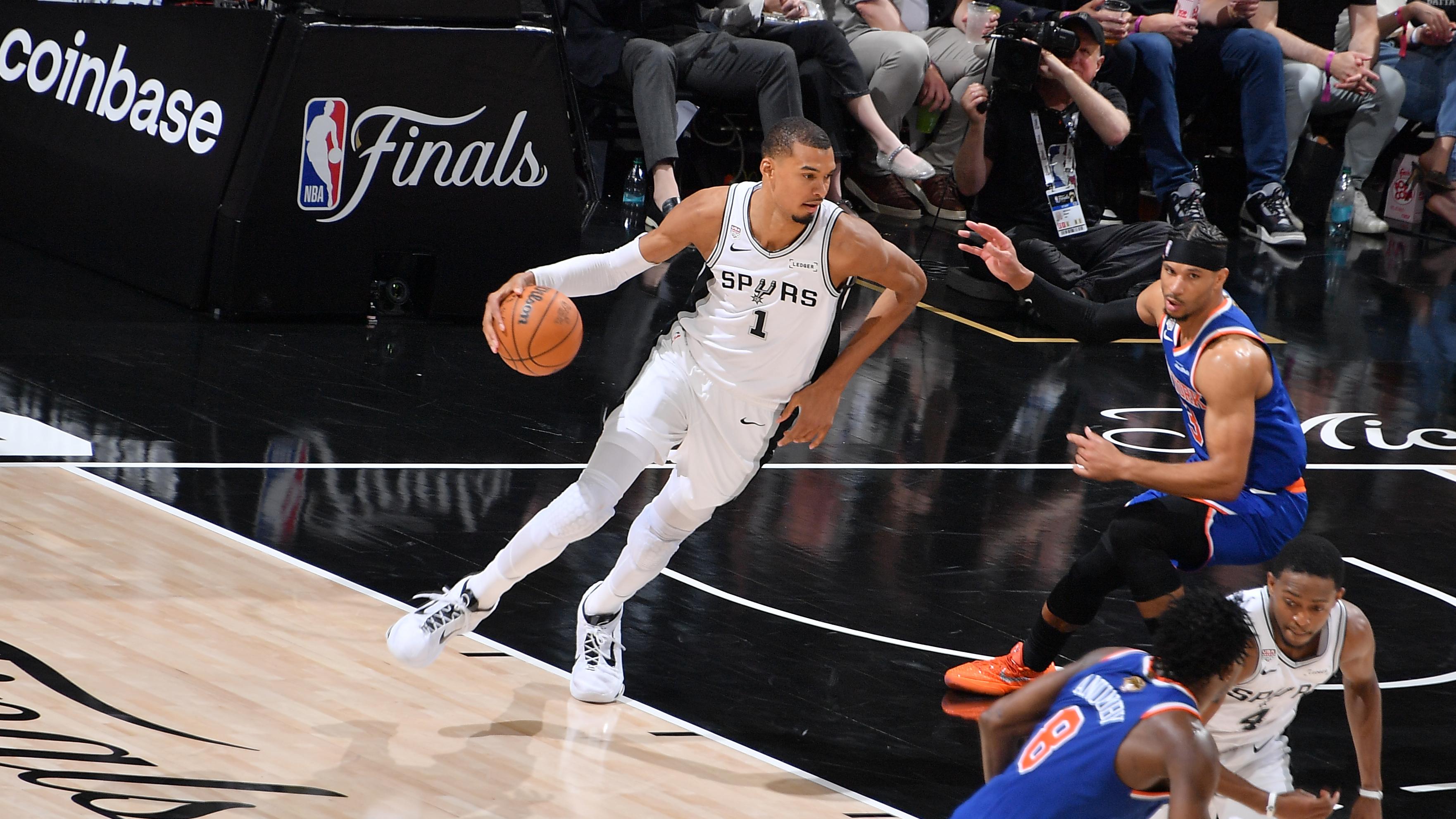
In the broader context of the series, Game 2 will likely stand as a pivotal narrative pivot point. It reinforced the reality that, in the rarefied air of the NBA Finals, success is rarely found in the spectacular; it is found in the persistent, intelligent application of a game plan under the most extreme scrutiny. As the series moves forward, both teams are now acutely aware of the thin margins that separate victory from defeat. The lessons of June 5th—the necessity of defensive discipline, the importance of composure under pressure, and the courage to take the final shot—have been etched into the consciousness of every player on the floor, setting the stage for an even more intense confrontation in the games to come.
Ultimately, this encounter was a reminder of why we engage with sports at such a deep, visceral level. It is the drama of the "what if," the beauty of the well-executed plan, and the raw humanity of a game decided by a single point. It is a story of two organizations, each at a different stage of their evolution, clashing in the pursuit of the sport’s ultimate prize. As the dust settles on this intense battle, the fans are left with the anticipation of what comes next, knowing that when two teams of this caliber meet, the game on the floor is only half of the story. The rest is written in the hearts of the players, the adjustments of the coaches, and the unfolding, unpredictable history of the 2026 Finals.