Estadio Guadalajara — The landscape of modern international football is a stage where nations do not merely compete for trophies; they contend for the weight of national pride, and few matches capture the collision of tactical discipline and sheer, unadulterated willpower like the recent showdown between the Republic of Korea and the Czech Republic. On June 11, 2026, within the vibrant, architectural embrace of the Estadio Guadalajara in Zapopan, these two sides delivered a performance that served as an opening manifesto for their 2026 FIFA World Cup campaigns. It was a contest that transcended the simple arithmetic of the final scoreline, evolving into a narrative of resilience, adaptation, and the relentless pursuit of victory on the world’s most demanding stage.
The match began as a cautious exploration of intent, characterized by the distinct tactical philosophies of both squads. The Czech Republic, renowned for their rugged, direct style of play, sought to turn the contest into a physical battle of attrition. Their approach was predicated on discipline and set-piece mastery, an attempt to compress the space and stifle the technical fluidity that has become the hallmark of the South Korean national team. For the first forty-five minutes, the strategy appeared to be working. The Czech side operated with a clinical, disciplined defensive structure that frustrated the Korean midfield, effectively keeping the match in a tactical stalemate that tested the patience of both the players and the tens of thousands of spectators watching from the stands.

Related article - Uphorial Shopify

As the second half unfolded, the equilibrium was shattered in the 59th minute. It was a moment of traditional Czech footballing excellence: a long, perfectly weighted throw-in from Vladimír Coufal found Ladislav Krejčí, whose header was executed with the kind of precision that underscores why the Czech Republic remains a perennial threat in tournament play. The goal acted as a catalyst, shifting the atmosphere of the stadium and forcing South Korea to navigate the psychological burden of being behind in a high-stakes opening match. It was the moment that defined the middle phase of the game—the point where a team’s identity is most clearly revealed by how it responds to adversity.South Korea’s reaction was not one of panic, but of tactical maturation. Recognizing that the game was slipping away, the team intensified their circulation of the ball, increasing the tempo of their attacks and widening the pitch to isolate the Czech defenders. The equalizer arrived in the 67th minute, and it was a masterpiece of individual execution and team movement. Hwang In-beom, demonstrating the composure that has made him a vital cog in the Korean setup, received the ball with space outside the box. With a flick of his right boot, he curled a precise, unstoppable shot into the far corner, a goal that was as much a triumph of technique as it was a statement of intent. The stadium erupted, the roar reflecting a shift in momentum that was as palpable as it was sudden.
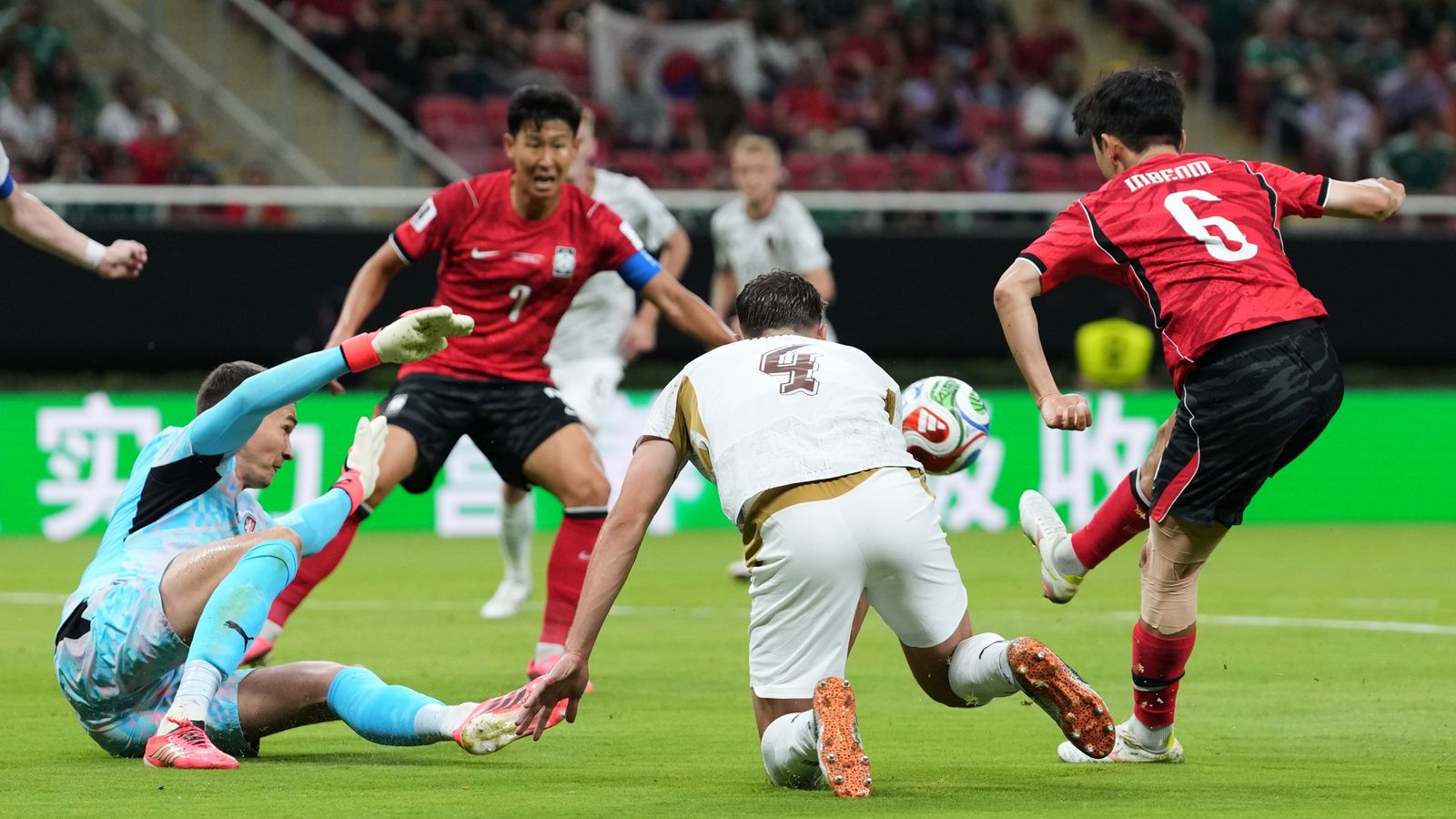
The final act of the match was a relentless push for superiority, with both teams refusing to settle for the parity that the scoreline suggested. South Korea, buoyed by the equalizer and the backing of their vocal support, dominated the closing passages of play, their movement becoming increasingly fluid and dangerous. The decisive moment came in the 80th minute, serving as the perfect culmination of their second-half resurgence. Oh Hyeon-gyu, introduced as a substitute, became the hero of the evening, perfectly timing a run to meet a low, penetrating cross from Hwang In-beom. His finish was clinical, a definitive strike that secured a 2-1 victory and sent the Estadio Guadalajara into a frenzy.The implications of this result are profound, setting a tone for a Group A that is shaping up to be one of the most competitive in the tournament. For South Korea, the victory is a vindication of their tactical evolution—a sign that they possess not only the technical skill to compete with European opposition but also the mental fortitude to orchestrate a comeback on the global stage. For the Czech Republic, the match serves as a brutal lesson in the margins of professional football, where a few moments of lapses in concentration can undo a match of otherwise disciplined excellence.
As the dust settles in Zapopan, the narrative arc of this match offers a glimpse into what we can expect from the remainder of the 2026 World Cup. It was a victory that celebrated the beauty of the sport—the transition from the rigid tactical battles of the first half to the high-stakes, fluid drama of the final twenty minutes. The players who took the pitch at the Estadio Guadalajara did more than chase a ball; they participated in a transformative moment for their respective footballing cultures, ensuring that the legacy of this World Cup will be written by those who possess the courage to play until the final whistle. As South Korea looks ahead to a high-profile collision with Mexico on June 18, and the Czech Republic prepares for a must-win engagement against South Africa on that same day, the memory of this intense, hard-fought match will serve as the foundation upon which their tournament aspirations are built. It was, in every sense, a match that captured the soul of the beautiful game.