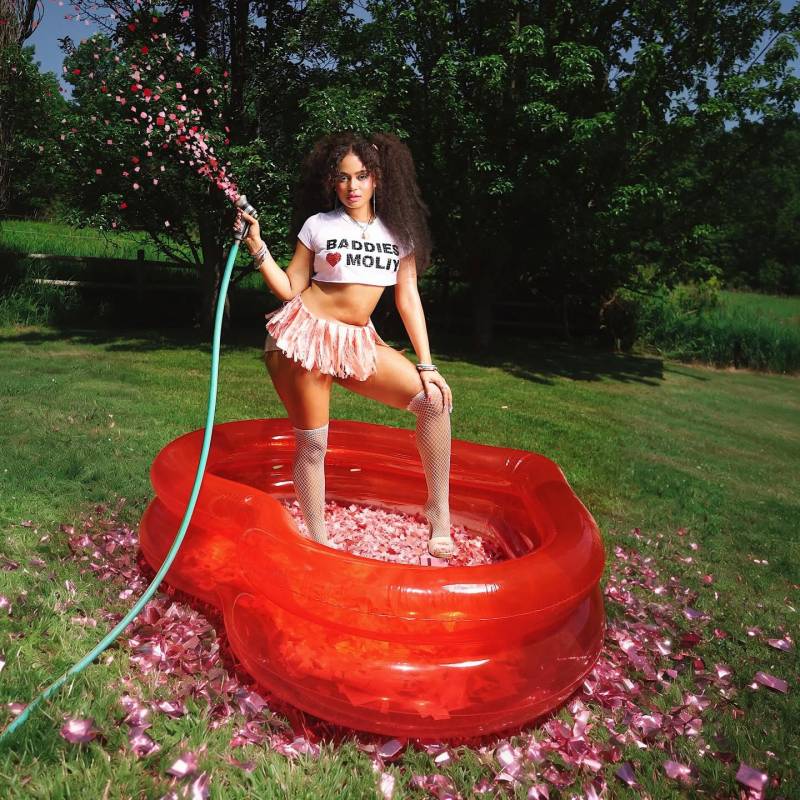
LONDON — The arrival of Little Simz’s latest musical offering, the "Sugar Girl" EP, marks a definitive pivot in the trajectory of one of Britain’s most vital artistic voices. Released on Friday, 8 May 2026, the four-track project serves as a masterclass in creative liberation, signaling a sharp departure from the deeply introspective and narrative-driven themes that defined her 2025 masterpiece, "Lotus." In an industry that often demands consistency to a fault, Simz has instead chosen the path of radical evolution. This EP is not merely a collection of songs but a strategic reconfiguration of her sonic identity, moving away from the orchestral grandiosity of her past work toward a gritty, club-inspired, and fiercely experimental landscape. It is a bold statement of intent that prioritizes the visceral over the analytical, proving that her artistry is as much about the pulse of the dancefloor as it is about the poetry of the soul.
To achieve this transformation, Simz has masterfully curated her collaborators, reuniting with producer Jakwob to recapture the electronic edge they first explored on the "Drop 7" EP. This partnership provides the skeletal framework for a sound that is both skeletal and overwhelming. The project opens with "That's a No No," a track that functions as a jarring initiation into this new era. Utilizing "rage-style" production and heavy Auto-Tune modulations, Simz manipulates her greatest tool—her voice—until it becomes an instrument of pure texture. By leaning into these experimental techniques, she demonstrates an intelligent understanding of contemporary sonic trends while simultaneously subverting them, framing her transition not as a trend-chasing move, but as a deliberate expansion of her creative vocabulary.
The rhythmic core of the "Sugar Girl" EP finds its most potent expression in the track "Open Arms," a song that serves as a sophisticated bridge between the digital future and the percussive history of the African diaspora. Featuring the sharp, evocative presence of British Nigerian artist DEELA, the track is a masterclass in "Afro-tech" fusion. It moves with a deliberate, driving intensity, trading the traditional melodic structures of Simz’s earlier work for a complex tapestry of heavy percussion and atmospheric synth layers. In the context of the EP’s broader "sonic shift," "Open Arms" acts as a cultural anchor, demonstrating that Simz’s foray into club-inspired experimentation is deeply rooted in an intelligent understanding of rhythmic storytelling and heritage.

The collaboration with DEELA is particularly strategic, as both artists share a cultural shorthand that allows the track to feel both globally accessible and intimately specific. The production doesn't just invite the listener to the dancefloor; it demands a visceral, physical response, using the repetition of the beat to create a sense of communal trance. By framing this track as a central pillar of the project, Simz elevates the "Sugar Girl" narrative from a simple genre exercise into a transformational exploration of identity. "Open Arms" is not just a song to be heard; it is a percussive environment to be inhabited, showcasing Simz’s ability to curate sounds that are as emotionally precise as they are technically daring.

The EP’s brilliance lies in its cultural fluency, seamlessly weaving together disparate threads of the global diaspora. Nowhere is this more evident than on "Game On," a high-energy collaboration with JT of the City Girls. The track, which gained legendary status following a surprise debut during Simz’s Coachella set earlier this year, serves as a bridge between London’s lyrical precision and Miami’s unapologetic bravado. Following this, the project dives deeper into rhythmic exploration with "Open Arms," featuring British-Nigerian artist DEELA. This track is an "Afro-tech" excursion that pulses with heavy percussion, honoring Simz’s heritage while pushing it into a futuristic, digital space. It is a moment of profound cultural synthesis, showing a deep respect for the roots of the sound while fearlessly reimagining its branches.
As the project reaches its conclusion, the emotional precision of Simz’s storytelling takes a turn toward the ethereal. "Telephone," featuring 070 Shake, closes the EP with a dreamy, alt-rock-influenced atmosphere. The inclusion of stadium-ready guitar passages provides a grand, cinematic exit that contrasts sharply with the claustrophobic energy of the opening tracks. This strategic pacing ensures that while the EP is experimental, it remains a cohesive journey. By framing the project as a "sonic playground," Simz allows herself the grace to fail, to iterate, and ultimately to transcend the expectations placed upon her as a "conscious" rapper. It is a transformational move that positions her not just as a musician, but as a cultural curator capable of navigating any genre she touches.
Ultimately, "Sugar Girl" is the sound of an artist reclaiming her right to be unpredictable. As she prepares for a massive 2026 summer festival circuit—including headlining slots at Primavera Sound, Roskilde, and Lollapalooza Chicago—this EP provides the perfect high-octane ammunition for the world's biggest stages. Little Simz has proven once again that the most powerful story an artist can tell is the one where they refuse to stay in the box built for them. Through this work, she has invited her audience to stop thinking and start feeling, turning the club into a sanctuary for self-discovery and cementing her status as a pioneer of the modern avant-garde.