ITALY - In a specialized study presented by the National Gallery, art historian Melissa Baksh has provided a deep-dive analysis into Lorenzo Lotto’s 16th-century masterpiece, Portrait of a Woman inspired by Lucretia. The painting, an oil-on-canvas work from roughly 1533, is being hailed as a radical departure from the gendered portraiture norms of the High Renaissance. According to Baksh, the work serves as a manifesto of feminine agency, utilizing complex symbolism to challenge the traditional "male gaze" that dominated the era’s artistic production.
The most striking element of the portrait is the sitter’s confrontational posture. Unlike typical Renaissance depictions of women—which often emphasized modesty through downward-cast eyes and passive poses—this unidentified woman meets the viewer with a direct, steady gaze. Her "arms akimbo" stance, with one hand placed firmly on her hip, was a body language convention historically reserved for male subjects to denote authority, control, and social boldness. By adopting this masculine posture, the sitter asserts a level of self-assurance that Baksh argues was revolutionary for a female subject in 1530s Venice.
The painting’s intellectual core lies in its reference to the Roman heroine Lucretia, who famously committed suicide to preserve her honor after being raped. The sitter holds a drawing of the heroine, but technical analysis has revealed a significant shift in the painting’s creation. X-rays show that the drawing was originally a colorful, feminine-styled sketch that Lotto later modified into a monochrome work defined by sharp, "masculine" line work. Baksh suggests this change mirrors the sitter’s own identity—a woman choosing to align herself with the moral integrity of a historical martyr while signaling her intent to "survive and thrive" rather than meet a tragic end. Her unconventional jewelry placement further underscores this alliance, framing her virtue as a source of strength rather than a catalyst for victimhood.

Related article - Uphorial Shopify
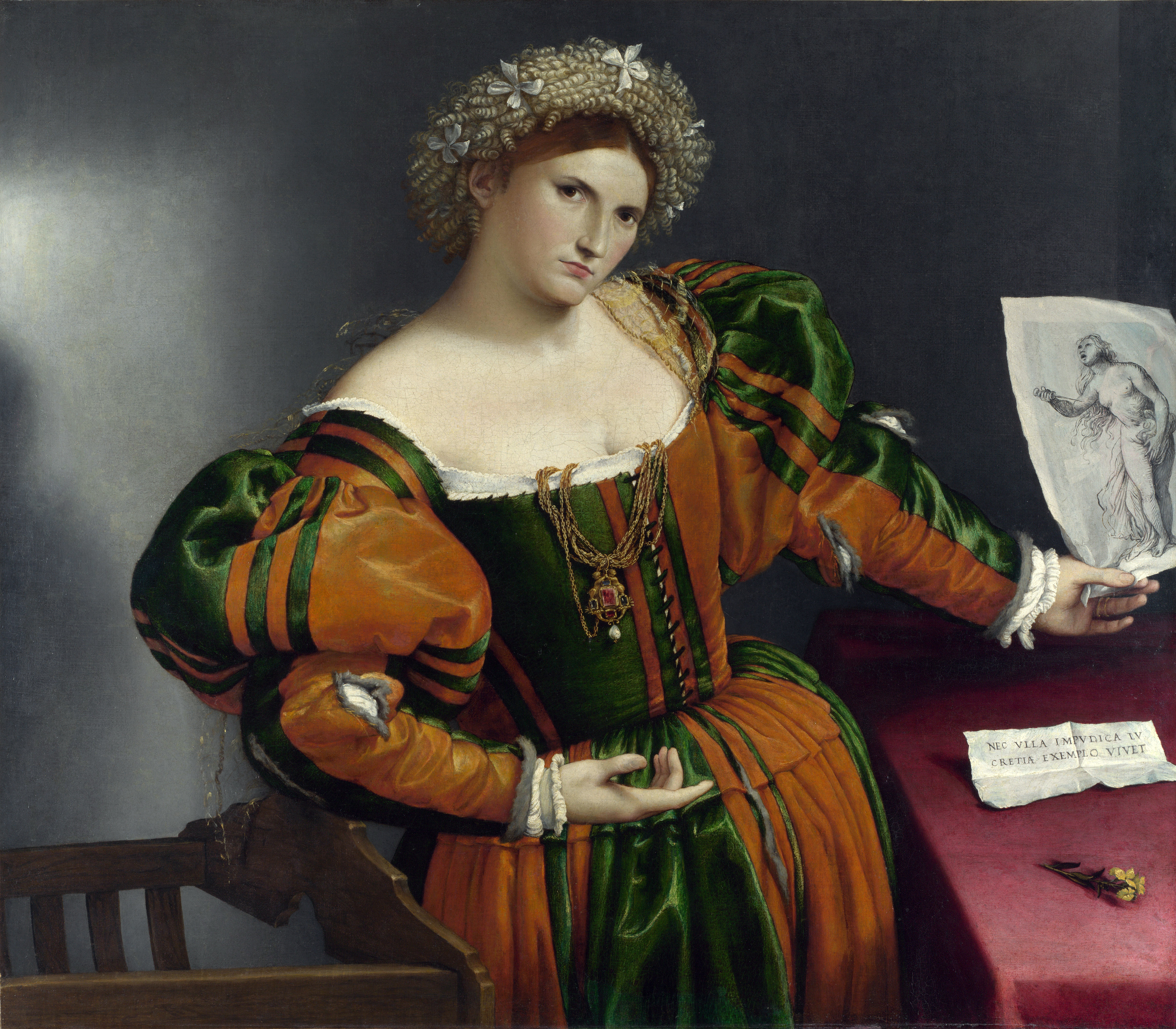
The setting of the portrait adds another layer of narrative complexity. The woman is positioned in a cramped, contrived space that contrasts sharply with her opulent green and orange dress. Beside her sits a plain, unadorned chair—a choice Baksh identifies as a symbol of intellectual prowess and "sober" character. By placing a sumptuously dressed woman in such a minimalist, humble interior, Lotto shifts the focus away from mere displays of wealth toward the sitter’s psychological depth and independent spirit.
Ultimately, Portrait of a Woman inspired by Lucretia is presented not just as a likeness, but as a sophisticated construction of identity. By blending feminine elegance with masculine structural cues, Lotto created a portrait of a woman who defies the binary gender norms of her time. The result is a timeless assertion of a complex, virtuous, and bold identity that continues to resonate with modern audiences nearly five centuries later.