An extraordinary convergence of financial maneuvering, regulatory scrutiny, and corporate capital reallocation marked a pivotal week across the global technology landscape. From Wall Street boardrooms to federal courtrooms, the sheer scale of modern artificial intelligence infrastructure and its collateral effects took center stage, establishing unprecedented benchmarks for corporate debt, public listings, and enterprise governance.
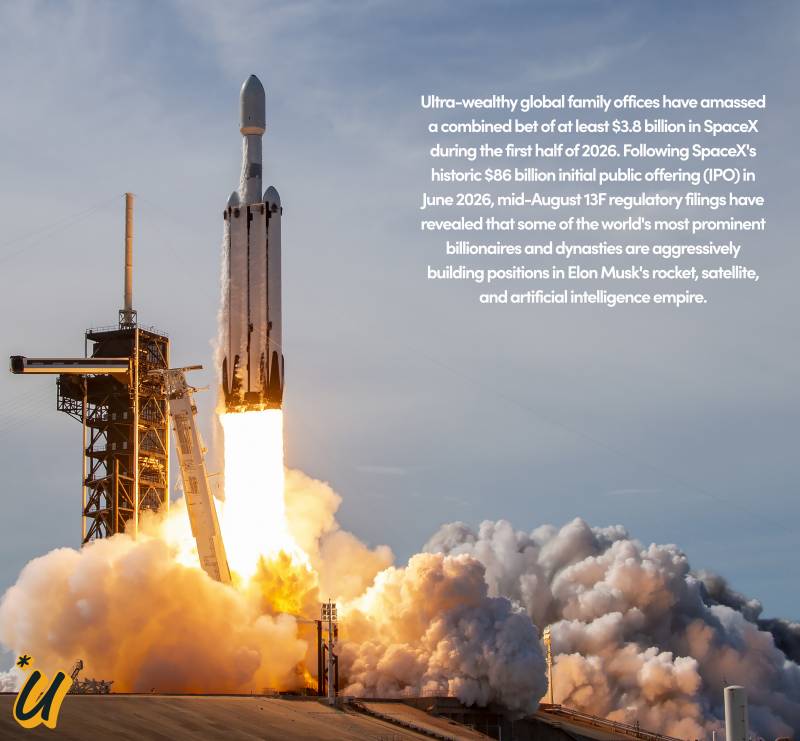
At the heart of the week’s record-setting momentum, artificial intelligence lab Anthropic initiated preparations for a blockbuster initial public offering (IPO) that aims to match or exceed SpaceX's historic $75 billion listing. As executive briefings and investor meetings get underway, Anthropic has simultaneously moved to address growing enterprise security demands. The company announced a significant update to its data retention policies, granting corporate clients fine-grained control over how and where their proprietary information is stored—a critical maneuver aimed at solidifying institutional trust ahead of its public debut.
Concurrently, the astronomical capital requirements driving the hardware race were underscored by semiconductor giant Broadcom. Broadcom is in advanced negotiations to raise over $60 billion in debt via a specialized, complex special-purpose vehicle (SPV). Designed specifically to fund large-scale AI infrastructure buildouts and accelerate chip procurement, the debt arrangement underscores the creative engineering required by corporate balance sheets to sustain the current pace of compute deployment.

While balance sheets expanded to accommodate AI growth, social media giant Meta spent the week confronting stark legal realities in federal court. The opening week of a landmark trial concluded in California, where 29 state attorneys general have accused Meta of knowingly deploying addictive product features that harm children while misleading the public about platform safety. Court filings revealed that Meta is facing a theoretical worst-case exposure of up to $1.4 trillion in cumulative statutory penalties, though legal scholars emphasize that any final monetary remedy, should liability be established, would likely land well below that baseline calculation.
Farther east, semiconductor heavyweights in Asia signaled a shift toward capital discipline and shareholder prioritization. Samsung Electronics announced a massive $80 billion shareholder return framework—marking the largest capital return program in South Korean corporate history. The decision mirrors similar capital allocation measures recently deployed by domestic rival SK Hynix, as memory manufacturers balance heavy ongoing capital expenditures with direct equity value creation.
Early-stage venture activity also showed strong activity around domain-specific applications. Venture capital firm Khosla Ventures co-led a seed round for Discovery Loop, a newly emerged startup co-founded by former Google research scientists, including renowned computer scientist Jeff Dean. Discovery Loop focuses on deploying autonomous AI agents to drive automated scientific experimentation and discovery, reflecting growing investor conviction in AI systems tailored for complex laboratory research.
Closing out the week, equity markets turned their attention to chipmaker Nvidia ahead of its forthcoming second-quarter earnings disclosure. Traders and supply chain analysts are closely monitoring the release for signals regarding the production ramp of Nvidia's next-generation Vera Rubin architecture, alongside updates on revenue recovery trajectories within key international segments like China. With multi-billion-dollar infrastructure bets hanging in the balance, market participants view the upcoming report as the definitive barometer for the broader technology sector's momentum.