Houston, Texas - A session marked by sweeping geopolitical shifts and radical technological pivots, Bloomberg Technology hosts Caroline Hyde and Ed Ludlow detailed a market landscape caught between the relief of diplomatic de-escalation and the aggressive expansion of the artificial intelligence frontier. The financial world witnessed a rare moment of "market whiplash" as the volatility of Middle Eastern diplomacy dictated the pace of global trading, while industry titans like Elon Musk and Apple’s executive board signaled a new era of structural transformation.

The primary catalyst for the day’s market rally was an unexpected surge in diplomatic optimism. Reports surfacing of President Trump outlining specific talks aimed at ending the war in Iran triggered an immediate and profound reaction across global exchanges. The prospect of de-escalation sent the Brent crude contract into a sharp record move, with prices tumbling below $96 per barrel. This retreat in energy costs provided the oxygen needed for a tech-heavy recovery; the NASDAQ 100 subsequently enjoyed its strongest performance since February. Chip stocks, in particular, saw significant outperformance, shaking off recent geopolitical jitters as investors pivoted back toward growth and innovation.
As the markets digested the news of cooling tensions abroad, Elon Musk unveiled a manufacturing strategy that threatens to upend the traditional semiconductor supply chain. Under the banner of the "TerraFab" plan, Musk announced that Tesla and SpaceX would join forces to manufacture proprietary chips at a sprawling facility in Austin, Texas. This initiative is designed to solve the compounding demand for high-performance silicon required for robotics, advanced AI, and the burgeoning field of space-based data centers.
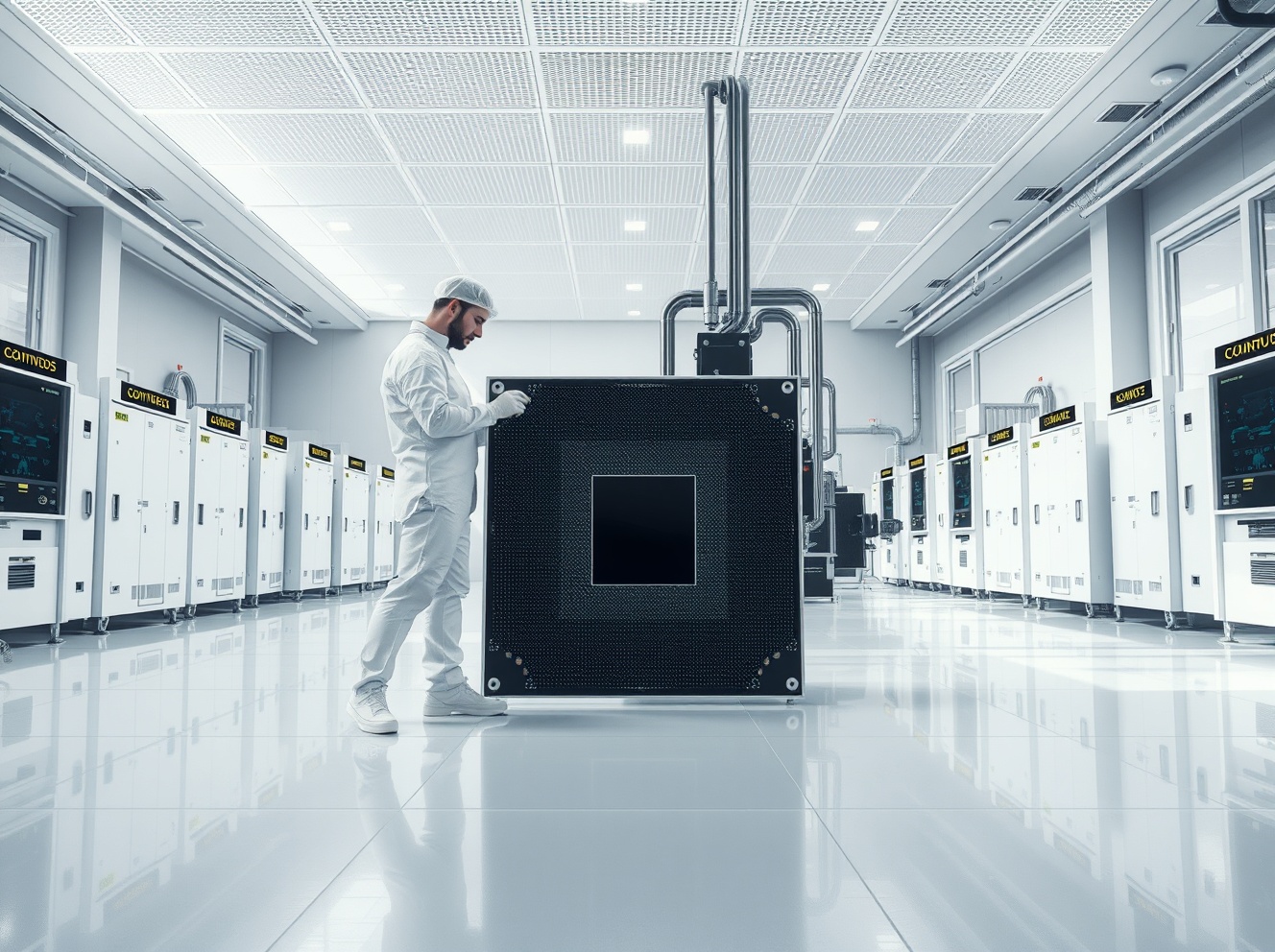
What sets Musk’s TerraFab apart is its departure from industry norms. Traditionally, chip production is a fragmented process involving separate entities for logic design, memory manufacturing, and final packaging. Musk’s vision seeks to consolidate this entire lifecycle under one roof—a vertically integrated approach rarely seen in the semiconductor space. This infrastructure is not merely for terrestrial use; the chips are central to SpaceX’s ambitions to launch orbital data centers. These celestial servers, intended to be transported by Starship and powered by massive solar arrays, represent a new frontier in data processing and connectivity.
The momentum in AI infrastructure is not limited to American soil. In Europe, NScale has solidified its position as a dominant force, achieving a valuation of $14.6 billion to become one of the continent's most valuable startups. In a move to fortify its leadership as it scales its AI data center footprint, the company announced the high-profile additions of Sheryl Sandberg and Nick Clegg to its board. The recruitment of such seasoned Silicon Valley veterans underscores the global race to build out the physical hardware necessary to support the next generation of generative AI applications.
Inside the corporate boardrooms of the industry's established giants, the winds of change are blowing just as fiercely. At Apple, the long-standing question of leadership succession is gaining clarity. John Ternus, currently the Senior Vice President of Hardware Engineering, has emerged as the leading internal candidate to eventually succeed Tim Cook. Ternus’s rise comes at a pivotal moment as Apple continues to navigate the complex integration of hardware and AI. Simultaneously, Synopsis is facing external pressure from Elliott Management. The activist investor has taken a significant stake in the company, intending to push for structural changes to ensure Synopsis can better capitalize on the current "AI frenzy" and the shifting needs of chip designers.
The day’s analysis concluded with a sobering look at the risks inherent in this rapid technological evolution. Kato Networks CEO Shlomo Kramer joined the program to discuss the AI transformation of the global threat landscape. Kramer emphasized that while AI offers immense productivity gains, it has simultaneously empowered bad actors, making robust cybersecurity a non-negotiable prerequisite for any enterprise looking to adopt AI. As the session closed, the overarching theme was clear: while diplomacy may provide temporary market stability, the relentless pace of AI innovation and the radical restructuring of hardware manufacturing remain the true long-term drivers of the global economy.