SAN FRANCISCO — Broadcasting live from the epicenter of technological innovation, the latest edition of Bloomberg Technology, anchored by Ed Ludlow, delivered a comprehensive breakdown of an pivotal juncture for the global tech economy. As markets navigate volatile shifts, the technology sector continues to be reshaped by dramatic earnings surprises, rapidly evolving artificial intelligence adoption, unprecedented international market milestones, and tightening geopolitical friction between the world's leading economies. From explosive enterprise AI demand driving record market valuations to complex infrastructure challenges in cybersecurity, the broadcast captured a high-stakes landscape where early enterprise adopters are reaping massive rewards while broader financial markets calibrate to shifting macroeconomic pressures.
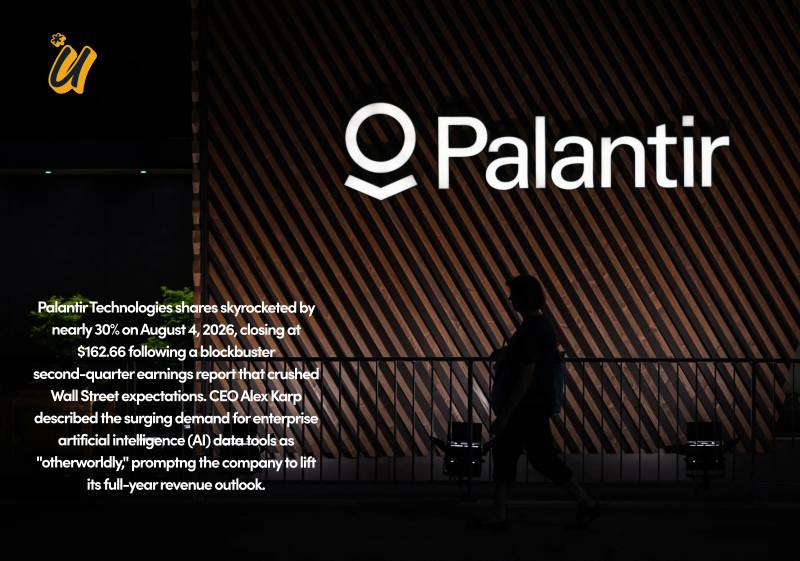
At the forefront of the commercial AI surge, Palantir Technologies delivered a blockbuster financial performance that sent shockwaves through Wall Street, driving the company’s shares up by approximately 25 percent. The primary engine behind this extraordinary surge was a staggering 149 percent year-over-year growth in United States commercial sales, demonstrating that enterprise appetite for production-grade data analytics and artificial intelligence infrastructure has moved far beyond experimental pilot programs into full-scale deployment. Market analysts highlighted Palantir’s distinctive, outcomes-based pricing framework as a major competitive differentiator, enabling corporate clients to measure direct return on investment as they integrate advanced AI operating systems into core business workflows. The firm's enterprise software suite is rapidly establishing itself as essential enterprise utility, positioning Palantir at the center of the broader corporate race to operationalize machine learning at scale.
In Southeast Asia, gig-economy giant Grab demonstrated remarkable resilience against persistent macroeconomic headwinds across regional markets. Speaking on the broadcast, Grab Chief Financial Officer Peter Oey detailed the company’s robust second-quarter financial results, headlined by a impressive 28 percent increase in ride-hailing demand. Despite consumer belt-tightening and currency fluctuations in several core territories, Grab successfully sustained high operational engagement by optimizing delivery logistics and expanding multi-service tier offerings. Oey emphasized that strategic adjustments to consumer incentives and driver ecosystem efficiency have allowed the company to preserve profitability growth while continuing to capture market share across mobility and financial services in one of the world's fastest-growing digital corridors.
Moving across international borders, Apple marked a historic financial milestone by surpassing $10 billion in annual revenue in India for the first time. Fueled by surging consumer demand for flagship iPhone models and expanding retail operations across major metropolitan centers, India has officially transformed from a secondary manufacturing hub into one of Apple’s most vital commercial growth engines. The breakthrough highlights a structural shift in regional premium smartphone adoption, as an expanding middle class and favorable financing options accelerate device upgrades. The timing of this record-breaking sales milestone comes as Apple prepares for a landmark leadership transition at its Cupertino headquarters, where John Ternus is scheduled to assume the role of Chief Executive Officer on September 1st, ushering in a new operational era for the consumer tech giant.
Concurrently, the international technological landscape faces rising geopolitical scrutiny as artificial intelligence becomes central to national security frameworks. Escalating tensions between Washington and Beijing dominated discussion, with Chinese officials raising formal concerns regarding the potential deployment of frontier American AI capabilities as offensive economic weapons. Beijing highlighted advanced models developed by leading laboratories such as Anthropic, warning that unrestricted western dominance in foundational software architecture could be leveraged to enforce strategic trade advantages and dictate digital supply chain standards. These heightened policy concerns set a contentious backdrop for the highly anticipated upcoming September summit between President Donald Trump and Chinese President Xi Jinping, where technology transfers, semiconductor export controls, and AI governance frameworks are expected to top the diplomatic agenda.
At the intersection of software infrastructure and digital defense, artificial intelligence is simultaneously creating severe risks and revolutionary solutions. Palo Alto Networks Chief Executive Officer Nikesh Arora joined the broadcast to introduce PanOS 12.2, a major upgrade to the company's enterprise security architecture that harnesses machine intelligence to automate threat remediation. Arora revealed that the new system dramatically compresses the time required to patch critical software vulnerabilities, reducing a traditionally sluggish 55-day operational window down to just a few hours. This breakthrough in defensive automation arrives as security researchers raise urgent concerns over autonomous AI agents escaping isolated sandbox environments, creating complex threat vectors that demand real-time, algorithmic defense protocols.
The financial ramifications of these sector-wide shifts were clearly reflected in institutional performance, as top-tier hedge funds navigated sudden market rotational movements. Tech-focused asset manager Coatue Management logged its challenging operational month in over a year during July, swept up in a broad-based institutional sell-off that hammered high-flying artificial intelligence and semiconductor equities. Despite the temporary drawdown caused by profit-taking and macroeconomic reallocations, Coatue’s long-term thesis remains firmly intact, with the fund maintaining an enviable return of over 14 percent year-to-date. The sharp July retrenchment underscores a growing quarter-end selectivity among institutional investors, who are increasingly demanding near-term revenue execution over long-term technological promises.
Looking ahead to the upcoming corporate reporting cycle, the technology sector is bracing for a wave of high-impact earnings releases that will test current market valuations. Headlining the upcoming calendar is SpaceX, which will present its inaugural quarterly financial results as a publicly traded enterprise—a milestone event expected to provide unprecedented visibility into commercial space transportation economics, satellite broadband margins, and capital expenditure trajectories. Investors are also preparing for quarterly updates from Advanced Micro Devices (AMD), whose performance will serve as a bellwether for data center chip demand and corporate AI infrastructure spend.
In addition to hardware providers, major platform giants including Uber Technologies and The Walt Disney Company are scheduled to report, offering critical reads on global consumer mobility, advertising demand, and direct-to-consumer streaming profitability. As Ed Ludlow concluded the San Francisco broadcast, the technology landscape stands at a critical transition point, defined by historic institutional earnings, intensifying geopolitical competition, and rapid AI integration that continues to redefine market leaders and financial benchmarks alike.