SOUTH LONDON — The contemporary art world often feels cluttered with the ephemeral and the performative, yet in the quiet, tactile geometry of the South London Gallery, the British-Nigerian artist Ranti Bam has carved out a sanctuary that demands something different from its observers. Her inaugural solo institutional exhibition, Sacred Groves, is not merely a collection of ceramic works; it is a meticulously choreographed ritual of return. For Bam, art is not a separate discipline practiced in a vacuum; it is a way of living, a continuous unfolding of the self that mirrors the very materials she shapes with her hands. It is a transformational framing of the artist’s role: moving away from the creator as an ego-driven producer and toward the creator as a conduit for a more ancient, collective consciousness.
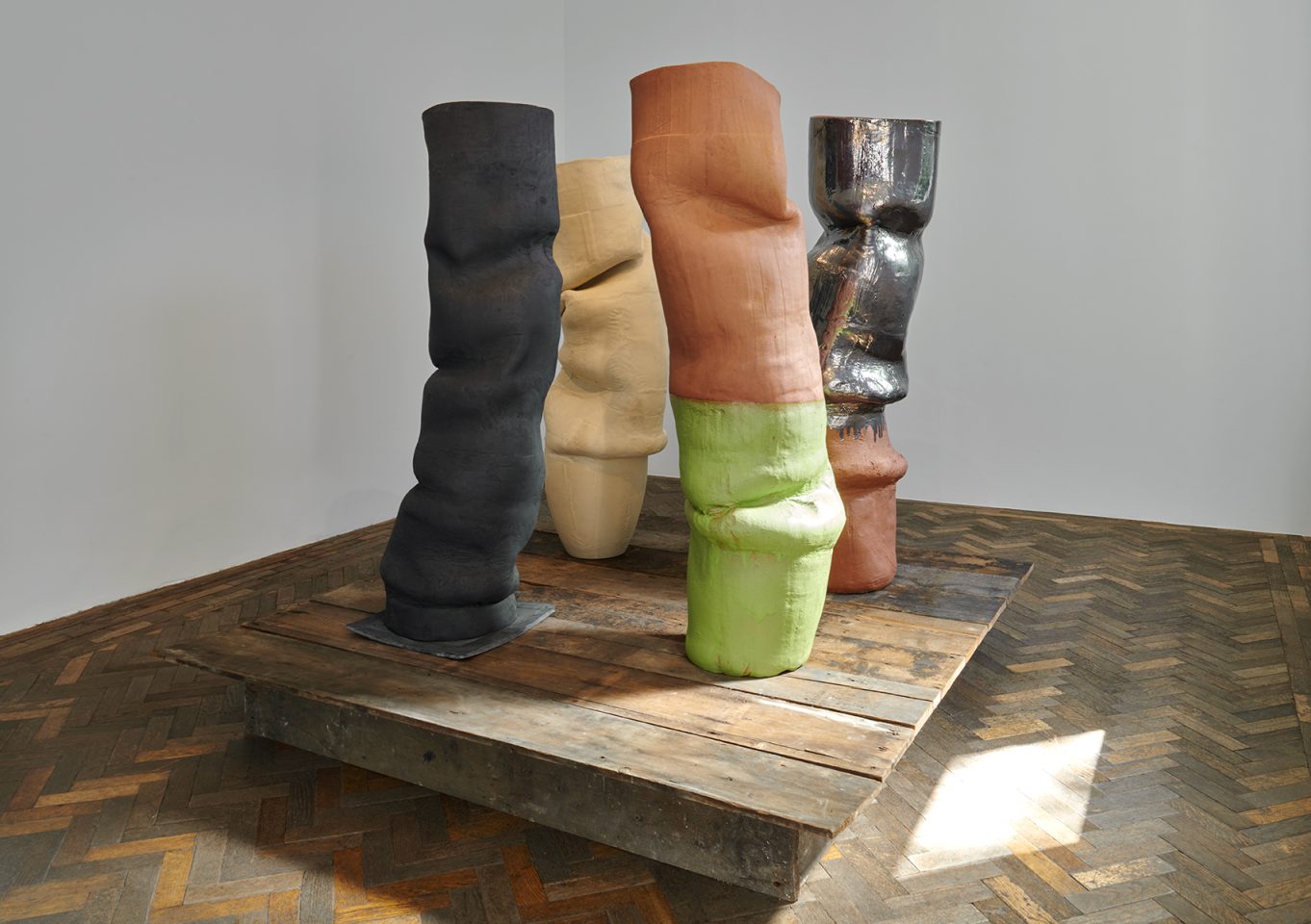
At the center of this practice is clay—a material Bam treats with the reverence one might reserve for a primordial witness. In her hands, clay is not just a medium, but a vessel for ancient history and infinite potential. She approaches it as a primal force, the same earth from which human myths are forged and to which all living things eventually return. By anchoring her work in this substance, she bridges the gap between the geological time of the planet and the fleeting temporality of the human experience. There is a profound intellectual curation at play here; by choosing to work primarily in clay, Bam bypasses the shiny, disposable nature of much contemporary sculpture, opting instead for a medium that carries the literal weight of history.
The exhibition itself is structured as a series of distinct groves, a metaphorical geography that guides the visitor through a psychological and spiritual itinerary. Upon entering, one is met with the room of Earth/Origin, where the clay remains in its raw, drying state—a fragile, unformed potentiality that invites us to sit with the beginning of things. This initial space is a masterclass in emotional precision; it demands that the viewer stop, slow their breathing, and acknowledge the vulnerability inherent in any beginning. From there, the journey moves into the transformative heat of Fire, where the works have undergone a permanent, searing metamorphosis. This progression toward Expression, an upstairs gallery defined by outward-facing, vibrant color, represents the kinetic energy of life in full bloom. Finally, the Unfolding projection room serves as the exhibition’s spiritual anchor, a space where the noise of the outside world is muted, and viewers are encouraged to sit with the earth to feel truly, deeply replenished.
Related article - Uphorial Shopify
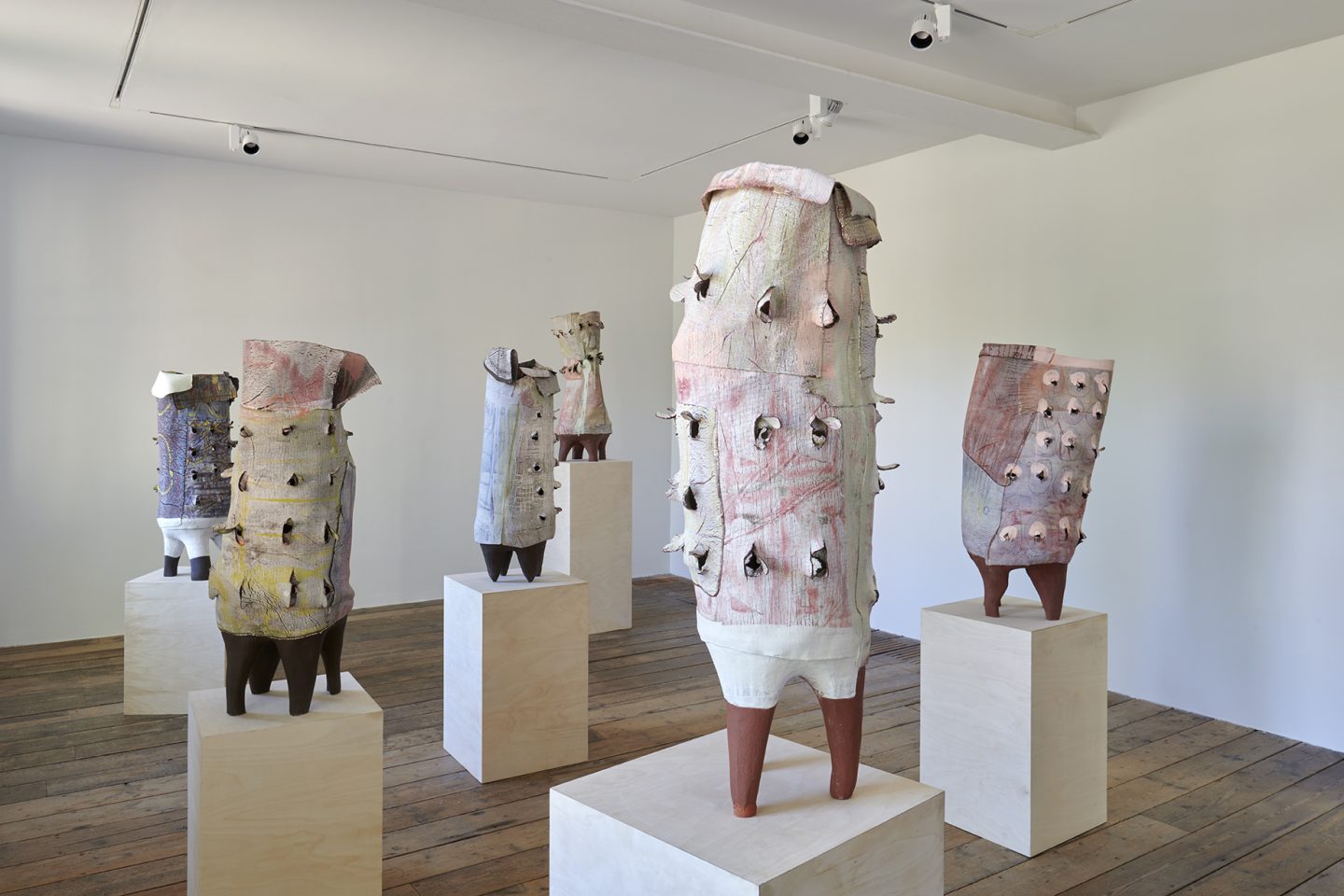
Bam’s creative vocabulary is heavily informed by her formative experiences in Oshogbo, Nigeria, and her engagement with the work of Suzanne Wenger. A "sacred grove," in Bam’s definition, is a consecrated space—a place where the boundaries between the mundane and the divine begin to dissolve. By bringing this philosophy to a gallery setting in London, she transforms the institutional space into a borderless, boundless environment. She is not asking the visitor to merely look at objects; she is inviting them into a space of integration. This reflects a deep cultural understanding: the realization that the sacred is not something found only in distant, ancient forests, but something that can be reconstructed through deliberate intention and community gathering.

One of the most radical components of Bam’s philosophy is her reclamation of the "primal feminine." She argues, with piercing clarity, that while contemporary society claims to celebrate vulnerability, it consistently denigrates it in practice, often equating soft edges with a lack of substance. Bam rejects this dichotomy. By centering the primal feminine, she posits vulnerability as a pathway to wholeness rather than a weakness. Her work becomes a site of resistance, where the act of making and the act of feeling are one and the same, and where the integration of these forces creates a new, fortified kind of strength. It is a strategic storytelling maneuver, one that forces the viewer to confront their own biases regarding what constitutes strength and stability in a high-pressure world.
The ultimate ambition of Sacred Groves is deceptively simple: to provide a respite. In an age of relentless digital saturation and societal fragmentation, Bam hopes that by stepping into her exhibition, visitors can shed the noise that dictates their daily lives and find a rare, profound sense of stillness and community. She creates a metaphorical architecture where the borders that separate us—those defined by culture, state of being, or temporality—begin to soften. The space is intentionally designed to be an antidote to the friction of modern existence. It is not an escape from reality, but a re-engagement with it—a chance to return to the earth, to the self, and to the quiet, resilient truth that persists beneath the clamor of the contemporary moment.
Ranti Bam’s work serves as a reminder that the most potent art does not necessarily shout; sometimes, it simply waits, silent and steady, like clay waiting to be formed. By inviting us to witness her own process of unfolding, she encourages us to do the same, leaving the gallery not just as viewers, but as participants in a quiet, collective search for the sacred. It is an exhibition that offers us a rare gift: the permission to be still, to be vulnerable, and to be whole. As the visitor moves through the groves, the realization sets in that the true installation is not the clay on the pedestal, but the internal shift that occurs within the spectator themselves. It is a testament to the fact that when we dissolve the boundaries between our inner and outer worlds, we find that we have been part of a sacred grove all along.