SAN FRANCISCO and NEW YORK — The global technology sector is undergoing a monumental transformation driven by an insatiable appetite for artificial intelligence infrastructure, reshaping everything from international financial markets to local community politics. In a comprehensive cross-coastal broadcast of Bloomberg Technology, hosts Ed Ludlow in San Francisco and Caroline Hyde in New York detailed a shifting landscape where semiconductor supremacy, aggressive AI software pricing, orbital manufacturing, and localized resistance to data infrastructure are converging to redefine the modern economy. At the heart of this shift is an unprecedented surge in demand for specialized memory chips, a critical bottleneck in the race to scale next-generation artificial intelligence hardware.
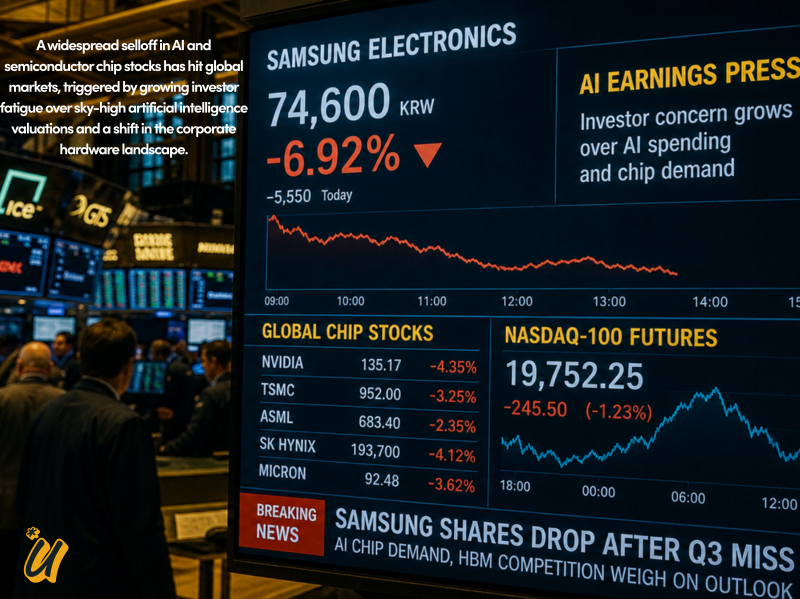
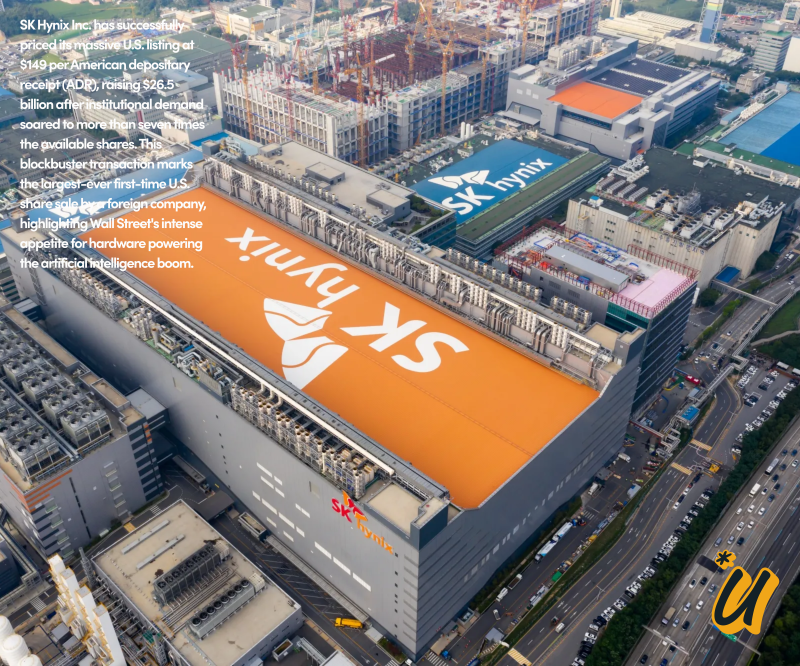
This demand has culminated in a historic financial milestone for South Korea's SK Hynix, a dominant force in the high-bandwidth memory market. The semiconductor giant is currently preparing for the largest-ever foreign first-time public share sale in the United States, pricing its American Depositary Receipts at $149. Wall Street's response to the offering highlights the intense investor frenzy surrounding AI hardware supply chains, as the deal has already become more than seven times oversubscribed. This immense investor appetite underscores a broader reality in the tech sector, where capital is aggressively chasing the physical components required to keep pacing with AI model development.
The domestic American manufacturing landscape is feeling an identical surge of capital. Micron Technology has dramatically accelerated its domestic expansion plans, increasing its total U.S. investment commitments to a staggering $250 billion, up from a previous target of $200 billion. This massive influx of capital is aimed at securing America's foothold in the AI infrastructure race, aiming to alleviate supply constraints for the memory systems that run alongside advanced logic processors. However, this aggressive expansion of physical infrastructure is creating a stark divergence on Wall Street. While hardware and chip stocks continue to ride a wave of historic valuations, traditional software giants are facing a period of intense scrutiny. The market is increasingly evaluating how the AI transition will affect legacy software providers like Microsoft and IBM, forcing investors to weigh the massive capital expenditures required for AI against the actual near-term monetization of these software tools.
As hardware makers scramble to build the foundation, the battle for software dominance is escalating with unprecedented aggression. Meta CEO Mark Zuckerberg recently escalated the AI arms race by unveiling the company's latest open-source AI model, introducing a significant twist: a new paid developer tier. By pricing this tier aggressively, Meta is aiming directly at the market share of established AI labs and Google’s Gemini ecosystem. This strategic move signals a transition from the initial technological discovery phase of AI to a brutal, price-sensitive commercial war designed to capture the developer ecosystems that will build the applications of tomorrow.
The technological frontier is also expanding beyond Earth's atmosphere, driven by the same demands for advanced manufacturing and capital. Delian Asparouhov of Founders Fund and Varda Space Industries recently highlighted the maturing state of the space economy, emphasizing that the next phase of industrial growth relies heavily on scaling launch capacity and perfecting reliable re-entry technology. These advancements are critical for orbital manufacturing, a nascent industry aiming to produce materials and pharmaceuticals in microgravity that are impossible to create on Earth. This bullish outlook on the space sector is further mirrored in public markets, where financial analysts like William Blair’s Louie DiPalma point to an incredibly positive trajectory for SpaceX following its own record-breaking initial public offering, cementing space infrastructure as a core pillar of the broader tech economy.
Yet, this rapid, capital-intensive expansion of technology is beginning to clash with geopolitical realities and local communities on the ground. Washington is showing a sharp bipartisan interest in the role of sovereign wealth funds, exploring how international state-backed capital can or should be leveraged to fund these multi-billion-dollar infrastructure projects. At the same time, the sheer physical footprint of the AI boom is triggering a growing grassroots political pushback across the United States. Local communities are increasingly organizing against the rapid construction of massive data centers, raising urgent alarms over the immense strain these facilities place on local power grids, water supplies, and regional resources. As the tech industry pushes deeper into the next decade, the ultimate challenge may not be the limitations of science or software, but navigating the real-world friction of politics, resource scarcity, and community consent.