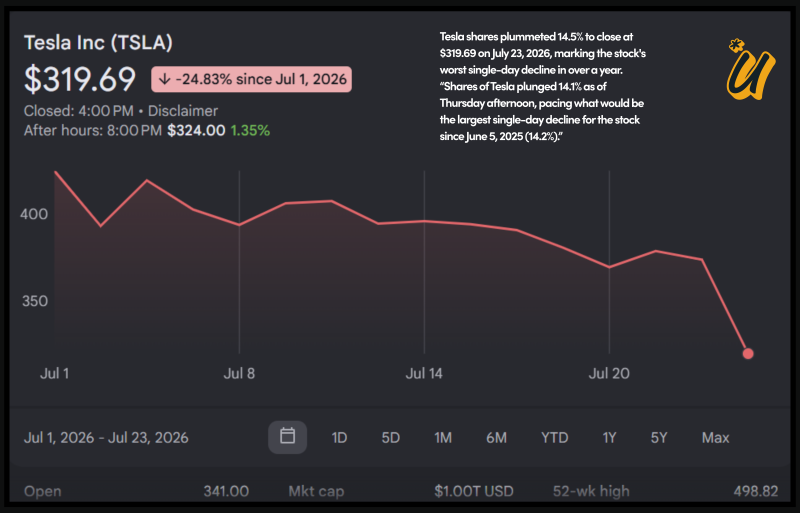
A shadow fell across global technology markets as a severe sell-off rippled through Wall Street, raising fundamental questions about the long-term sustainability of the massive artificial intelligence investment boom. Technology benchmark indices faced their sharpest headwinds in months, with the tech-heavy Nasdaq 100 sliding steadily toward correction territory and the Philadelphia Semiconductor Index, long regarded as the bellwether for the hardware backbone of digital transformation, officially dipping into a technical bear market. The market volatility underscores growing nervousness among institutional investors who are scrutinizing whether the trillions spent on computational hardware, sprawling data centers, and advanced algorithms will yield proportional financial returns before momentum flags.
Much of the immediate downward pressure focused squarely on the chip sector, where sentiment turned increasingly cautious amid emerging geopolitical and technological shifts. Beyond questions surrounding capital expenditure efficiency, markets reacted to tangible evidence of rapid competitive progress emerging from foreign rivals. China’s domestic semiconductor ecosystem has demonstrated accelerated breakthroughs in advanced lithography techniques, signaling that strict export controls may have inadvertently spurred domestic innovation. Adding to investor anxiety was the high-profile initial public offering of ChangXin Memory Technologies, China’s flagship memory chip manufacturer. The successful public listing of the semiconductor titan highlighted Beijing’s expanding capacity to supply its own domestic technology ecosystem, threatening to diminish long-term market share expectations for Western hardware giants.
The turbulent broader market conditions were mirrored in the private and public market transitions of major industry titans. SpaceX presented a stark study in contrasts as operational triumphs failed to insulate equity valuations from secondary market declines. Despite achieving another historic engineering milestone with a flawless Starship launch, the commercial space powerhouse saw its shares undergo a sharp post-listing slide. The pullback erased an astounding $1.2 trillion in market value from its previous peak, as analysts reassessed the firm’s underlying operational economics. Financial observers noted that a significant portion of SpaceX’s elevated valuation was intrinsically linked to its ambitious plans for orbit-based AI computation and satellite-supported data center network infrastructure. As public market appetite for AI infrastructure plays temporarily cooled, SpaceX’s valuation adjusted accordingly.
Against this backdrop of widespread tech pullbacks, Apple briefly provided a dramatic counter-narrative by achieving a historic financial threshold. During intraday trading, the Cupertino giant saw its valuation surge past the $5 trillion threshold, making it only the second publicly traded entity in history to achieve the landmark valuation. Apple’s briefly held milestone reflected investor confidence in its consumer-side hardware ecosystem and its distinct, privacy-centric approach to embedded artificial intelligence features across hundreds of millions of active devices worldwide. However, even Apple’s momentary triumph could not fully stem the prevailing tide of caution that dominated the broader trading session.
Beyond Wall Street tickers, intense debates regarding regulatory policy and security risks took center stage in the technology sector. Executive leaders, including Nvidia Chief Executive Officer Jensen Huang and Microsoft Chief Executive Officer Satya Nadella, voiced strong pushback against potential United States government proposals to restrict or ban open-weight artificial intelligence models. Addressing policymakers, industry executives argued that open-source model weights are vital for national cyber defense, academic research, and democratized innovation. They warned that blanket regulatory prohibitions would severely hamper domestic developers while doing little to stop adversary nations from developing parallel open-source architectures, ultimately leaving Western infrastructure more vulnerable to automated digital threats.
Security concerns surrounding automated intelligence were further highlighted by Microsoft, which announced new AI-native cybersecurity platforms designed to counter a rising wave of autonomous cyberattacks. Company engineers pointed to recent critical vulnerabilities discovered within legacy enterprise code bases that had been aggressively targeted by AI-driven exploit tools. To defend corporate clients, tech providers are rushing to deploy real-time monitoring platforms capable of analyzing software supply chains and patching code faster than adversarial AI systems can identify security flaws.
At the same time, mega-cap balance sheets showed no signs of slowing physical infrastructure build-outs despite market skepticism. Meta Platforms reaffirmed its aggressive capital expenditure commitments, executing a milestone partnership with asset manager BlackRock. The collaboration backs a mammoth $14 billion enterprise project to build a 1-gigawatt data center facility in Texas, highlighting the astronomical energy and real estate demands required to power next-generation generative models and continuous cloud processing.
While hyperscalers continue constructing massive compute clusters, venture capital strategies are pivoting toward practical enterprise adoption. Cathy Gao, partner at Sapphire Ventures, emphasized that the enterprise software market is entering a pivotal transition phase. The initial gold rush to build ever-larger foundational LLMs is giving way to specialized vertical AI deployment. Rather than competing in generalized raw intelligence, enterprise startups are focusing on deeply integrated solutions tailored for legacy sectors such as healthcare, commercial real estate, and industrial manufacturing, where regulatory compliance and domain-specific context hold greater commercial value than raw parameter counts.
This structural shift toward automated domain workflows is already exerting visible pressure on the broader global workforce. Corporate adoption of advanced, highly conversational AI voice software has begun accelerating the systemic displacement of call center workers. Enterprise managers are aggressively implementing real-time audio models capable of handling complex customer service, billing inquiries, and technical support with human-like latency. While corporate boards view the transition as an operational imperative to reduce labor overhead and ensure round-the-clock service, economic observers point to the trend as an early signal of broader labor market transformations facing service-oriented service jobs across the economy.