LONDON – The British Museum has unveiled a landmark exhibition that transcends the traditional boundaries of ethnographic display, offering a profound, curator-led exploration of the Hawaiian archipelago’s sophisticated political and cultural history. Titled Hawai‘i: a kingdom crossing oceans, the exhibition represents a deep, multi-year collaboration with Native Hawaiian knowledge bearers and cultural practitioners. By moving beyond the stereotypical imagery often associated with the islands, the collection provides a rigorous academic and emotional narrative of a sovereign nation navigating a millennium of ancestral tradition, global diplomacy, and enduring resilience in the face of colonial upheaval.
The journey through the galleries begins not with the ancient past, but with a powerful symbol of contemporary continuity: a drum named Akeanali‘i. Crafted specifically to echo the resonance of ancestral instruments, the drum serves as a sonic and visual metaphor for the first voyagers who arrived in Hawai‘i over a thousand years ago. It establishes the exhibition’s primary thesis—that Hawaiian history is not a static relic of the past, but a living, breathing movement. This introduction sets the stage for a deeper dive into the foundational structures of Hawaiian society, specifically the intricate relationship between the divine, the land, and the ruling class.
In the section dedicated to "Gods and Chiefs," visitors are presented with some of the most visually stunning artifacts in the museum’s care. The display features a rare collection of feathered cloaks, known as ‘ahu ‘ula, and feathered helmets, or mahiole. These items were far more than regalia; they were sacred manifestations of the mana (spiritual power) of the ali‘i (chiefs). The vibrant red and yellow feathers, meticulously woven into high-density fiber, illustrate a society where artistic mastery was inextricably linked to the protection of the land and the spiritual health of the people. Each cloak tells a story of lineage and responsibility, grounding the viewer in the complex social hierarchy that existed long before European contact.

Related article - Uphorial Shopify

The narrative then shifts to the 19th century, a period defined by Hawai‘i’s emergence as a sophisticated player on the global diplomatic stage. A poignant highlight of the exhibition is the documentation of the 1824 diplomatic mission to London by King Liholiho, also known as Kamehameha II, and Queen Kamāmalu. The royal couple traveled across oceans to seek a formal alliance with the British Crown, a mission that ended in tragedy when both succumbed to measles shortly after their arrival. Despite this loss, the exhibition emphasizes that their journey cemented a long-standing diplomatic relationship that bore fruit decades later. This era of international engagement culminated in the 1843 Anglo-Franco Proclamation, a historic document showcased in the gallery that officially recognized Hawaiian sovereignty, placing the kingdom on equal footing with the world's great powers.
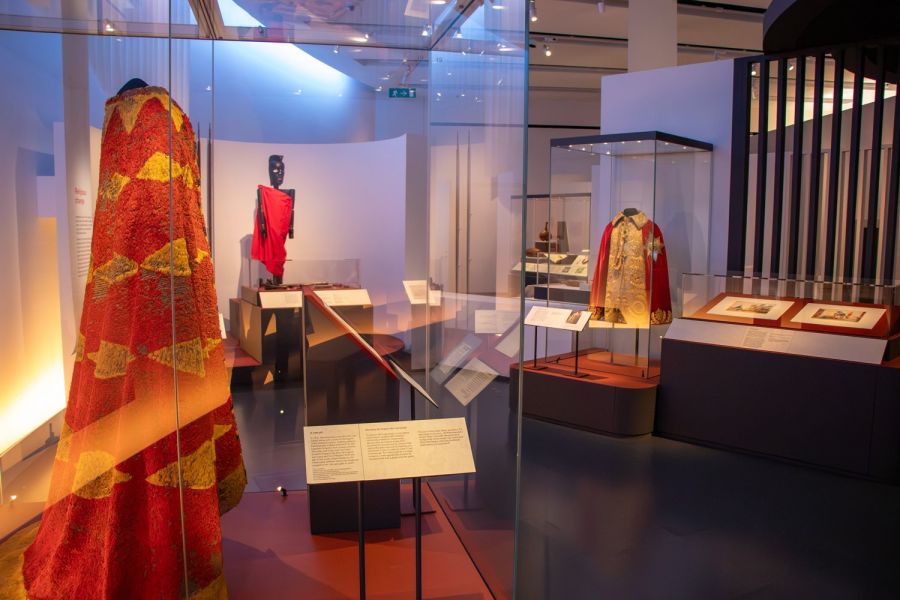
However, the exhibition does not shy away from the darker chapters of the 19th century. A significant portion of the gallery is dedicated to the 1893 overthrow of the Hawaiian monarchy, an event that remains a central point of historical grief and political activism. The display features a deeply moving letter from Queen Lili‘uokalani, the last reigning monarch, whose words reflect a dignified but firm resistance to the illegal seizure of her nation. This historical record is brought into the modern era through the inclusion of a powerful contemporary portrait of the late activist and scholar Haunani-Kay Trask, bridging the gap between the 19th-century resistance and the modern Hawaiian sovereignty movement.
The final sections of the exhibition, titled "Coexistence and Resilience," explore how Hawaiian identity has integrated and reclaimed foreign symbols over time. The curators highlight the presence of the Union Jack in the Hawaiian flag as a symbol of early diplomatic alliances rather than colonial subjugation. This theme of adaptation is further explored through the work of contemporary artists like Bernice Akamine, who utilizes traditional kapa (barkcloth) to create installations that reflect on land rights and enduring sovereignty. By featuring these modern works, the British Museum underscores that the Hawaiian story is one of constant reactivation.
As the tour concludes, the message remains one of celebratory defiance. The exhibition does not end with the loss of monarchy but with the vibrant efforts of the Hawaiian community to revitalize ancestral knowledge for a new generation. Through the preservation of language, the reclamation of land, and the continued creation of sacred art, the people of Hawai‘i are shown to be looking toward a future that is firmly rooted in their sovereign past. The exhibition stands as a testament to a kingdom that did not just cross oceans, but survived the storms of history to remain a distinct and powerful voice in the 21st century.