In the realm of contemporary stand-up, Ali Siddiq has carved out a singular lane as a master storyteller, one whose craft relies not on the rapid-fire succession of punchlines, but on the meticulous, deeply human architecture of lived experience. His latest special, My Father, is perhaps his most ambitious project to date—a cinematic, poignant, and raucously funny deep dive into the life of Lenny Gains, the man who shaped Siddiq’s world. Through a blend of sharp observation and vulnerable reflection, Siddiq invites his audience into a narrative that is less of a comedy set and more of an exorcism of the past, transforming the chaotic memories of a non-traditional upbringing into a universal meditation on forgiveness, mortality, and the complex anatomy of the father-son bond.
The special opens with a narrative hook that perfectly encapsulates the "mythology" of Lenny Gains: the running gag of his father’s purported expertise in karate. As Siddiq unfolds this story, it serves as a brilliant metaphor for his father’s personality—larger-than-life, inherently unpredictable, and fundamentally untethered from reality. Gains was not a man of conventional stability; he was a character of extremes. Siddiq paints a vivid picture of a childhood defined by this eccentricity, where the line between a protective father and a source of perpetual chaos was constantly blurred. The stories are granular, filled with the specific, often absurd details—like the infamous incident where Gains, needing to soothe his young son’s toothache, retrieved medication from a tub used to stash contraband—that transform a generic tale of "absentee fatherhood" into something uniquely, undeniably human.

Related article - Uphorial Shopify

The special is masterfully structured to navigate the sprawling landscape of Gains’ hidden life. In one of the show’s most striking sequences, Siddiq recounts a surreal, chance encounter at a club where he was confronted by a man claiming to be his brother—a revelation that forces Siddiq to grapple with the realization that his father lived a life far more vast and disconnected than he had ever fully understood. These moments of discovery are woven through the fabric of the show, illustrating the bewilderment of a child trying to make sense of a parent whose personal history was largely kept behind a veil. Siddiq navigates these revelations with a mix of bemused detachment and genuine longing, providing the audience with a window into the dizzying reality of being the son of a man who was simultaneously present and unreachable.Central to the narrative is the atmosphere of Siddiq’s upbringing in Houston, where traditional parenting was replaced by a more improvisational, and often perilous, existence. He recounts his time under the tutelage of his uncles—Mac and Alfred—and the early lessons he learned about navigating a world where street dealings were simply part of the family ecosystem. From the childhood folly of selling candy at school to the more profound lessons learned in the wake of his father’s erratic choices, Siddiq frames these experiences not as trauma to be wallowed in, but as the raw material that forged his own resilience. There is a profound cultural understanding in his storytelling; he captures the specificities of Black fatherhood and community dynamics in a way that feels intimate, authentic, and deeply respectful of the survival mechanisms he had to adopt as a young man.
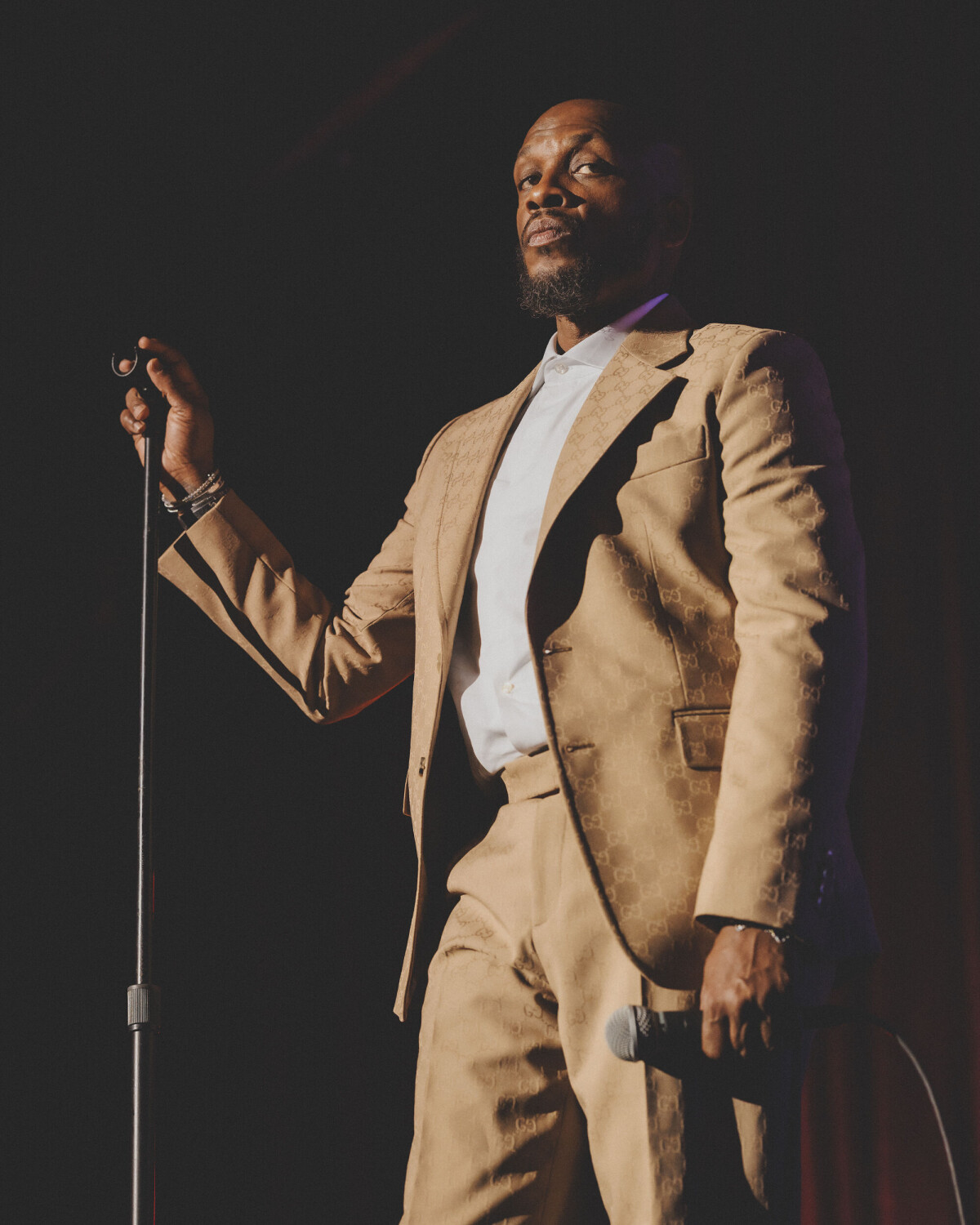
The emotional precision of the special is most evident in its final act, as the lens shifts from the chaotic antics of Gains’ prime to the quiet, dignified vulnerability of his final years. Siddiq discusses the shift in their dynamic—the role reversal that occurs when the child must suddenly become the caretaker. These segments are handled with a tenderness that grounds the entire special, as they navigate the murky waters of family history, including complex, unresolved conversations about Siddiq’s mother. The final interaction, occurring just days before his father’s passing on Valentine’s Day, is a masterclass in narrative closure, leaving the audience not with a sense of bitterness, but with a lingering, resonant sense of grace.
Siddiq concludes My Father with a heartfelt, unadorned plea for gratitude. It is a moment of transformational framing: he asks the audience to look past the imperfections, the betrayals, and the absences in their own relationships to find the kernel of humanity that remains. Whether or not one’s father was a hero or a source of heartbreak, Siddiq argues, the time shared is the only currency that ultimately matters. It is a powerful, final takeaway from a special that succeeds precisely because it refuses to sanitize the past. By honoring the "beautiful madness" of Lenny Gains, Ali Siddiq has done something rare in modern comedy: he has taken the messy, fractured pieces of his own life and, through the sheer force of his storytelling, crafted a monument to the man who made him—flaws and all.