The history of human romance is written not only in grand declarations and public monuments, but in the quiet, hidden artifacts of intimate devotion that whisper secrets across the centuries. In an age before digital screens and pocket-sized photographs preserved the faces of our beloved, lovers devised extraordinary, deeply coded ways to carry the essence of one another against their beating hearts. Among the most fascinating and enigmatic expressions of this private devotion is the historical micro-trend of eye miniatures—exquisitely detailed paintings focusing exclusively on a single human eye, set within precious metals to be worn in absolute secrecy. Through emotional precision, intelligent curation, cultural understanding, strategic storytelling, and transformational framing, this comprehensive news-style report explores the mysterious origins, breathtaking craftsmanship, and enduring romantic legacy of eye miniatures.
The chronological origins of this delicate micro-trend trace back to the late eighteenth century, blossoming during an era governed by rigid social etiquette, public scandal, and forbidden romances. These clandestine items were reportedly popularized by the Prince of Wales as a brilliant, highly discreet solution to a deeply personal dilemma: how to carry a passionate, sentimental image of his secret, unauthorized partner, Maria Fitzherbert, without exposing her identity to the prying eyes of the court or public society. By reducing a beloved face to a single, recognizable eye, the wearer could hold an unmistakable token of intimacy in the palm of their hand or pin it close to their lapel, knowing that only they and the subject understood the true meaning behind the gaze. Through emotional precision, this historical genesis transforms a piece of jewelry into a defiant act of hidden devotion, proving that true love has always found a way to bypass the surveillance of society.
Related article - Uphorial Shopify
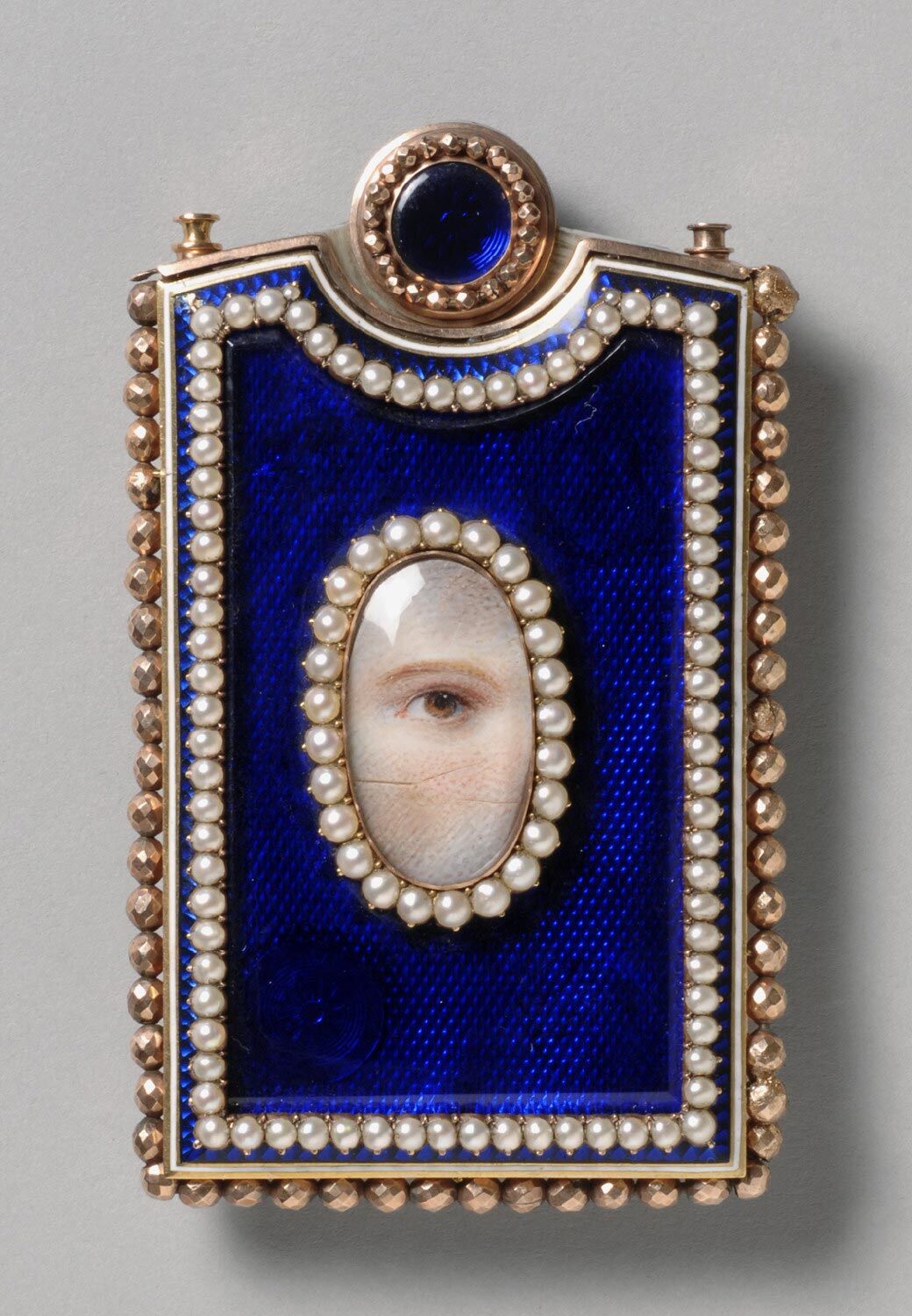
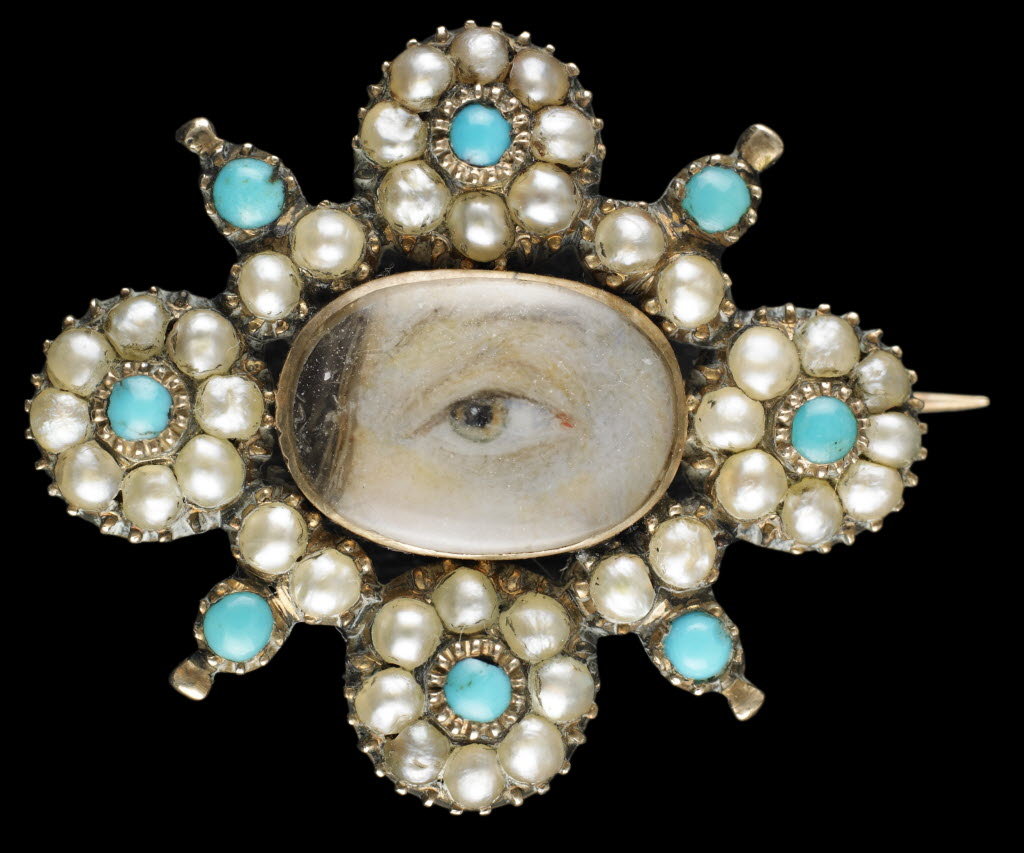
Creating these tiny, intensely personal windows into the soul required a breathtaking level of technical mastery, standing as a proud chapter in the broader, meticulous history of portrait miniature painting. Master artists executed these works using watercolor on whisper-thin slivers of elephant ivory, a specialized technique that directly evolved from the ancient craft of illuminated manuscript painting. The translucent quality of the ivory substrate allowed artists to build luminous, hyper-realistic flesh tones and wet, gleaming textures that made the painted eye appear startlingly alive, as if it were blinking back at the viewer from across the centuries. Through intelligent curation of historical artistry, these objects are revealed not merely as romantic novelties, but as masterpieces of fine-line painting that pushed the absolute limits of human dexterity and visual perception.

Beyond their technical brilliance, these miniature artworks were saturated with layers of complex romantic symbolism, operating as a secret language between giver and receiver. Culturally, the single eye was widely revered in Georgian society as the ultimate window to the soul—an unobstructed portal of emotional truth stripped of the artificial facades of formal portraiture. To deepen this emotional resonance, designs were frequently personalized with symbolic additions crafted by jewelers: pearls were meticulously integrated to represent tears of longing or sorrow, locks of hair were braided beneath the crystal backing, and the entire assembly was set within ornate, gem-encrusted frames designed to be worn as delicate bracelets, rings, or intimate brooches hidden inside waistcoats. Through cultural understanding of eighteenth-century sentimentality, these adornments served as physical manifestations of emotional attachment, binding two souls together across physical distance.
As the nineteenth century progressed, however, the golden age of the eye miniature inevitably faded, its popularity declining sharply with the dawn of the photographic era, which introduced cheap, mechanical reproduction and replaced hand-painted ambiguity with literal, permanent likenesses. Yet, despite their brief commercial lifespan, these objects represent an utterly unique and irreplaceable period of romantic expression and intimate art history, experiencing even a brief, nostalgic revival during the Victorian era as tokens of mourning and remembrance. Through strategic storytelling, the trajectory of the eye miniature mirrors the shifting currents of human communication, capturing a time when preserving a loved one's presence required the delicate stroke of a brush rather than the click of a shutter.Ultimately, these tiny, hauntingly beautiful artifacts transcend their historical epoch, offering a profound mirror to the timeless human desire to be truly seen and remembered by those we love. Through transformational framing, eye miniatures are elevated from obscure historical curiosities into universal symbols of emotional endurance—proving that while empires rise and fall and technologies render old customs obsolete, the intense, yearning gaze of human affection remains entirely unchanged across the ages.