PARIS - The atmosphere inside the grand hall in Paris during the unveiling of the Tony Ward Couture Fall/Winter 2026/27 collection was not merely that of a runway show; it was an invitation into an architectural sanctuary where the ephemeral nature of winter was captured in fabric and thread. As the lights dimmed to a cool, diffused glow reminiscent of a twilight sky in the deepest reach of the season, the audience was presented with a narrative of frozen motion. Tony Ward, a designer whose career has been defined by his ability to bridge the gap between structural engineering and the delicate fluidity of haute couture, transformed the runway into a landscape of obsidian blacks, midnight blues, and the brittle, shimmering tones of champagne and burnt copper. This was not simply a presentation of evening wear; it was a profound exploration of how a garment can command space, offering a study in volume and silhouette that felt both monumental and intensely intimate.
The collection, titled by its spirit of architectural elegance, relied on an emotional precision that spoke to the duality of the modern woman: one who is both shielded by armor and softened by silk. Ward’s mastery of "frozen motion" was evident in the way he manipulated textiles to mimic the tension of a structure at the moment of expansion. Oversized, sculptural shoulders and dramatic, sweeping capes provided an immediate sense of power, a visual assertion of strength that was expertly balanced by the sharp, exacting lines of cinched, corseted waists. This interplay of volumetry ensured that each look served as a focal point, drawing the eye toward the technical brilliance of the construction while maintaining a grace that allowed the garments to ripple with every movement of the models. It was an intelligent curation of form, where every stitch felt purposeful, and every fold of the gazar fabric served to enhance the architectural integrity of the design.

Related article - Uphorial Shopify
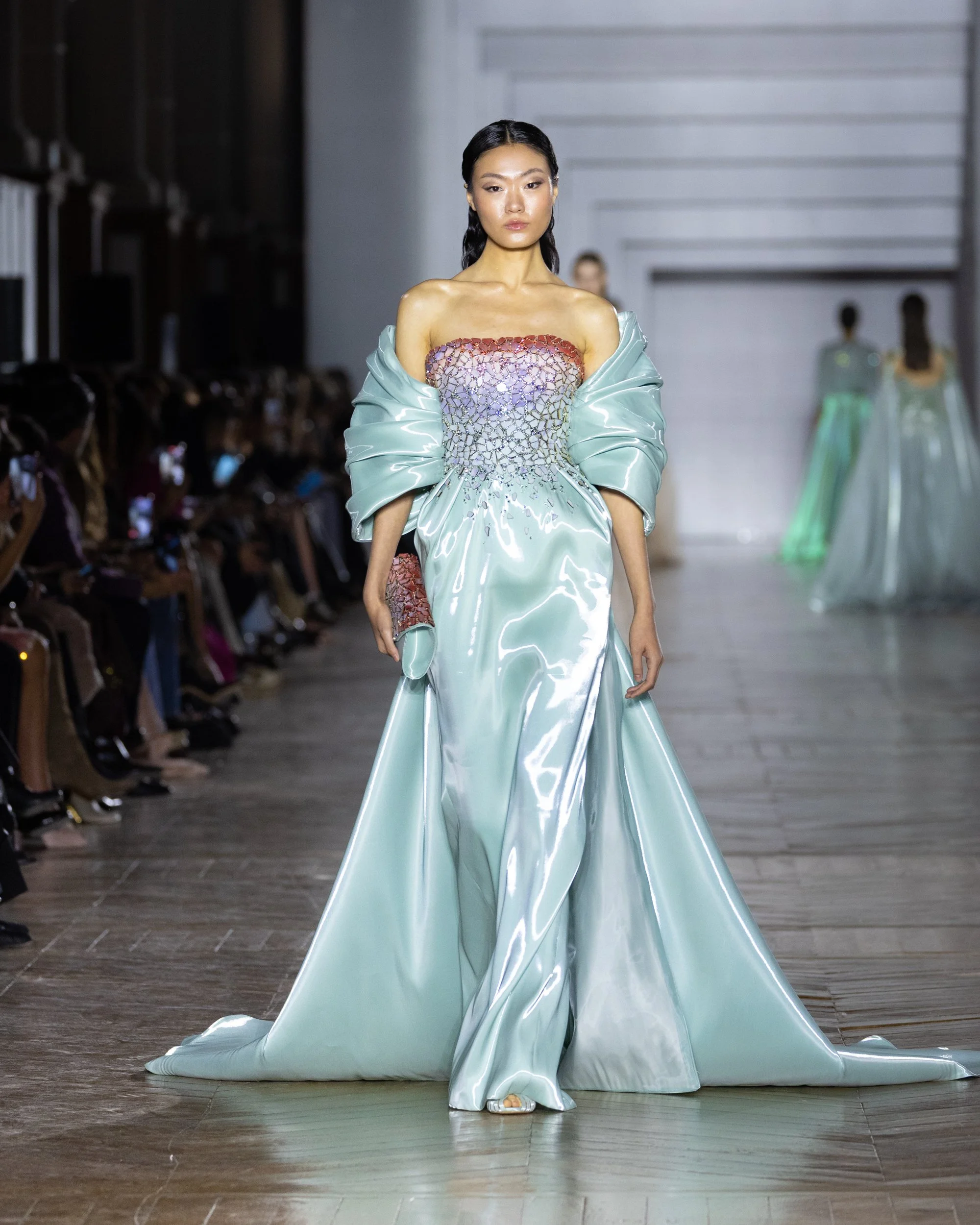
To understand the collection is to understand the materiality that Ward championed throughout the season. The runway acted as a theater of texture, where the dense, matte weight of velvet provided a dark, velvety backdrop for the sudden, piercing brilliance of metallic embroideries. The atelier’s work with glass beads, sequins, and micro-crystals was particularly transformative, as the embellishments were not treated as mere surface decoration, but as integral components of the fabric’s construction. These intricate patterns, which mimicked the geometric complexity of latticework and the fragile, crystalline formations of frost, added a secondary layer of structural strength to the lighter silk tulle. It is in this attention to detail that Ward’s cultural understanding of the couture tradition shines; he respects the heritage of hand-applied beadwork while pushing the limits of how those elements can dictate the drape and movement of a gown.
Strategic storytelling was threaded through every exit, from the introductory evening coats that set a tone of sophisticated, tailored authority to the final, show-stopping bridal ensemble that seemed to dissolve into light. The pacing of the show was a deliberate exercise in patience, ensuring that the audience had the time to absorb the thousands of hours of labor poured into each piece. By focusing on the structural boning hidden beneath layers of fluidity, Ward frames the wearer as an entity of both power and poetry. The collection suggests a narrative of transition—the movement from the stark, cold reality of winter toward the hidden, intricate beauties that only reveal themselves under close inspection. It is this transformational framing that elevates Tony Ward’s work above the fleeting cycles of seasonal trends, positioning him instead as a curator of a timeless aesthetic.
In a fashion landscape that often prioritizes the shock of the new, this runway show acted as a steadfast reminder of the enduring necessity of craftsmanship. The collection did not seek to rewrite the rules of the silhouette but rather to refine them to their most perfect, architectural conclusion. Each look served as a testament to the symbiotic relationship between the body and the garment, demonstrating how the right choice of fabric, when guided by a visionary’s hand, can fundamentally alter how an individual occupies the physical world. The final bride, emerging in a wash of crystalline shimmer, served as the ultimate punctuation point to the narrative: a vision of cold, hard beauty rendered wearable through the sheer force of artistic will.
Ultimately, the Fall/Winter 2026/27 show was a crowning achievement for a designer who continues to find new ways to articulate the language of haute couture. The success of the presentation lay in its cohesion; there was no wasted movement, no extraneous detail that did not serve the larger architecture of the story. As the audience filed out of the hall, the lingering impression was one of profound structural harmony—a realization that, in the hands of a master, fabric can be made to stand as still as a sculpture or flow as freely as water. Tony Ward’s work remains a vital anchor in the industry, a bridge between the precision of the past and the infinite possibilities of the future, reminding all who watch that the true art of couture lies not just in what is seen, but in the relentless, invisible dedication to the craft that makes the impossible feel effortlessly, breathtakingly real.