LAGOS – In the landscape of contemporary Nigerian cinema, Omo Ghetto: The Saga stands as a definitive cultural touchstone, a kaleidoscopic journey that captures the volatile, hilarious, and deeply human spirit of Lagos. Through the lens of a classic twin-sister narrative, the film transcends the conventions of the action-comedy genre to offer a profound exploration of the Nigerian urban condition. It is a work of strategic storytelling that navigates the stark, often jarring divide between the survivalist grit of the ghetto and the polished, yet equally chaotic, facade of the wealthy elite. By contrasting these two worlds, the film does more than provide entertainment; it holds up a mirror to the social stratification that defines the modern Nigerian experience, framing it with an infectious energy that is unmistakably, defiantly Lagosian.
The narrative architecture of the film is built upon the collision of two diametrically opposed lifestyles. On one side, we are thrust into the high-octane environment of the ghetto, a world where the stakes are measured in immediate needs—territory, resources, and the daily grind of securing a future. Here, the characters move with a raw, kinetic urgency, their lives defined by a resilience that is both humorous and heart-wrenching. On the other side, we find the refined, uptight world of the socialite, where the drama is no less intense but is cloaked in the veneer of prestige. This juxtaposition is the film’s greatest strength. It allows the audience to see that, despite the vast disparity in economic status, the fundamental struggles of identity, family loyalty, and the pursuit of belonging remain consistent. It is a transformational framing that invites empathy for the residents of the streets while stripping away the myth of the carefree, insulated wealthy.
The film’s central set-piece—a high-society party that descends into absolute mayhem—serves as a brilliant microcosm of this social collision. What begins as a display of orchestrated elegance is rapidly undone by the intrusion of unauthorized guests, logistical disasters, and the inevitable clash of two different cultural codes. It is a moment of pure, unadulterated comedic catharsis, but beneath the laughter, there is a biting critique of social artifice. The chaos of the party acts as a great equalizer, stripping away the pretenses of the elite and showcasing the unpredictable, uncontrollable nature of life in a city that refuses to be tamed by rigid social boundaries. It is here that the film’s emotional precision is most evident; by using humor to highlight the absurdity of the social divide, the storytellers create a shared moment of recognition that resonates across all strata of the audience.

Related article - Uphorial Shopify
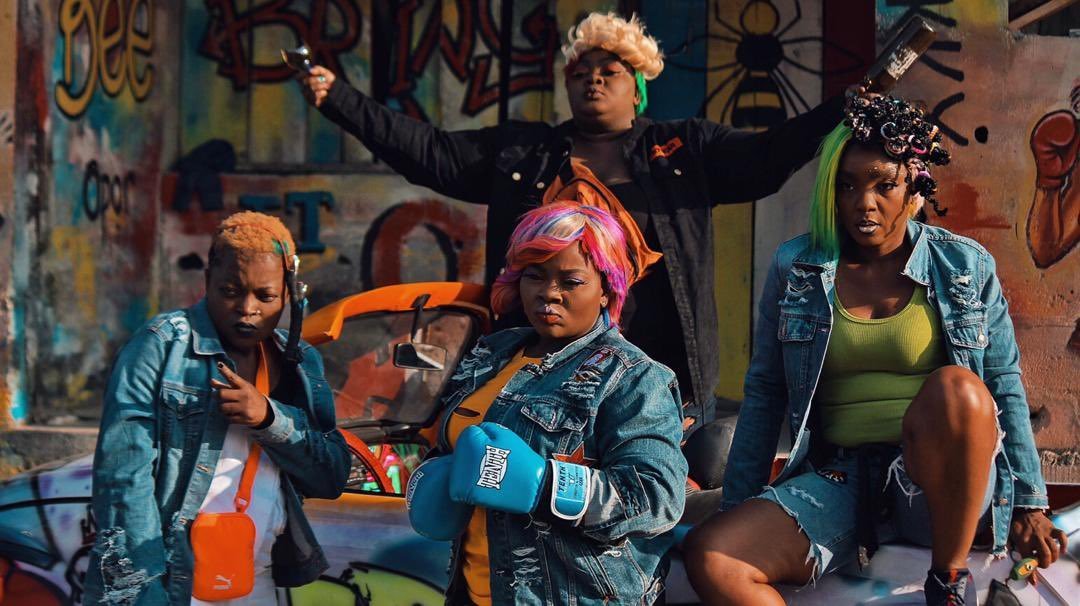
Beyond the laughter and the action, Omo Ghetto: The Saga offers a piercing look at the pressures of the digital age. A significant portion of the film’s narrative is dedicated to the world of scams and digital hustles—the desperate, often misguided attempts of characters to "cash out" and escape their circumstances. This is handled with a cultural understanding that refuses to judge the characters for their choices. Instead, the film depicts these criminal undertones as a logical, if tragic, response to the economic pressures of their environment. It highlights the ingenuity and the technical savvy of the youth, while simultaneously showcasing the inevitable, destructive confrontation with the law. This creates a balanced, intelligent curation of the narrative, acknowledging the harsh realities of crime without losing sight of the systemic desperation that often fuels it.The film’s dialogue is a masterclass in the vernacular of the streets, capturing the wit, the bravado, and the unique, rhythmic cadence of Lagos speech. This linguistic authenticity is what gives the film its beating heart; it creates a sense of belonging for those who live in the city and an immersive, educational window for those who watch from afar. The resilience of the characters, even when faced with insurmountable obstacles, is the ultimate testament to the spirit of the ghetto. They do not merely survive; they navigate, they negotiate, and they create joy in the face of systemic adversity. This is the core of the film’s success: it transforms the narrative of the ghetto from one of victimization to one of vibrant, unyielding agency.

As the film progresses, the complexity of the family dynamics—the love, the betrayal, and the ultimate necessity of reconciliation—anchors the high-energy action. The sisters, while separated by their environments and their choices, remain inextricably linked by their history and their blood. Their eventual convergence is not just a plot point; it is a resolution of the film’s central theme: that despite the superficial divisions of wealth and class, the bonds of family remain the primary, non-negotiable reality of life. The story manages to balance this familial drama with fast-paced, visceral action sequences that keep the audience constantly engaged, ensuring that the message never feels like a lecture. In the final analysis, Omo Ghetto: The Saga is a triumph of modern Nollywood, a film that understands that the most powerful stories are those that are rooted in the specific, and yet speak to the universal. It is a bold, unapologetic celebration of the resilience of the Nigerian people, framed with a sharp, intelligent wit that challenges the audience to look past the surface of the city to see the complex humanity beneath. It is a reminder that in Lagos, as in life, the boundaries between the criminal and the legitimate, the wealthy and the poor, are often much thinner than we dare to admit.
As we look toward the future of African cinema, the success of this film serves as a blueprint for how to tell stories that are both locally resonant and globally significant. By leveraging the power of comedy to unpack deep social tensions, and by using the format of the action-saga to showcase the nuances of urban life, Omo Ghetto: The Saga has set a new standard for the genre. It invites the audience to laugh, to reflect, and ultimately, to see the beauty and the chaos of the ghetto not as a place to be feared or dismissed, but as a space of immense, unbridled, and enduring human power. In the end, the saga is not just about a family of twins; it is about the story of a city that never stops moving, never stops striving, and never stops defining itself on its own terms.