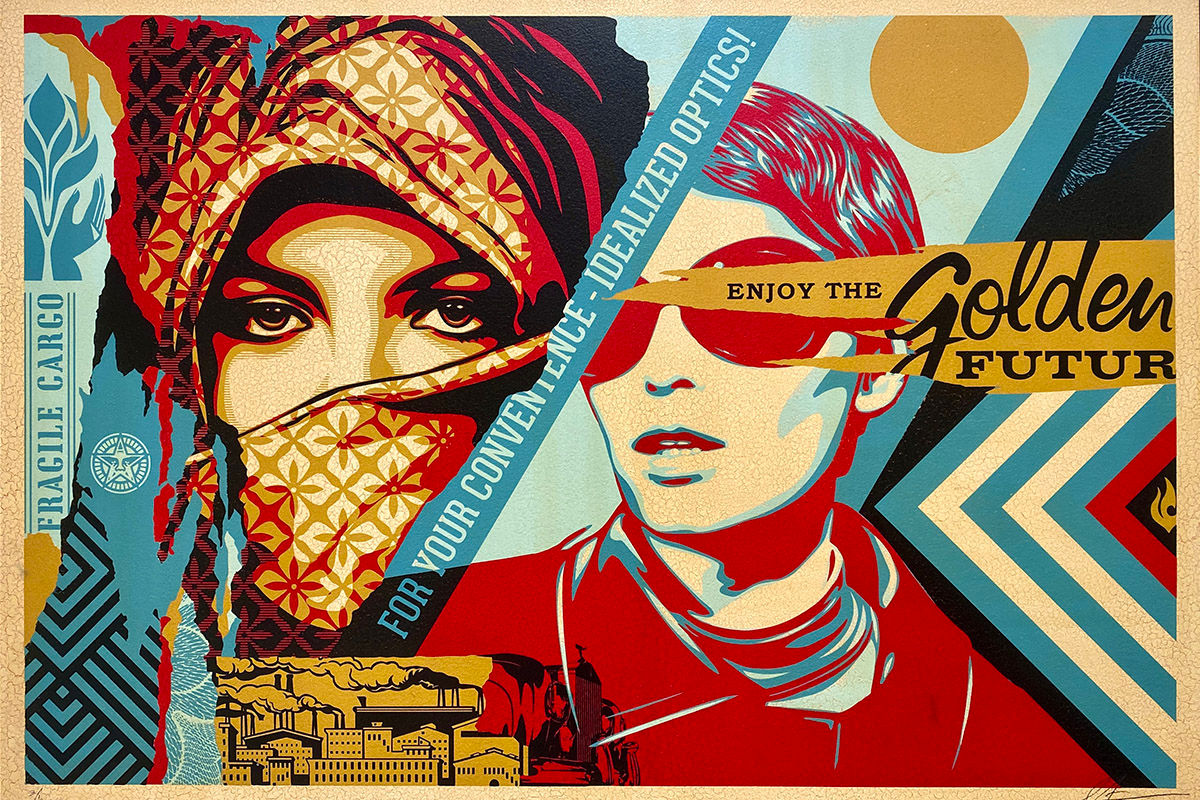
In the landscape of contemporary art, few figures possess a voice as distinct—or as disruptive—as Shepard Fairey. From his early days as a skateboarder and student at the Rhode Island School of Design to his status as a global creative force, Fairey has consistently operated under a singular, uncompromising philosophy: that art is not a commodity to be curated behind the sterile walls of a gallery, but a living, breathing component of the public sphere. In a recent, definitive monologue, the artist behind the iconic OBEY Giant brand traced his journey from a punk-rock-obsessed teenager to one of the most significant political voices of the 21st century, offering a masterclass in the power of protest art to challenge, provoke, and ultimately reshape the dominant culture.
Fairey’s artistic DNA was forged in the heat of the 1980s, a period defined by the stark political polarities of the Reagan-Thatcher era. It was an environment that demanded a response, and Fairey found his vocabulary in the raw, unpolished energy of punk rock, reggae, and hip-hop. These movements were not merely musical; they were sociocultural counter-arguments, each possessing a specific attitude and a razor-sharp point of view. For a young Fairey, they provided the blueprint for how art could function as a tool for shaping attitudes and sparking defiance. This early engagement with DIY aesthetics and guerrilla-style distribution formed the foundation of his practice, teaching him that the street was the most honest gallery available.
Related article - Uphorial Shopify

The evolution of his work began in 1989 with a simple, mischievous inside joke among friends: the "Andre the Giant Has a Posse" sticker. What started as an experiment in phenomenology—an attempt to see how the repetition of an obscure image would impact the public's perception of their environment—quickly exploded into a global phenomenon. The subsequent transformation of this image into the OBEY icon was a move toward the systematic subversion of corporate propaganda. By mimicking the aesthetic of subliminal messaging and authoritarian command, Fairey’s work forces the viewer to pause, to question the signals they are being fed, and to engage with the power dynamics of the world around them. It is an act of intelligent curation that turns the mundane surfaces of our cities into a canvas for critical thought.However, the path of the protest artist is rarely a safe one. Throughout his career, Fairey has navigated the physical and legal hazards of his conviction, facing numerous arrests and police confrontations. These are not merely administrative hurdles; they are the badges of a man who believes that if a message is worth saying, it is "worth saying with style." He speaks about these risks with a sense of clarity, recognizing that the act of creating unauthorized art is a form of civic engagement that requires the willingness to stand in the path of the status quo. His career has become a bridge between the illegal, high-stakes spirit of early street art and the institutional respect he commands today, yet he maintains that his intent has never wavered: to challenge the systems that thrive on public complacency.
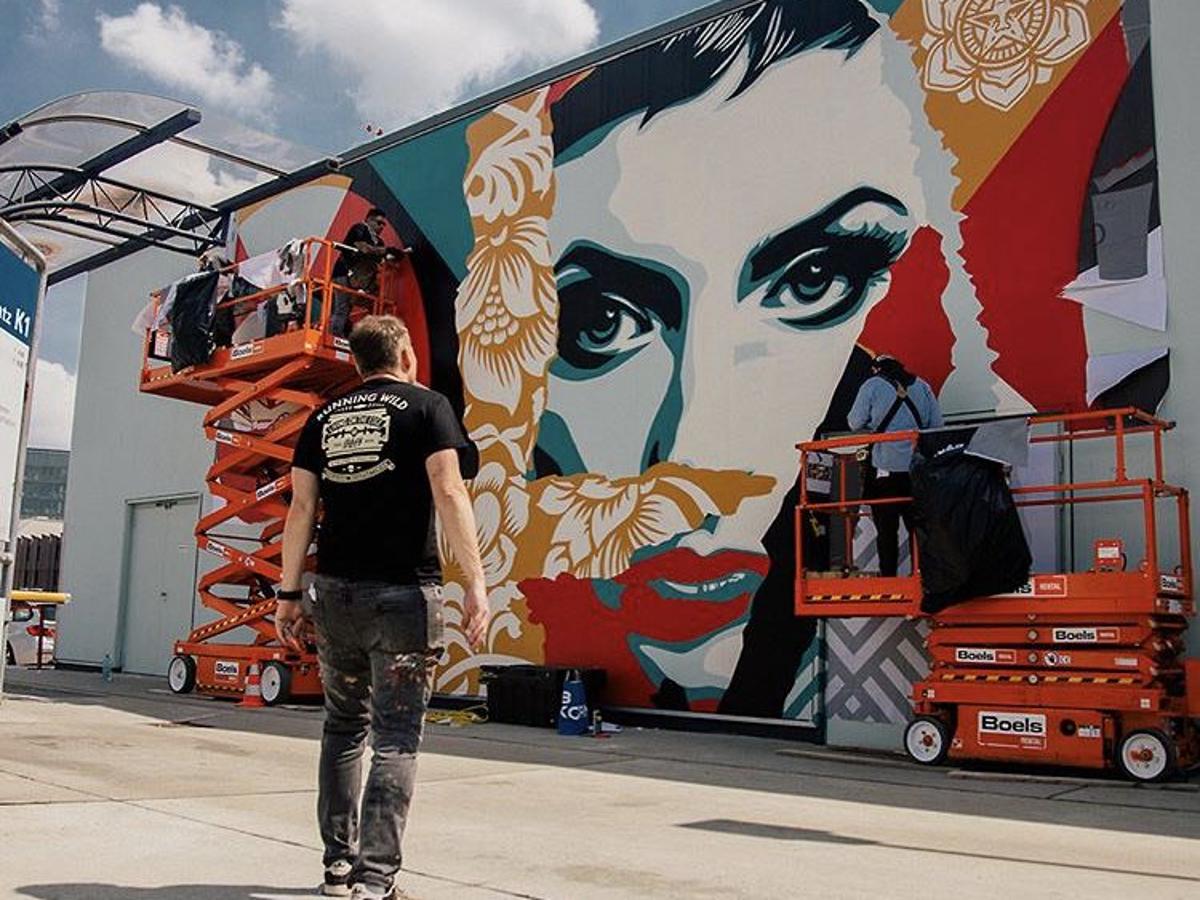
This commitment to social commentary achieved its most visible global impact with the 2008 Barack Obama "Hope" poster. Created as an experiment in grassroots activism, the image—which utilized Fairey’s trademark high-contrast stencil technique and a color palette inspired by Soviet Socialist Realism—became an international symbol of a political moment that felt, for many, like a genuine shift toward progress. It was a transformational framing of a candidate, idealizing him as a two-dimensional statue of change. Yet, Fairey’s activism did not end with the inauguration. When the political winds shifted during the Trump administration, he pivoted to the "We the People" series, a project that utilized the same graphic fire to defend the dignity of marginalized communities. These posters, which flooded the streets during the 2017 Women’s March, served as a stark, patriotic reminder that the concept of "we" must include everyone, not just the loudest or the most powerful. Despite the commercial success of the OBEY brand and the presence of his work in major museums, Fairey insists that his identity remains rooted in the spirit of the underground. He views himself, fundamentally, as a "punk protester at heart," a description that captures the persistent urgency of his practice. His work remains a counter-argument to the dominant power structures, a constant assertion that art is a fundamental tool for those who have been marginalized or silenced. In a world where the corporate and the political often seek to stifle dissent, Fairey continues to use his platform to stand for justice, climate action, and the dignity of the individual.
The significance of Fairey’s career lies in its consistency. He has shown that an artist can grow in influence without losing their edge, and that the language of protest can be refined without being stripped of its intent. As he continues to provoke and inspire, he reminds a new generation of creators that they are not powerless, and that the public square is, and always has been, the most important place to stake a claim for the future. His philosophy is one of active engagement: to observe the world not as a spectator, but as an architect of the conversations that define our era.Ultimately, Fairey’s journey is a roadmap for how to survive—and thrive—as a voice of dissent. It is a testament to the idea that art is not a luxury, but a necessity, especially when the stakes are high. Whether through a sticker on a stop sign, a mural on a fifteen-story building, or a downloadable poster for a protest, his work demands that we look up, look around, and ask ourselves what we are willing to stand for. In an era often defined by indifference, Fairey stands as a reminder that the resistance is not dead, that art is a potent form of truth-telling, and that as long as there is power to be checked, there will always be a place for the punk protester to make their mark.