The technology landscape witnessed seismic shifts across enterprise artificial intelligence, hardware supply chains, consumer electronics, and healthcare automation. From massive corporate partnerships that promise to reshape the cloud data center market to high-stakes M&A reversals and record-setting venture rounds, the latest market movements underscore how deeply artificial intelligence is transforming core global industries. Investors and tech executives alike were treated to a detailed breakdown of the trends driving the world’s most powerful tech giants, fast-rising startups, and crucial semiconductor foundries as they navigate an increasingly AI-driven economy.
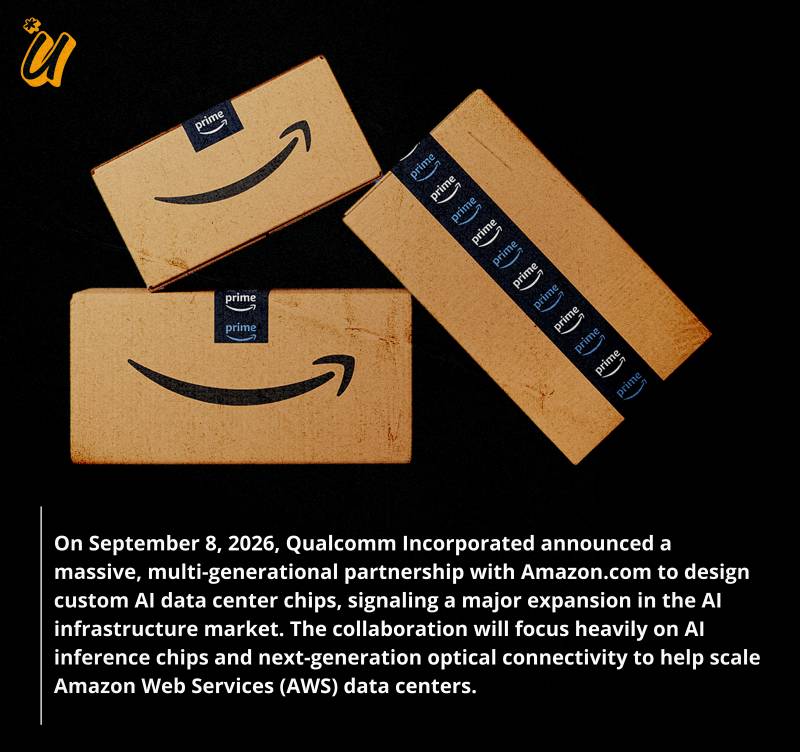
The program’s headline story centered on a transformative agreement between Qualcomm and Amazon Web Services (AWS). In a move that market analysts view as a major validation of Qualcomm's long-term enterprise ambitions, Qualcomm signed a multi-generation deal to supply custom AI chips for AWS. Historically known for its dominance in mobile processors, Qualcomm has been making aggressive moves to establish a foothold inside the lucrative data center market. Partnering directly with AWS—the world's largest cloud provider—provides critical infrastructure-level backing for Qualcomm’s custom silicon strategy. The partnership signals that major cloud operators are eager to diversify their hardware vendor ecosystem away from single-supplier dominance, creating significant growth runways for non-traditional data center chipmakers capable of executing at hyper-scale.
While Qualcomm secured a major win in the enterprise pipeline, another high-stakes transaction took a sudden turn. Anthropic, one of the primary frontier AI research labs, abandoned its planned acquisition of the artificial intelligence startup Decart AI. The potential deal, which was reported to carry a value of roughly $6 billion, would have represented one of the largest consolidation moves in the generative AI sector to date. Despite terminating the full buyout, industry sources indicate that the decision does not signal a total breakdown in relations. Both Anthropic and Decart AI are expected to explore commercial partnerships, allowing Anthropic to integrate Decart’s specialized software or compute capabilities while avoiding the complexities and regulatory hurdles of a full corporate integration.
Beyond enterprise cloud and software deals, consumer markets are bracing for a potential milestone moment in consumer hardware. Equity markets and tech analysts are carefully watching the approach of Apple’s next major product launch event. The primary focus of investor anticipation is the expected unveiling of Apple's first foldable iPhone. With smartphone upgrade cycles lengthening globally, introducing a novel, premium foldable form factor could reinvigorate consumer demand and set off a fresh supercycle. For Apple, entering the foldable market marks a strategic effort to capture high-margin hardware revenue while asserting design leadership against competing Android OEMs that have dominated the foldable segment for several years.
Simultaneously, European AI startups continue to prove their ability to command eye-watering valuations on the global stage. French AI flagship Mistral AI reached a massive $24.4 billion valuation following the completion of a $3.5 billion funding round led by consumer electronics and semiconductor giant Samsung. The substantial capital injection underscores growing global confidence in open-weights and European frontier models as alternatives to US-centric AI ecosystems. For Samsung, leading the round secures closer technological alignment with one of the world's most agile AI research teams as the Korean firm pushes to integrate sophisticated AI features across its vast device portfolio and foundry business.
The massive requirements of training and running these advanced models continue to place unprecedented demands on advanced chip manufacturing. In the semiconductor ecosystem, major foundries Samsung and TSMC confirmed commitments to adopt ASML’s cutting-edge high-numerical aperture (High-NA) extreme ultraviolet (EUV) lithography machines. These ultra-advanced machines, which represent the pinnacle of modern optical engineering, allow chipmakers to print significantly smaller transistor features onto silicon wafers. By transitioning to High-NA EUV lithography, chipmakers aim to dramatically increase processing efficiency, improve chip yields, and lower long-term unit production costs for next-generation AI accelerators and mobile processors.
The power of artificial intelligence is also driving rapid consolidation and capital deployment inside real-world operational sectors like healthcare. Healthcare automation startup Forest announced a successful $150 million funding round, tripling its market valuation to $3 billion. Forest operates an AI-driven platform designed to streamline medication access, automate complex administrative workflows, and eliminate friction points between insurers, pharmacies, and patients. The funding surge reflects a growing investor mandate for pragmatic, sector-specific AI tools that solve immediate, high-cost operational bottlenecks within heavily regulated healthcare systems.
Amid the flurry of record funding rounds and rapid commercial expansion, leaders inside the AI community continue to urge caution regarding the pace of technological development. OpenAI’s chief scientist issued a clear call for "extreme caution" across the tech industry as foundational models grow exponentially more capable. Emphasizing the urgent necessity of robust safety protocols, alignment research, and fail-safe human control mechanisms, the warning highlights an ongoing tension inside Silicon Valley: the push to commercialize cutting-edge AI at breakneck speed versus the imperative to guard against systemic safety risks as models approach human-level capabilities.