May 13, 2026, as a series of unprecedented geopolitical maneuvers and massive capital injections signaled a definitive shift in the world’s economic order. At the center of this whirlwind is a high-stakes summit between President Donald Trump and China’s President Xi Jinping, a meeting that market analysts are describing as perhaps the most consequential diplomatic event for the tech sector in a generation. The discussions, primarily focused on the delicate balance of trade and the burgeoning field of artificial intelligence cooperation, have sent ripples through international markets. The atmosphere of the summit took on a renewed sense of urgency and optimism with the last-minute addition of Nvidia CEO Jensen Huang to the American CEO delegation. Huang’s presence in the room is being viewed by industry insiders as a strategic signal that the United States may be looking to find a middle ground regarding advanced semiconductor exports. Investors reacted immediately to the news, driving market optimism that a breakthrough could finally be on the horizon for Nvidia’s chip sales within the Chinese market, a development that would fundamentally alter the revenue trajectory for the world’s leading AI hardware provider.
While world leaders negotiate the rules of engagement for the next decade, the private sector is rewriting the record books for valuation and scale. Anthropic, the AI safety and research firm that has long played second chair to OpenAI, is currently in talks to raise a fresh round of funding at a valuation exceeding $900 billion. The company is reportedly seeking at least $30 billion in new capital, a figure that would have been unthinkable just twenty-four months ago. This massive shift in the AI narrative suggests that the market no longer views artificial intelligence as a speculative venture, but as the foundational infrastructure of the modern world. If finalized, Anthropic’s valuation would place it on the precipice of the trillion-dollar club, a milestone that reflects the staggering costs of compute and the equally staggering potential for AI-driven revenue. This appetite for capital is not limited to the civilian sector, as the intersection of technology and national security continues to attract record-breaking investment. Anduril Industries recently secured a $61 billion valuation following a successful $5 billion funding round. The company is aggressively ramping up production for its defense technologies, most notably the Barracuda cruise missile system. The valuation reflects a growing consensus that the future of defense lies in software-defined autonomous systems, moving away from the legacy hardware of the 20th century.
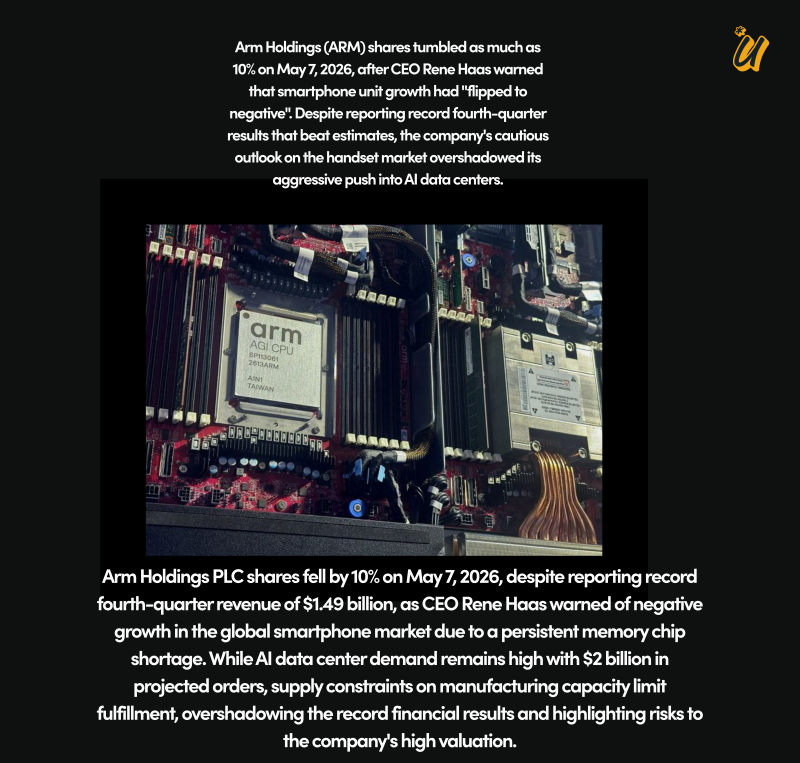
In the realm of semiconductor innovation and corporate independence, new details have emerged regarding the path of Cerebras Systems. It was revealed today that the British chip design giant ARM, backed by its parent company SoftBank, made a significant attempt to acquire Cerebras ahead of its highly anticipated initial public offering. However, Cerebras reportedly declined the offer, choosing instead to pursue an independent path as a public entity. This decision underscores a growing trend among elite tech firms to resist consolidation in favor of maintaining control over their proprietary architectures. Cerebras, known for its massive "wafer-scale" chips, represents a direct challenge to the traditional GPU model, and its leadership appears confident that the public markets will reward its unique approach to solving the compute bottleneck that currently plagues the AI industry. This desire for independence comes at a time when SoftBank has been aggressively trying to consolidate the global AI supply chain, making the Cerebras rejection a rare and notable setback for Masayoshi Son’s overarching strategy.

The frontier of tech innovation is also expanding literally beyond the atmosphere, as Varda Space Industries moves closer to making orbital manufacturing a commercial reality. CEO Will Bruey recently detailed a groundbreaking partnership with United Therapeutics to conduct pharmaceutical research in microgravity. The collaboration aims to utilize the unique environment of space to improve drug formulations, specifically focusing on how protein crystals grow in the absence of gravity. This research could lead to more stable and effective medications that are impossible to manufacture on Earth. By utilizing autonomous spacecraft to serve as orbiting laboratories, Varda is demonstrating that the "space economy" is evolving past satellite launches and into high-value industrial production. This convergence of biotech and aerospace represents a new pillar of the tech economy, where the physical constraints of the planet are no longer the ceiling for scientific breakthroughs.
Simultaneously, the world of fintech is undergoing its own radical transformation, led by companies like Affirm. CEO Max Levchin has outlined a bold path toward achieving $100 billion in annual transaction volume, a goal anchored in the concept of "Agentic Commerce." This vision involves AI agents that do more than just facilitate payments; they actively manage consumer spending, find the best deals, and optimize financing in real-time. As Affirm expands its global footprint, the company is betting that the integration of deep AI into the point-of-sale experience will render traditional credit cards obsolete. Levchin’s strategy emphasizes a move toward a more transparent, automated financial system that aligns more closely with the digital-native habits of the modern global consumer. This shift toward agent-led transactions is being watched closely by traditional banking institutions, who fear that fintechs are moving from being service providers to becoming the primary interface for all consumer economic activity.
As the day’s trading concludes, the broader tech market remains exceptionally resilient. There is a palpable and sustained interest in AI hardware and the semiconductor infrastructure that supports it. While the "Big Tech" giants continue to dominate headlines, emerging data center companies like Nebius are beginning to capture the attention of institutional investors. These firms are providing the localized, high-performance compute environments necessary to power the next generation of large language models and autonomous systems. The market’s appetite for "shovels in the gold mine"—the physical infrastructure of the digital age—shows no signs of waning. From the diplomatic tables in Beijing to the orbiting labs in the thermosphere, the message of the day is clear: the integration of AI into every facet of human endeavor is accelerating, and the capital markets are more than willing to fund the revolution. The tech sector is no longer just a segment of the economy; it has become the engine of global geopolitics and the primary driver of future industrial growth.