Dakar is a city that doesn’t just host culture; it breathes it, transforming every street corner and market stall into a canvas for West African identity. The journey into the heart of Senegal’s capital begins at Marché Kermel, one of the city’s oldest commercial landmarks. Here, the air is thick with the scent of fresh seafood and the energy of a thriving community. Between the displays of giant blue crabs and local produce, the market serves as an introduction to the Senegalese mastery of craft. Visitors find themselves surrounded by glass painters and the rhythmic sounds of traditional instruments like the kora and the calabash, proving that even in a hub of commerce, art is never far away.
This creative pulse extends into the world of fashion and ritual. In the workshops of local tailors like Mama, the process of creating custom Bafou pants becomes a collaborative performance of style. Nearby, tribal mask shops offer a deeper look into the continent’s spiritual history, where carved wood represents more than just decoration; these pieces are the vessels for West African ceremonies and ancestral stories. This respect for craftsmanship is mirrored in the silver smith workshops, where meticulous metalwork precedes the day's transition into the culinary arts. A meal of "deluxe chebuin"—the iconic national dish of fish and rice—serves as a reminder that in Dakar, hospitality is as much a part of the heritage as the music.

Related article - Uphorial Shopify

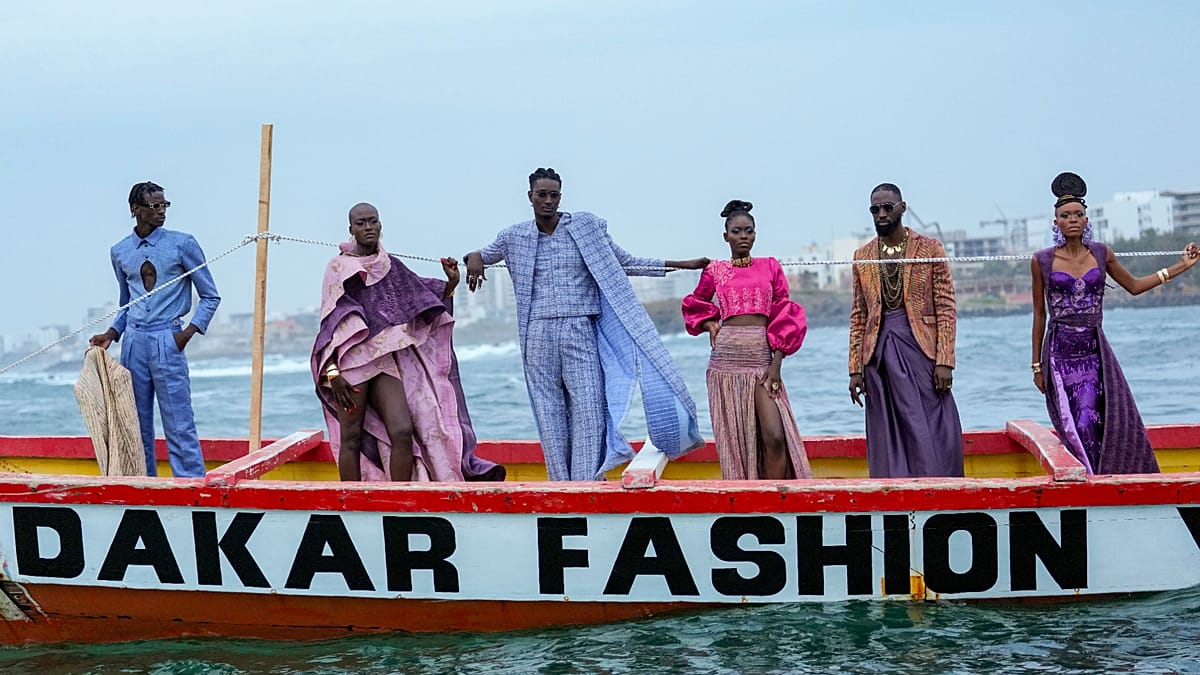

The city’s skyline is dominated by the African Renaissance Monument, a towering bronze structure that stands as the tallest statue on the continent. It acts as a permanent symbol of independence and a bold look toward the future, situated not far from the lighthouse that marks the westernmost point of Africa. As night falls, the energy shifts to places like Yoka, where the sound of live music accompanies fresh catches from the Atlantic, blending the city's natural geography with its vibrant nightlife.
A short boat ride away, Ngor Island offers a serene contrast to the mainland’s bustle. This enclave is a sanctuary for the surfing community and the Lebu fishing tribe, whose cooperative traditions have sustained the island for generations. Ngor is an open-air gallery defined by murals and studios. Artists like Sham find beauty in the discarded, upcycling materials into provocative pieces, while veterans like Omar, who has painted here for three and a half decades, represent the enduring spirit of the Dakar art scene. This creative environment is so magnetic that it has become a permanent home for expats like Kate Lancaster, a fashion designer who has spent 23 years weaving herself into the city’s fabric.
The true spirit of Dakar is perhaps best captured in the shared moments of joy, whether it's gathering for a bowl of peanut-based Mafe or joining a rowdy AFCON watch party to cheer on the national football team. This sense of collective pride is championed by figures like Adama Paris, the founder of Dakar Fashion Week, who works to project Senegalese design onto the global stage. From the quiet shores of Ngor to the high-fashion runways and the crowded football stands, Dakar remains a place where tradition is constantly reimagined, creating a city that feels both ancient and entirely new.