The global landscape of luxury fashion is continually defined by houses that choose to look backward not out of hollow nostalgia, but to excavate the foundational truths that anchor their present identity. Few creative directors execute this delicate historical excavation with the surgical precision and emotional depth of Maximilian Davis at Ferragamo. With the unveiling of the Fall/Winter 2026 collection, staged within the austere, darkened halls of the Triennale di Milano, Davis delivers a definitive masterclass in historical translation, narrative depth, and structural discipline. Rather than relying on the glittering, predictable pastiche of the Jazz Age, Davis looks deep past the surface glamour of the 1920s—the pivotal era of Salvatore Ferragamo’s early American migration and foundational craftsmanship—to examine the intense interior tension between rigid social structure and midnight liberation.
At the conceptual core of this collection lies the evocative mythology of the 1920s speakeasy, framed not merely as a party venue, but as a liminal, underground equalizer where rigid social hierarchies blurred and diverse characters—sailors, high-society socialites, outcasts, and dreamers—intermingled after hours. This narrative is rendered with profound emotional precision and cultural understanding, drawing a deeply personal parallel between the historic maritime journeys undertaken by Salvatore Ferragamo crossing the treacherous Atlantic Ocean and the migration experiences of Davis’s own family moving from the Caribbean to Manchester. This shared history of crossing open waters and navigating displacement informs the collection’s foundational motif: the disciplined, resilient clothing of the sailor.

Related article - Uphorial Shopify

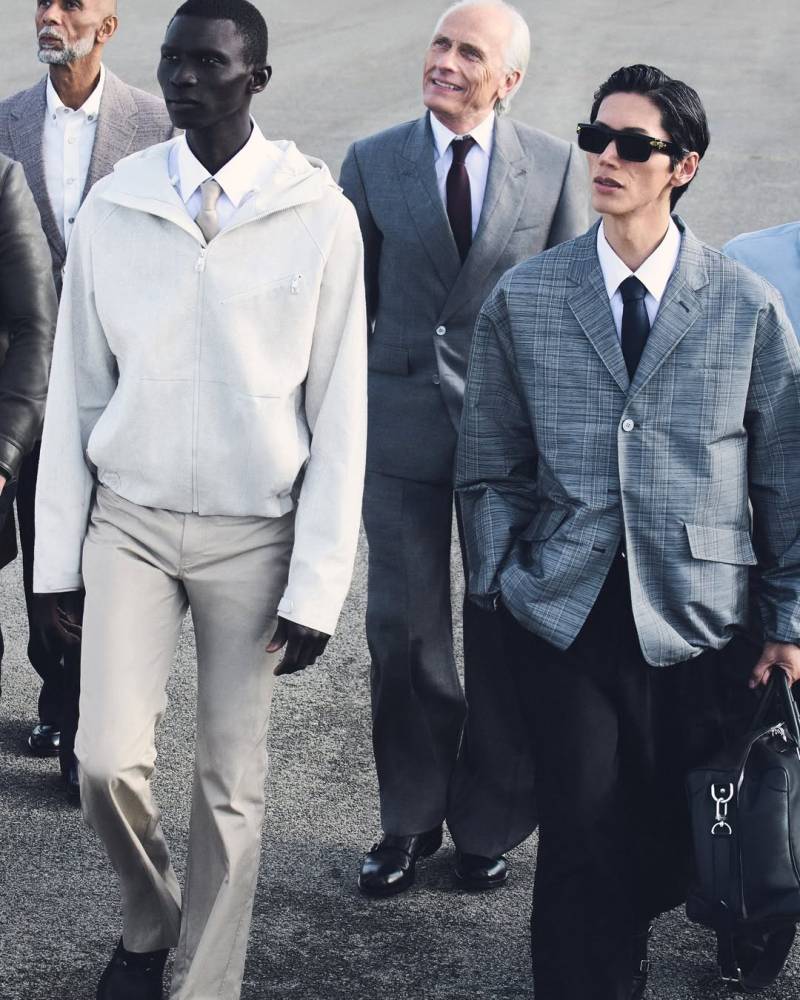
Through intelligent curation, Davis deconstructs and re-engineers traditional naval and workwear codes with exacting Italian craft, utilizing strategic storytelling to rewrite how heritage is perceived on the runway. Sailor uniforms are meticulously subverted; buttons are deliberately displaced, fastenings left undone to suggest an urgent undressing, and peacoats given exaggerated, architectural proportions that command the room. The tactile narrative is built on innovative textures, featuring heavy naval knitwear needle-punched with delicate chiffon to lock in structure, alongside rugged workwear parkas rendered in rich, textured nappa leather and lined with plush shearling. Modular tailoring takes center stage, with jackets and trousers featuring modular elements—panels that connect or disconnect at will via strategic buttoning and asymmetric lines—offering a look that feels intimately responsive to the body rather than statically bound to traditional tailoring constraints.

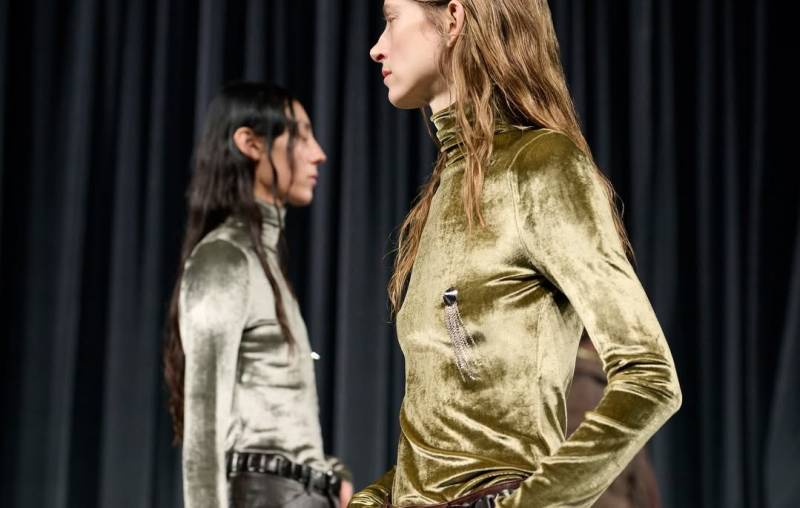
Juxtaposed against the rugged severity of the naval workwear are the fluid, nocturnal codes of speakeasy glamour, capturing the intoxicating atmosphere of an era caught between restriction and release. Slip dresses emerge in foiled velvet lamé and rich floral jacquards, shimmering under low light, while outerwear takes on dramatic, cocoon-like volumes that echo 1920s couture shapes, draping over long-line gowns with an effortless, protective majesty. Informed by the dynamic aesthetics of loose Cubist watercolors and the sepia-toned monochrome of Surrealist photography, the color palette feels as though it is viewed through a temporal haze. It begins in stark sobriety—deep blacks, inky navies, charcoal, and organic cotton canvases—before erupting into saturated jewel tones: lacquered reds, deep purples, and sudden, graphic flashes of tangerine. Garment-dyed nylons and aero-sprayed quilted leathers add a weathered, dimensional patina that speaks to the passage of time.
Rooted firmly in the brand's legendary heritage, the accessories serve as structural anchors that complete the narrative arc. Footwear draws heavily from archival cues, introducing a sharp new pointed stiletto and slingback referencing a 1954 Ferragamo flat, alongside sculptural sandals utilizing curved "shell sole" techniques, while menswear features elongated, sleek Oxfords and minimalist boots. Polished Gancini hardware cuts cleanly through the vintage-inspired haze, accenting updated Hug silhouettes, slim cross-body bags, and utility-driven leather goods. Through transformational framing, Maximilian Davis avoids cheap nostalgia, offering instead a sophisticated, highly curated dialogue between utility and elegance, past and present, proving once again that true luxury lies in the stories we choose to carry across the sea.