The technology sector finds itself at a pivotal crossroads as artificial intelligence transitions from speculative hype to a core driver of fiscal policy and national infrastructure. In a comprehensive sweep of the current landscape, industry analysts and corporate leaders are weighing the implications of high-stakes earnings, shifting regulatory demands, and the emergence of new AI-driven financial platforms.
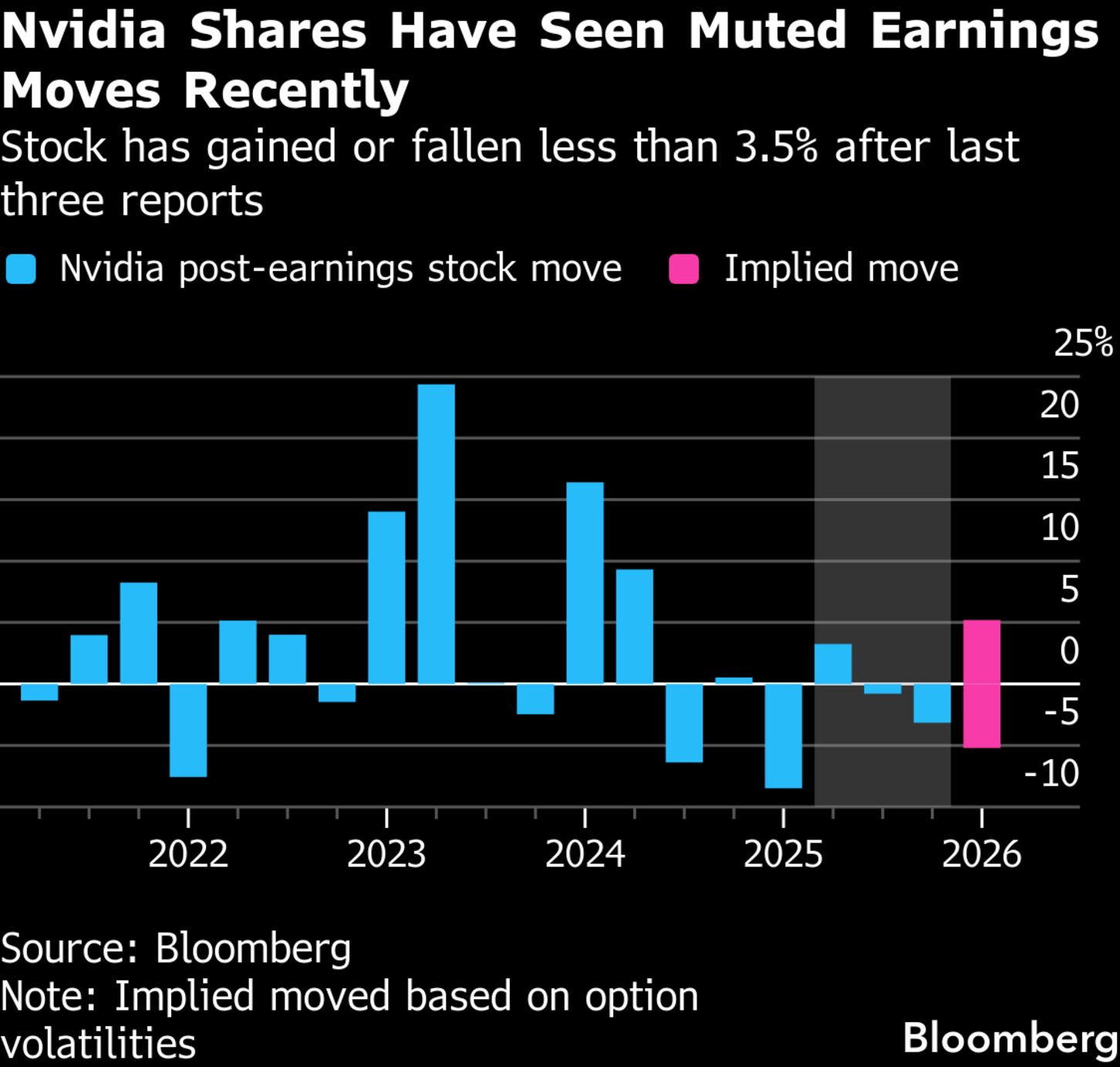
The market's immediate attention is fixed on Nvidia’s upcoming earnings report, a bellwether for the broader AI trade. Bloomberg Intelligence senior analyst Kunjan Sabani expects the chipmaker to outperform estimates by mid-to-high single digits. While the options market is pricing in a 5% swing, the real focus has shifted to the long-term horizon, specifically a projected $500 billion pipeline for 2026 and demand signals stretching into 2027. Despite the optimism, Martin Norton, chief investment strategist at Empire, warned that any breakdown in the AI trade could destabilize the primary growth engine of the U.S. economy. He noted, however, that the current "everything is a loser" sentiment in some corners of the market creates a unique opening for investors to find value in both established AI leaders and disrupted industries.
This corporate expansion is increasingly intersecting with federal policy. Following President Trump’s State of the Union address, the White House has introduced a "ratepayer protection pledge." The administration has reportedly instructed major tech players like Microsoft and Alphabet to develop their own power plants for data centers to prevent rising electricity costs for domestic consumers. While the pledge is currently non-binding, it signals a new era of "active discussions" regarding the environmental and infrastructure costs of the AI boom.
Simultaneously, the ethics of AI utility are being tested by national security interests. Anthropic has recently loosened its central safety policies following a dispute with the Department of Defense. Reports indicate the Pentagon threatened to invoke Cold War-era legislation to compel the company to allow military applications of its technology. In response, Anthropic has maintained strict conditions, specifically prohibiting the use of its AI for mass surveillance or fully autonomous weaponry.
In the digital asset space, Circle reported a banner fourth quarter, with shares jumping 23%. CEO Jeremy Allaire highlighted a significant decoupling of stablecoins like USDC from more volatile digital assets. USDC saw 72% year-over-year growth, facilitating nearly $12 trillion in transactions. Notably, the company’s pivot toward subscription and service revenue streams yielded a fifteen-fold increase, reaching $37 million.
The broader software and media landscapes are also facing disruption. Investors remain wary as Snowflake and Salesforce prepare to report earnings, with Bloomberg’s Brody Ford questioning whether new AI features are generating fresh revenue or merely masking a slowdown in core businesses. In media, the board of Warner Bros. Discovery is evaluating a $31-per-share offer from Paramount SkyDance, weighing it against an existing agreement with Netflix despite looming regulatory hurdles.
Innovation in specialized AI continues to attract significant venture capital. Rowspace, an AI platform tailored for financial services, launched with $50 million in funding led by Sequoia. CEO Michael Manapat stated the platform is designed to help asset managers leverage proprietary data for faster decision-making. Sequoia partner Alfred Lin emphasized that in the high-stakes world of finance, the accuracy provided by such tools is critical. Lin also noted that legacy companies like Snowflake must successfully integrate these AI capabilities to survive the current wave of industry disruption.
Finally, the future of autonomous transit remains a key focus for European tech. Alex Kendall, CEO of the UK-based self-driving firm Wave, detailed a strategy to mass-produce robo-taxis. Unlike hardware-centric competitors, Wave is pivoting toward a high-margin software licensing model, seeking to partner with global manufacturers to scale its AI driving systems.
As these various sectors converge, the consensus among leaders is clear: the next phase of the tech economy will be defined not just by the power of the algorithms, but by how effectively they are integrated into the physical and financial infrastructure of the global market.