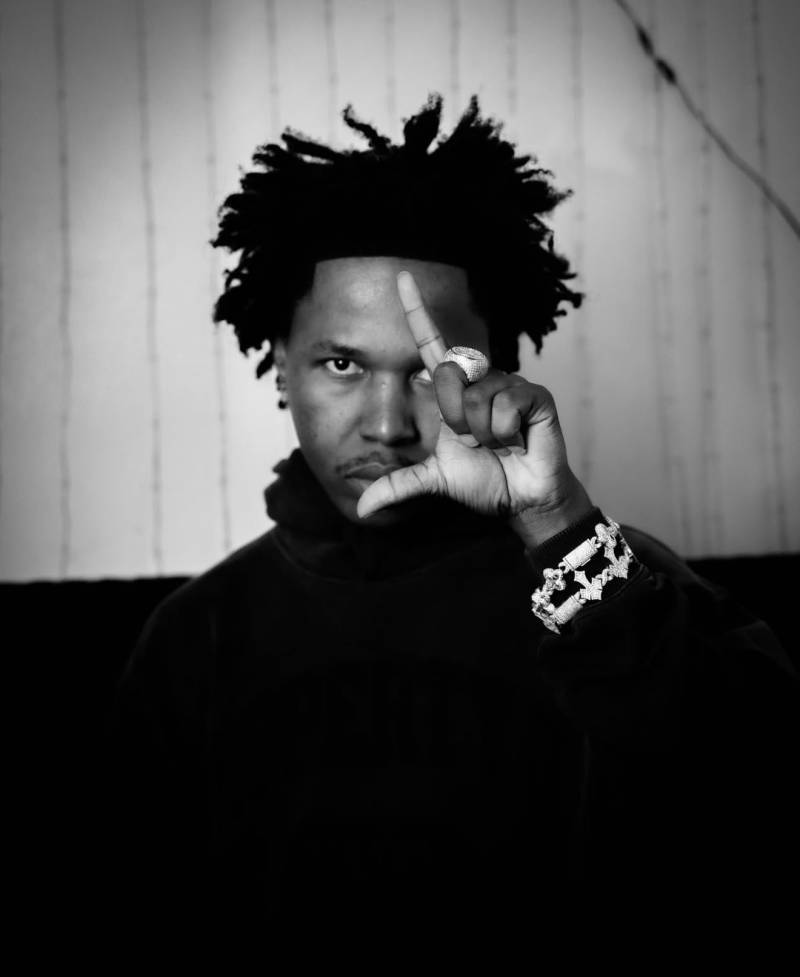
LAGOS – The conversation between Joey Akan and Ladipoe on the latest episode of Afrobeats Intelligence serves as more than just a standard artist interview; it stands as a poignant autopsy of the modern Nigerian music industry and an intimate portrait of a man reconciling the divergent demands of art and commerce. For Ladipoe, the journey of the past several years has been one of quiet, sometimes painful, metamorphosis. Sitting across from Akan, the rapper stripped away the facade often associated with a career in the public eye, offering a candid look at the friction between the person he is at home and the performer he must be on the global stage.
At the heart of their dialogue was the concept of boundaries—a theme that feels increasingly vital in the hyper-connected, high-speed ecosystem of the Nigerian entertainment scene. Ladipoe reflected on the punishing cadence of his profession, particularly during the December festival period, a time when the pressure to perform, appear, and capitalize reaches its zenith. He spoke with a quiet vulnerability about the dissonance of those weeks, noting the challenge of fulfilling professional obligations while desperately needing to retreat into the sanctity of family and personal space. For the artist, this is not merely a scheduling conflict; it is a battle for self-preservation. He acknowledged that the price of purpose often remains hidden when one first commits to the music, only revealing itself in the stolen moments with loved ones and the inevitable shifts in identity that accompany the ascent.

Related article - Uphorial Shopify

The discussion inevitably pivoted to the mechanisms of fame and the relentless creep of commercialization. In an industry now driven as much by algorithmic content creation and viral trends as by musical innovation, Ladipoe underscored the necessity of staying anchored. He addressed the reality that commercial success, while desirable, often risks altering the fundamental substance of an artist’s work. His commitment to intentionality—to ensuring that every release feels like a deliberate step rather than a reflexive reaction to the market—felt like a radical position in an environment that often prioritizes speed over substance.Perhaps the most compelling philosophical contribution to the conversation was his framing of the "guiding delusion" that defines his upcoming body of work. Ladipoe described this concept not as a weakness, but as a deliberate, foundational belief system: the radical idea that an artist can navigate the high-stakes, high-pressure machine of mainstream success without ever compromising their core artistic vision. It is a philosophy that acts as a compass, allowing him to navigate the industry’s turbulent waters while keeping his creative integrity intact. It is an act of faith, he suggested, in a business that rarely rewards it.

Akan and Ladipoe also took the time to dissect the current state of hip-hop in Nigeria, specifically addressing the friction and public rivalries between artists like Blaqbonez and Odumodublvck. Ladipoe positioned himself as a firm pacifist, offering a critique that felt both necessary and timely. He argued that the culture of rap beefs often serves to fragment the community, acting as a noisy distraction from the musical contributions that should be the industry’s central focus. In his view, such conflicts are a drain on the collective creative energy of the scene, a sentiment that highlights his commitment to unity and professional maturation within the rap fraternity.As for the future, the listener was offered a tantalizing glimpse into the studio process that has consumed the better part of the last three years. Ladipoe described this extended gestation period not as a delay, but as a mandatory season of self-discovery, where the primary objective was to define the right "mode of communication" for his evolving sound. He spoke of the work with the weight of someone who has spent years in the dark preparing for a breakthrough. By promising that this is the year of the revival, he signaled that the upcoming album will not merely be a collection of tracks, but a definitive statement of arrival for a new phase of his career.
The episode stands as a compelling reminder that the most durable artists are those who choose to fight for the silence necessary to hear their own creative impulses. Through his conversation with Akan, Ladipoe framed his journey not as a pursuit of celebrity, but as a rigorous, ongoing pursuit of authenticity. By acknowledging the costs of his chosen path and the "guiding delusion" he relies upon, he has invited his listeners into the difficult, beautiful, and profoundly human struggle of creating meaningful art in a commercialized world. As the industry watches for his next move, it is clear that for Ladipoe, the music is finally ready to speak for itself.