Global markets are currently grappling with the dual pressures of technological supply chain politics and high-stakes media acquisitions, a situation thoroughly dissected on Bloomberg Technology by anchors Caroline Hyde and Ed Ludlow. The two main narratives concern Nvidia's strategic chip sales to China and the competitive bidding war for Warner Bros. Discovery, both of which are fraught with geopolitical and antitrust tension.
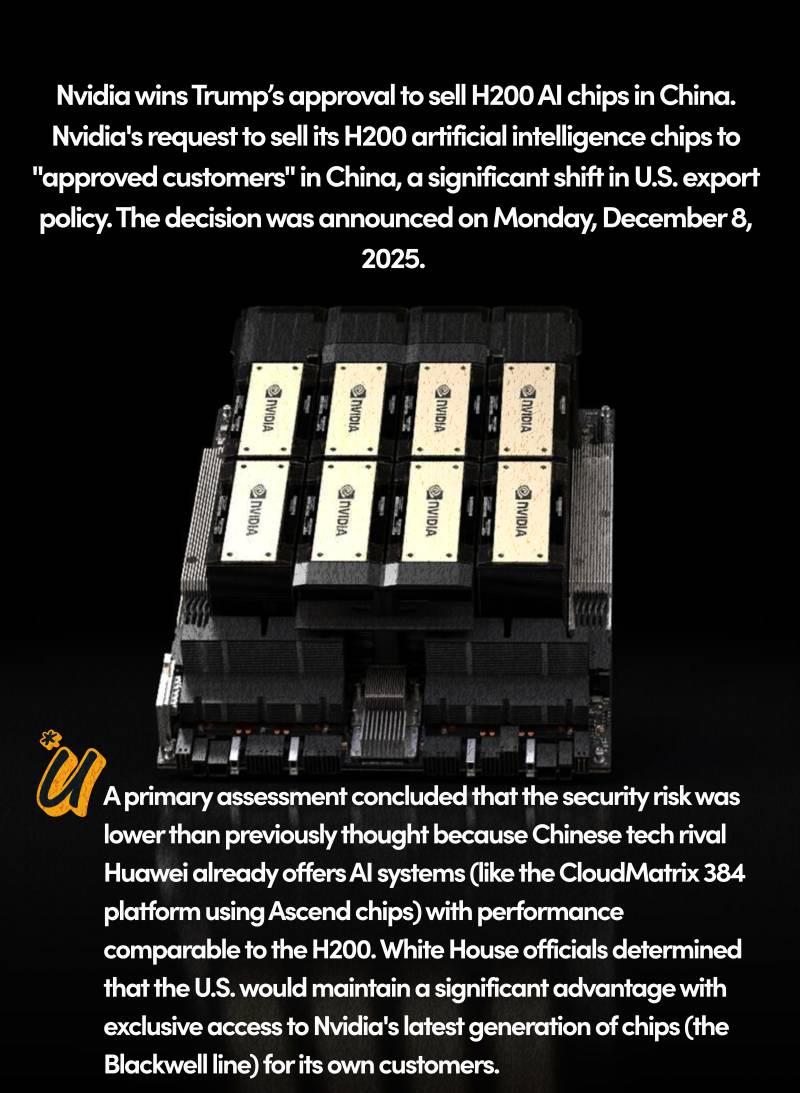
Ed Ludlow reported on the significant policy shift allowing Nvidia to export its H200 chips to China. This authorization from President Trump comes with a mandated 25% surcharge. Caroline Hyde and Ed Ludlow noted that because these chips are manufactured in Taiwan, they must be imported into the U.S. and then exported to China, making them subject to an import tariff, which is how the U.S. government gets paid. This rule applies to AMD and Intel as well, though their market exposure in China is currently smaller.
The H200 chip is considered "multiple times better" than anything Chinese domestic players can make themselves and would be welcomed by Chinese companies running large language models (LLMs) because Nvidia has proven to be the most useful chip company for building big training clusters. However, as Ed Ludlow pointed out, the stock initially spiked on the news, but the gains "fizzled" after reports surfaced that China might impose its own restrictions on which domestic companies could access the technology. Analysts noted that since the geopolitical backdrop was so uncertain, the safest assumption for Nvidia's fiscal year revenue from China had been zero, meaning every chip sold is a "bonus and a tail wind".
The second major story discussed live on Bloomberg Technology involved the rival bids for Warner Bros. Discovery. Caroline Hyde initiated the discussion, noting that Paramount Global had launched a hostile takeover attempt following Netflix's successful initial bid. The Netflix bid is primarily cash, and analysts believe it looks superior because Paramount values the cable networks at just $1 per share, whereas Warner Bros. Discovery values them at $3 to $4 per share.
Ed Ludlow highlighted the political undercurrents of the competing bids, specifically mentioning the involvement of people with proximity to the administration, such as Jared Kushner, in David Allison’s financing coalition. Caroline Hyde steered the conversation toward the intense antitrust scrutiny surrounding both proposed mergers. President Trump raised antitrust concerns over Netflix’s growing market share if the deal goes through, while Senator Elizabeth Warren called the Paramount merger a "five alarm antitrust fire". Caroline Hyde also noted that regulators are applying the new 2023 guidelines to determine if either deal would harm consumers by negatively impacting prices or quality. Concerns about Paramount’s interest in acquiring CNN were also raised, with experts suggesting this is a "power play" rather than a financial decision, reflecting a reluctance in Hollywood to see assets fall to those on the political right.
Ultimately, as Caroline Hyde and Ed Ludlow concluded on Bloomberg Technology, both the Nvidia export decision and the Warner Bros. bidding war illustrate a complex intersection of economics, technological necessity, and political influence that is reshaping global markets.