DALLAS - The stage was set in Dallas, a cathedral of modern sport, where the sheer gravity of history seemed to compress the atmosphere. On July 6, 2026, the FIFA World Cup Round of 16 delivered a narrative that felt less like a football match and more like a final act in a grand, generational drama. As Portugal and Spain clashed at Dallas Stadium, the weight of expectation was almost palpable, a silent testament to the long-standing rivalry that has defined European football for decades. For the players, the managers, and the millions watching across the globe, this was never just about advancing to the quarter-finals; it was about the closing chapters of legends and the emergence of new architects of fate.
From the first whistle, the pitch crackled with an intensity that only these two sides could summon. Spain, characterized by their methodical, possession-based elegance, sought to dismantle the Portuguese resolve with surgical precision. They moved the ball like a collective consciousness, probing for gaps in a defense that stood firm against the onslaught. Yet, Portugal, embodying the grit and flair of their nation, refused to be cowed. They were a side playing with the fervor of those aware that the clock was ticking, not just on the match, but on an era.
Related article - Uphorial Shopify

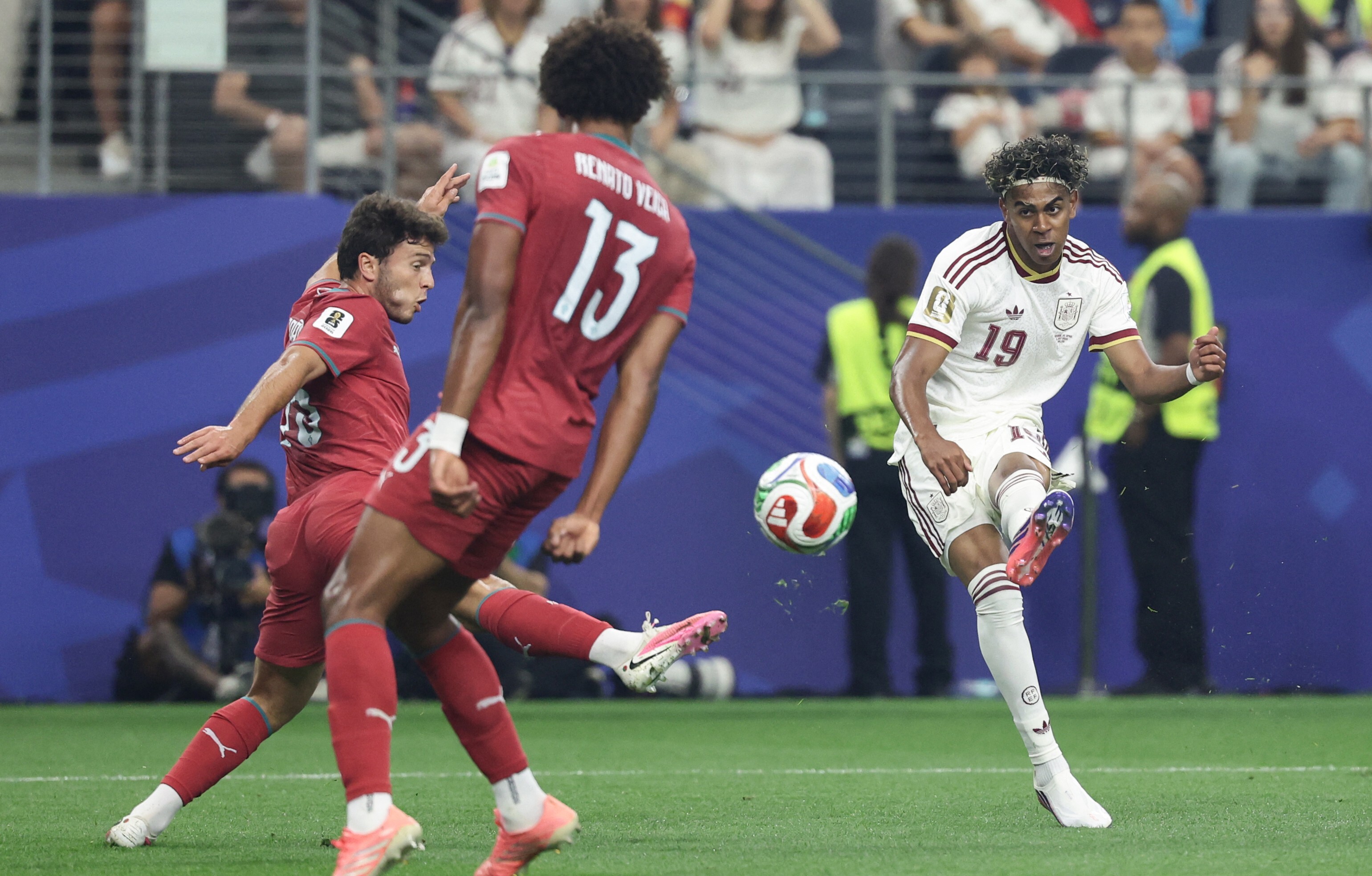
The drama was immediate. Spain’s attacking waves were relentless, testing the limits of Portuguese concentration. At the heart of the resistance was Diogo Costa, the Portuguese goalkeeper, whose performance throughout the evening was nothing short of heroic. With the poise of a veteran, he repelled effort after effort, his reflexes turning certain goals into mere footnotes of frustration for the Spanish forwards. It was a duel of will, where the brilliance of the offense was constantly met by the defiance of the defense. Cristiano Ronaldo, ever the talisman, led the line for Portugal with a desperate, burning ambition. He haunted the Spanish backline, a ghost of past glories still capable of conjuring magic. In one heart-stopping moment, he carved out space for himself, only to be denied by the narrowest of margins. Moments later, the woodwork itself conspired against Portugal; a vicious, deflected strike from Nuno Mendes shuddered against the crossbar, a sound that echoed through the stadium like a missed heartbeat.As the second half unfolded, the game shifted into a tense, tactical stalemate. Both teams grew increasingly cautious, the prospect of an error looming large. The flair of the opening exchanges gave way to the grinding reality of tournament knockout football, where every touch is scrutinized and every decision carries the weight of a nation’s hopes. The air grew thick with anticipation, the crowd caught in a collective breath as time bled away, the scoreline stubbornly locked in a goalless deadlock.

Then came the defining moment, a pivot point that would redirect the trajectory of the tournament. In the dying minutes of the match, as the shadow of extra time loomed, a set-piece opportunity arose for Spain. It was a moment of supreme stillness before the chaos—a free-kick that presented a final, desperate chance to avoid the uncertainty of a penalty shootout. The delivery was measured, and in the ensuing scramble, it was Mikel Merino who rose to the occasion. With a clinical precision born of composure under pressure, he capitalized on the loose ball, guiding it into the net. The stadium erupted, a tidal wave of noise that signaled not just a goal, but the breaking of a spirit.
The final whistle was a brutal finality. For Spain, it was the ecstasy of a dramatic, late victory, a testament to their persistence and their status as tournament heavyweights, now bound for the quarter-finals in Los Angeles. For Portugal, it was a profound, quiet devastation. As the players slumped to the turf, the reality of the elimination settled in—a moment of deep, collective sorrow for a team that had given everything. The images of the aftermath told a story of profound transition; for some, it was a realization that this was the end of a storied journey on football's greatest stage. The match in Dallas would be remembered not just for the goal that decided it, but for the emotion it laid bare, capturing the beautiful, cruel, and ultimately transformational essence of the beautiful game.