The dawn of independence across West Africa, a period of profound political and cultural transformation that peaked around the 1960 "Year of Africa," sparked not only a liberation of nations but a radical reimagining of the built environment. As newly sovereign states across Benin, Cameroon, Côte d'Ivoire, Ghana, Nigeria, Senegal, and Togo moved to define their identities, they turned to modern architecture as a potent language of self-determination. This dynamic era is the focus of Architects of Liberation: Modernism in Western Africa, a major exhibition at the Museum of Modern Art (MoMA) in New York City, which runs through January 2, 2027. Curated by Martino Stierli and Ikem Stanley Okoye, the exhibition illuminates how modernist principles were not merely imported but actively reshaped to serve the climate, cultural values, and Pan-African aspirations of a region reinventing itself after colonial rule.
At the heart of this architectural boom was a desire to project a forward-looking, cosmopolitan image both to the world and to citizens at home. The structures commissioned during this period—ranging from trade pavilions and educational campuses to housing projects and civic buildings—became physical manifestations of "Africanization" and Pan-African ideals. The exhibition highlights how architects, including a trailblazing first generation of trained African practitioners alongside international designers, engaged with the specificities of their local contexts. They adapted modernist idioms to create spaces that were as much about building a new national consciousness as they were about functional urban development.
Related article - Uphorial Shopify
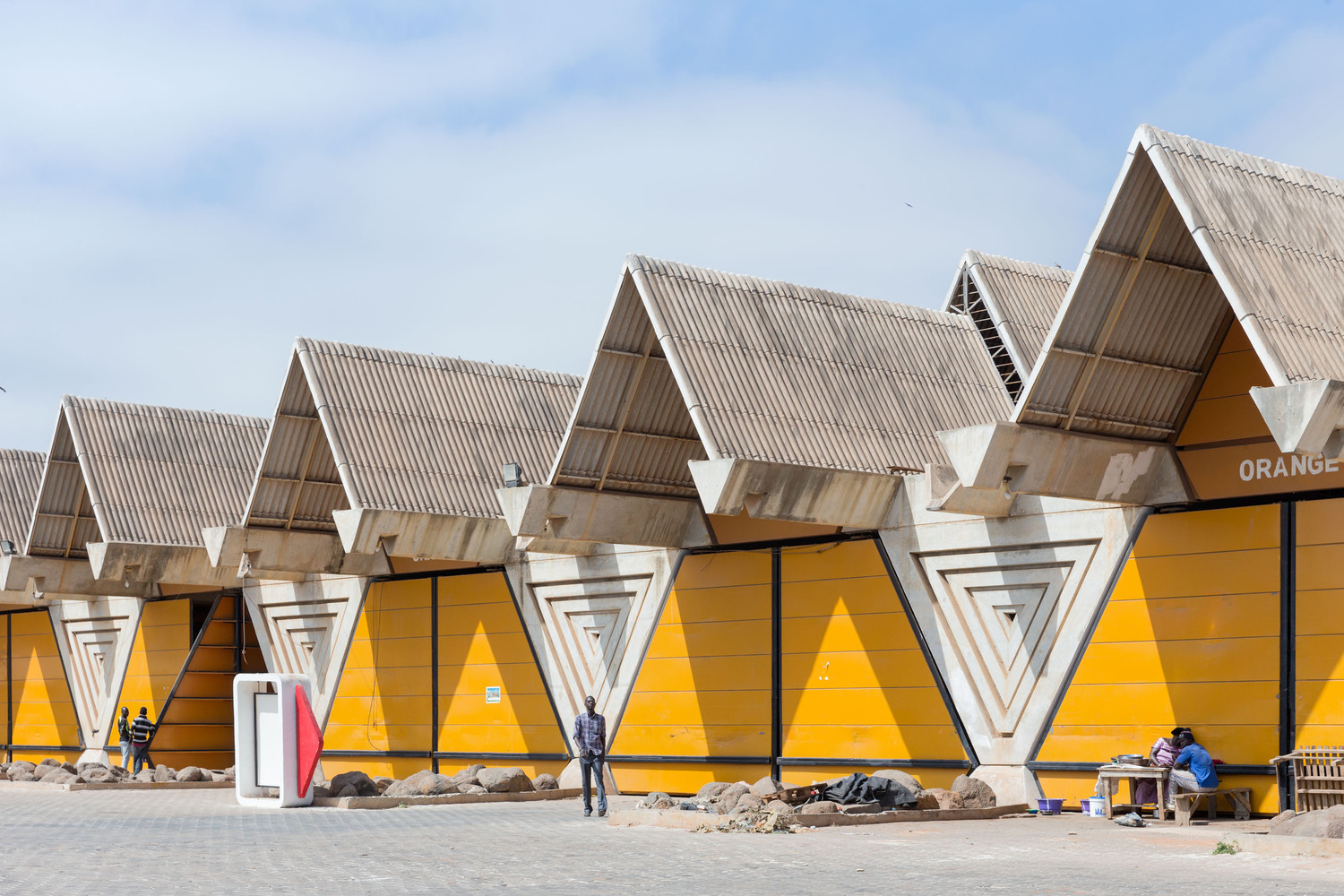
The exhibition features several iconic landmarks that exemplify this ambition. Among them is La Pyramide in Abidjan, Côte d'Ivoire, a futuristic high-rise by Rinaldo Olivieri and engineer Riccardo Morandi that stood as a bold symbol of economic prosperity. In Senegal, the Centre International du Commerce Extérieur du Sénégal (CICES) in Dakar, designed by Jean-Louis Marin and Jean-François Lamoureux, showcases a recurring triangular motif, illustrating how geometric precision could serve as a centerpiece for international trade. The Institut National Polytechnique Félix Houphouët-Boigny in Yamoussoukro, Côte d'Ivoire, designed by Henry Pottier, further captures the era's grand scale, particularly through its impressive octagonal Aupole.
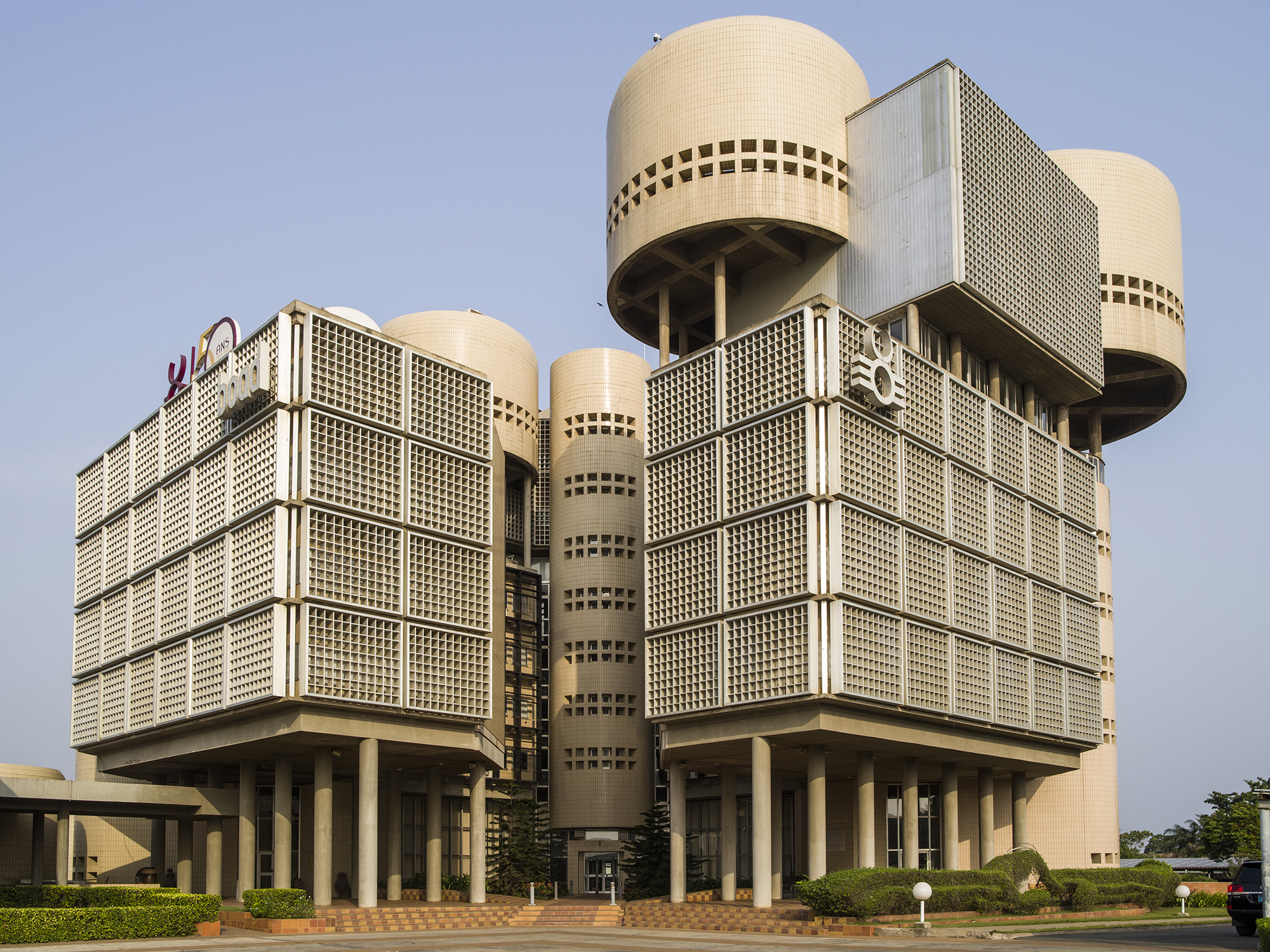
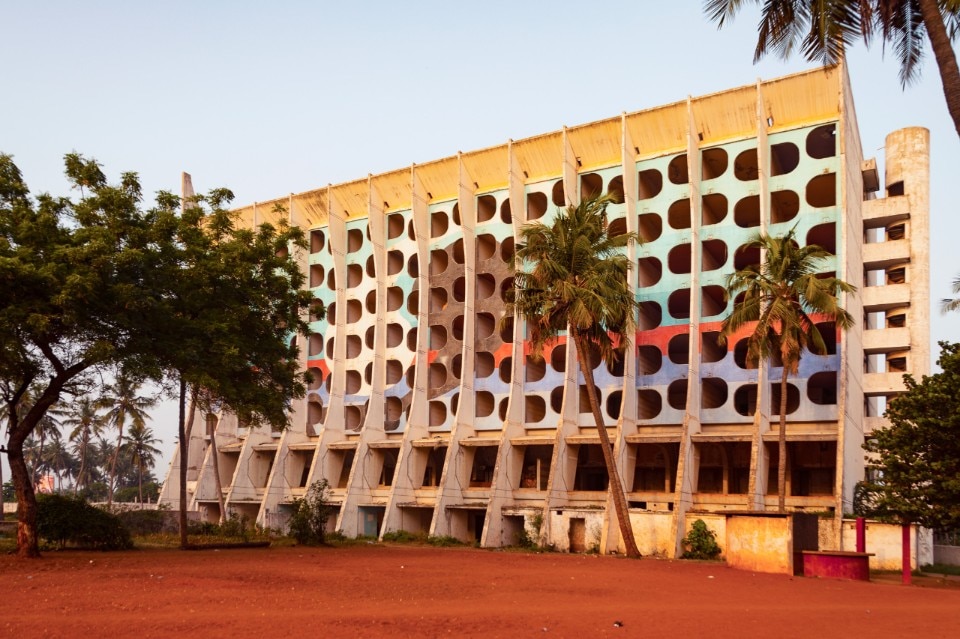
The survey also brings to light more intimate and localized expressions of this modernity. In Lomé, Togo, Daniel Chenut’s Hôtel de la Paix remains notable for its expressive concrete form, unique color palette, and original murals. In Ghana, the elegant Scott House in Accra, designed by Kenneth Scott, stands as a testament to the period’s focus on climate-adaptive design. Nigeria’s Obafemi Awolowo University in Ile-Ife serves as a primary example of blending modernism with traditional Yoruba design forms, a climate-conscious campus that remains a vital link between past and future. Meanwhile, the Bessengué Train Station in Douala, Cameroon, designed by Émilien Douala Bell and Jacques Nsangue Akwaa, uses an undulating roof and vibrant aluminum slats to unify national infrastructure with a distinctive, forward-thinking aesthetic.
Beyond the buildings themselves, the exhibition offers a rare glimpse into the intellectual and professional infrastructure that supported this creative explosion. It highlights the creation of state design offices and the role of newly trained African architects in professionalizing the nation-building process. With approximately 450 objects—including never-before-seen architectural drawings, original models, archival films, and newly commissioned photographs by François-Xavier Gbré—the exhibition pieces together an under-examined chapter of global modernism. While the future of some of these structures remains uncertain, the exhibition underscores their lasting significance as historical testaments to an era of immense creative ambition, providing a revealing look at a region that dared to build its own future.