The modern commercial airliner is a masterpiece of engineering that most of us experience with a mix of boredom and casual indifference. We walk through jet bridges, settle into narrow seats, and scroll through our devices, rarely pausing to consider that we are hurtling through the stratosphere at hundreds of miles per hour inside a pressurized tube held together by nothing more than the cold, hard logic of physics. In a recent discussion on StarTalk, host Neil deGrasse Tyson and comedian Chuck Nice dismantled the mystery behind this everyday miracle, revealing that the act of flying is not just a triumph of machines, but a legacy of history, human ingenuity, and the relentless pursuit of efficiency.
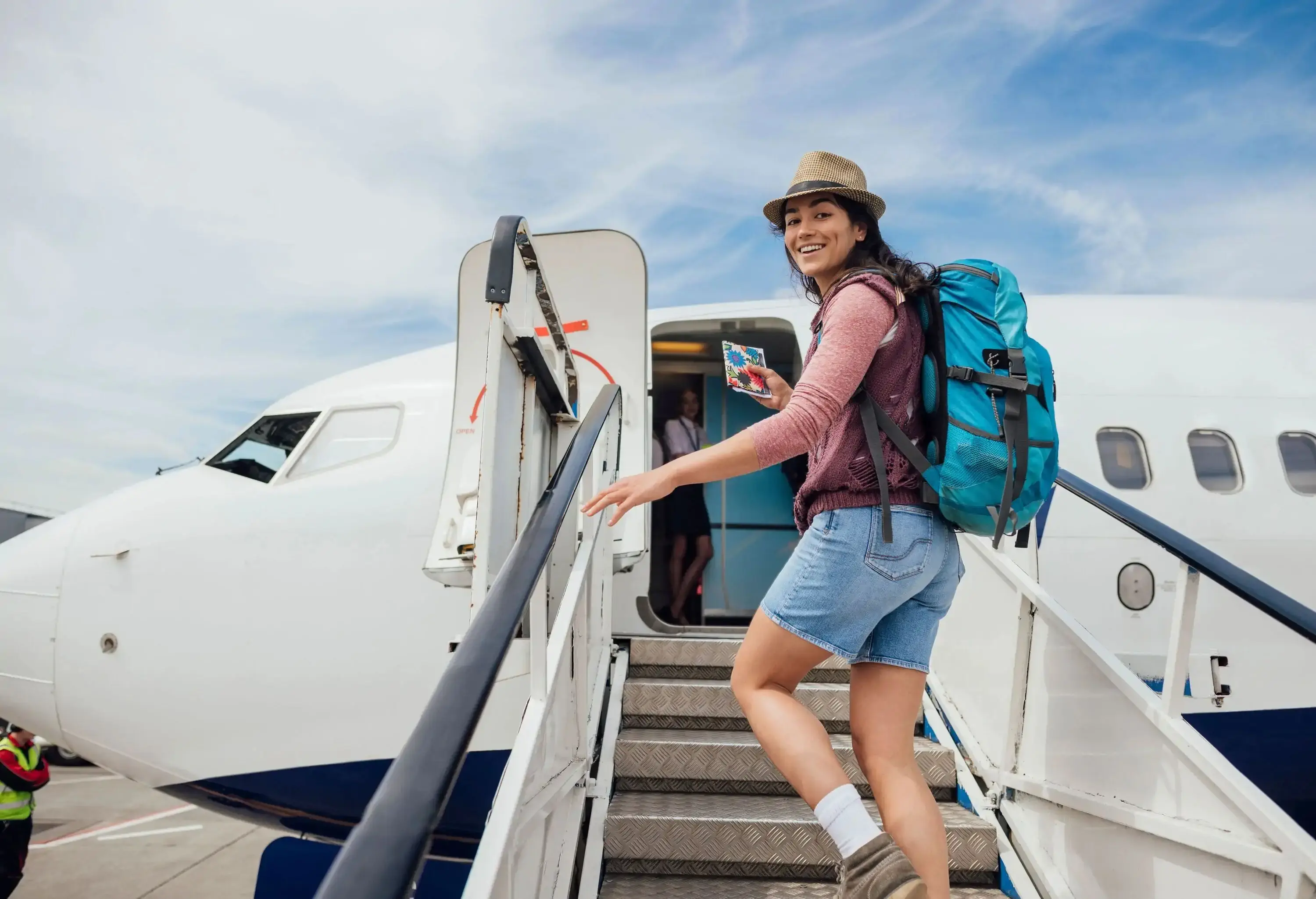
To understand the airplane, one must first look at the infrastructure that connects us to it. The term "gate," so ubiquitous in the lexicon of the modern traveler, is not a technological designation; it is a ghost of a bygone era. Before the sprawling, climate-controlled terminals of today, the act of boarding was an outdoor affair. Passengers walked across an open-air tarmac, climbed a set of mobile stairs, and entered the aircraft through a literal gate—a fence or barrier that separated the public from the runway. While the architecture of travel has moved into the realm of the sophisticated, the terminology remains a stubborn reminder of the days when boarding a plane was a more tactile, exposed experience.
:max_bytes(150000):strip_icc()/happytravelerwaitingfortheflightinairport-d213c083a15f4c498ebaf43bb0fb6c47.jpg)
Related article - Uphorial Shopify
Once aboard, the plane reveals itself to be a structural puzzle where every inch of space and every ounce of weight has been obsessively accounted for. Perhaps the most elegant example of this is the wings themselves. To the casual observer, they are the stabilizers of flight, but in the engineering reality of the aircraft, they double as massive, integrated fuel tanks. This is not a matter of convenience; it is a structural necessity that helps distribute the weight of the fuel to counterbalance the lift generated by the wings, thereby reducing structural stress on the fuselage. Inside the cabin, the same focus on space optimization is applied to the comfort of the traveler. First-class seating, often criticized for its massive footprint, is increasingly utilizing complex tessellation patterns—an interlocking design reminiscent of a geometric puzzle—that allows for the installation of spacious, lay-flat beds while maintaining the dense efficiency that commercial aviation requires.
The secret to why we can breathe at 35,000 feet—where the air is too thin to support life—lies in the physics of cabin pressure. The doors of an airplane are marvels of mechanical simplicity, designed as "plug doors" that open inward. This means that at altitude, the higher pressure inside the cabin physically presses the door against its frame, creating an airtight, self-locking seal that cannot be compromised by external forces. However, airlines do not attempt to replicate sea-level pressure at altitude. They instead maintain an internal atmosphere equivalent to roughly 5,000 to 8,000 feet—the altitude of a city like Denver. By "dropping" the cabin pressure to this level, engineers significantly reduce the hoop stress exerted on the fuselage, which in turn allows the aircraft to be built with lighter materials, thereby increasing fuel efficiency and payload capacity.

Passengers often struggle to reconcile the sensation of flight with the reality of movement. There is a persistent, if misguided, intuition that if you were to jump in the aisle of a plane, you would be left behind by the aircraft's forward velocity. In reality, you are a part of the plane’s frame of reference. Because you, the air in the cabin, and the structure of the plane are all moving at the same speed, you are effectively stationary relative to your environment; when you jump, you land exactly where you started. This physics-based reality does not, however, excuse the traveler from the necessity of the seatbelt. During takeoff and landing, the aircraft undergoes rapid changes in acceleration and direction—moments where the laws of motion are most volatile—making the seatbelt an indispensable tool for safety.
The wings, meanwhile, are not static appendages but dynamic surfaces that shift and morph in response to the demands of the flight. During takeoff, the wings expand to increase surface area and generate maximum lift. During the cruising phase, they retract and streamline to reduce drag, cutting through the air with surgical precision. One of the most visible examples of this refinement is the winglet—those small, upturned vertical tips at the end of the wings. Born from rigorous NASA research, these winglets serve to mitigate the turbulence created at the wingtips, a small but critical innovation that has yielded massive dividends in global fuel savings.
The anxiety surrounding flight safety often invites myths that have been amplified by popular culture, the most pervasive being the idea that a hull breach would create a vacuum-like effect, sucking passengers out into the sky. Science tells a more measured story. Because the cabin is pressurized, air would indeed rush out to equalize with the lower-pressure environment outside, and the sudden wind would be immensely powerful, but there is no "suction" force involved. Passengers would be buffeted by the rush of air, but the reality is dictated by the movement of gas from high pressure to low pressure, not by a cinematic pull toward the void. The return to the ground is equally nuanced, involving a complex orchestration of flaps to increase drag, the deployment of landing gear, and the use of reverse engine thrust to decelerate, all handled with a level of precision that makes the most complex maneuver feel routine.
Perhaps the most transformational shift in the history of commercial flight has been the dramatic reduction in noise. Since 1969, the roar of the jet engine has been steadily tamed by advancements in bypass technology and acoustic engineering. Modern engines are not only more powerful; they are vastly more efficient, allowing aircraft to climb to their cruising altitude with greater speed. By getting the plane out of the dense air near the ground and into the thin atmosphere above as quickly as possible, airlines have significantly diminished the noise pollution that once plagued the communities beneath the flight paths.The StarTalk exploration serves as a reminder that we live in a world where the laws of physics have been harnessed to shrink the globe. Every time we board an aircraft, we are placing our trust in a system that has been refined through decades of mathematical rigor, engineering discipline, and a deep, fundamental understanding of how the world works. The next time you find yourself cruising above the clouds, consider that you are not just a traveler; you are part of a delicate, ongoing experiment in the mastery of the atmosphere, made possible by the quiet, tireless science that operates in the background of our everyday lives.