The landscape of global technology underwent a seismic shift in late April 2026, as a series of unprecedented corporate maneuvers, regulatory interventions, and legal confrontations reshaped the future of artificial intelligence and the semiconductors that power it. From the high-rise offices of Silicon Valley to the regulatory corridors of Beijing, the industry is grappling with a new reality where long-standing alliances are being rewritten and the financial stakes of the AI revolution are being measured in the trillions of dollars.
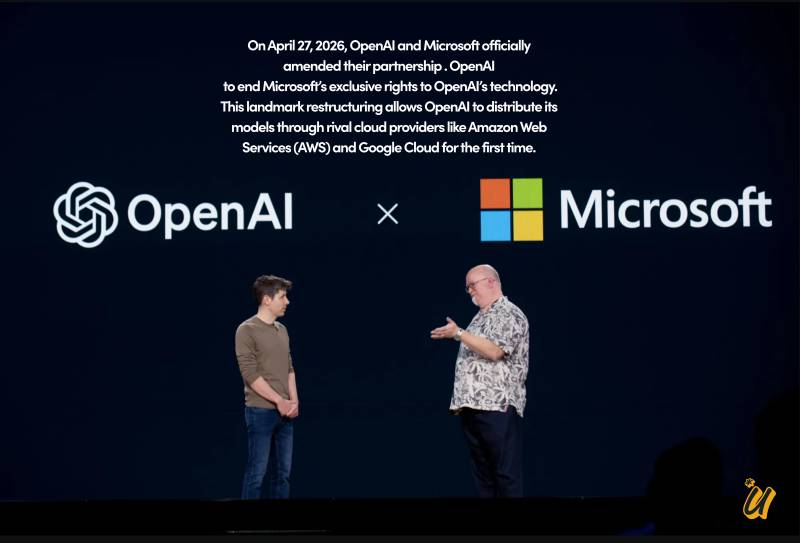
The most profound transformation occurred within the industry’s most influential power couple: Microsoft and OpenAI. After years of a tethered, exclusive relationship that defined the first wave of the generative AI boom, the two entities have officially entered a new era of "open" collaboration. Under a landmark agreement reached this week, OpenAI has secured the right to drop its exclusivity clauses with Microsoft. This pivotal change allows Sam Altman’s firm to distribute its cutting-edge models across rival platforms, most notably Amazon Web Services (AWS). While the move appears to be a concession by Microsoft, the Redmond-based giant has secured its own strategic long-term interests. Microsoft has retained access to OpenAI’s models through 2032 without the burden of a revenue-sharing agreement, effectively decoupling the two companies' operational futures while ensuring Microsoft remains a primary beneficiary of OpenAI’s intellectual property for the next decade.
As the corporate structure of AI shifts in the West, international tensions continue to dictate the pace of global expansion. Meta’s ambitions to bolster its AI portfolio suffered a significant blow this week when China’s National Development and Reform Commission (NDRC) intervened to block a $2 billion acquisition. Meta had sought to purchase Manus, a high-growth AI startup, in a move designed to close the gap with its competitors. However, Chinese regulators cited stringent regulatory compliance and expressed deep-seated concerns regarding the transfer of critical AI technology across borders. The blockage highlights the increasing "tech-nationalism" that is bifurcating the global market, making it nearly impossible for American tech giants to consolidate power through international acquisitions in sensitive sectors.
While software and model distribution dominate the headlines, the physical hardware required to run these systems is seeing its own share of speculative volatility. Market analysts are closely monitoring reports of a burgeoning relationship between Qualcomm and OpenAI. Speculation is mounting that Qualcomm may provide the specialized silicon for a future OpenAI-branded consumer device. Although the details remain under wraps and mass production is not projected until 2028, the potential for an "AI-first" hardware device designed by the world’s leading model builder and powered by Qualcomm’s mobile chips has sent ripples through the semiconductor sector. It suggests a future where AI is not just a cloud-based service, but a localized, hardware-integrated experience.
However, the internal politics of these AI pioneers are being laid bare in the judicial system. In an Oakland courtroom, a high-stakes legal battle has commenced that could redefine the governance of artificial intelligence. Elon Musk has followed through on his legal challenges against OpenAI and its leadership, including Sam Altman. Musk’s legal team argues that the company has fundamentally abandoned its original nonprofit mission—a mission Musk helped fund at its inception—in favor of a commercial, for-profit structure that prioritizes investor returns over the "benefit of humanity." The trial is expected to delve deep into the private communications and founding documents of OpenAI, potentially exposing the friction between the idealistic origins of AI development and the hyper-capitalist reality of its current trajectory.
All of these developments serve as a dramatic backdrop to what Wall Street is calling the "$16 trillion test." This week, the "Magnificent Seven"—specifically Meta, Microsoft, Alphabet, and Amazon—are set to report their quarterly earnings. The collective market capitalization of these firms represents a massive portion of the global economy, and investors are growing restless. The primary focus of the upcoming earnings calls will be the "AI ROI"—return on investment. For the past two years, these tech titans have poured hundreds of billions into capital expenditures, building out massive data centers and purchasing endless arrays of GPUs. Analysts are now looking for concrete evidence that this infrastructure is translating into significant revenue growth. The market is no longer satisfied with the promise of AI; it is demanding proof of its profitability.
As April 2026 draws to a close, the technology sector stands at a crossroads. The transition from exclusive partnerships to multi-platform distribution, the intervention of global regulators in AI M&A, and the looming shadow of "Big Tech" earnings suggest that the experimental phase of the AI era is ending. In its place, a more complex, litigious, and commercially pressured environment is emerging. The decisions made in courtrooms and boardrooms this month will likely dictate the hierarchy of the digital world for the next decade, determining which companies will lead the transition into a fully integrated AI economy and which will be left behind by the sheer scale of the required investment.