PARIS – The lights within the Bourse de Commerce did not simply turn on; they pulsed to life, revealing an oval expanse draped in a stark, beige carpet designed to evoke a room of memory. This was the stage for the Saint Laurent Men’s Winter 2026 collection, a presentation that stood as a defiant testament to precision in an era of aesthetic volatility. Under the creative direction of Anthony Vaccarello, the house once again occupied the center of the fashion firmament, drawing an elite crowd that included the likes of Austin Butler, Rami Malek, and Kate Moss, all gathered to witness a narrative titled The Morning After.
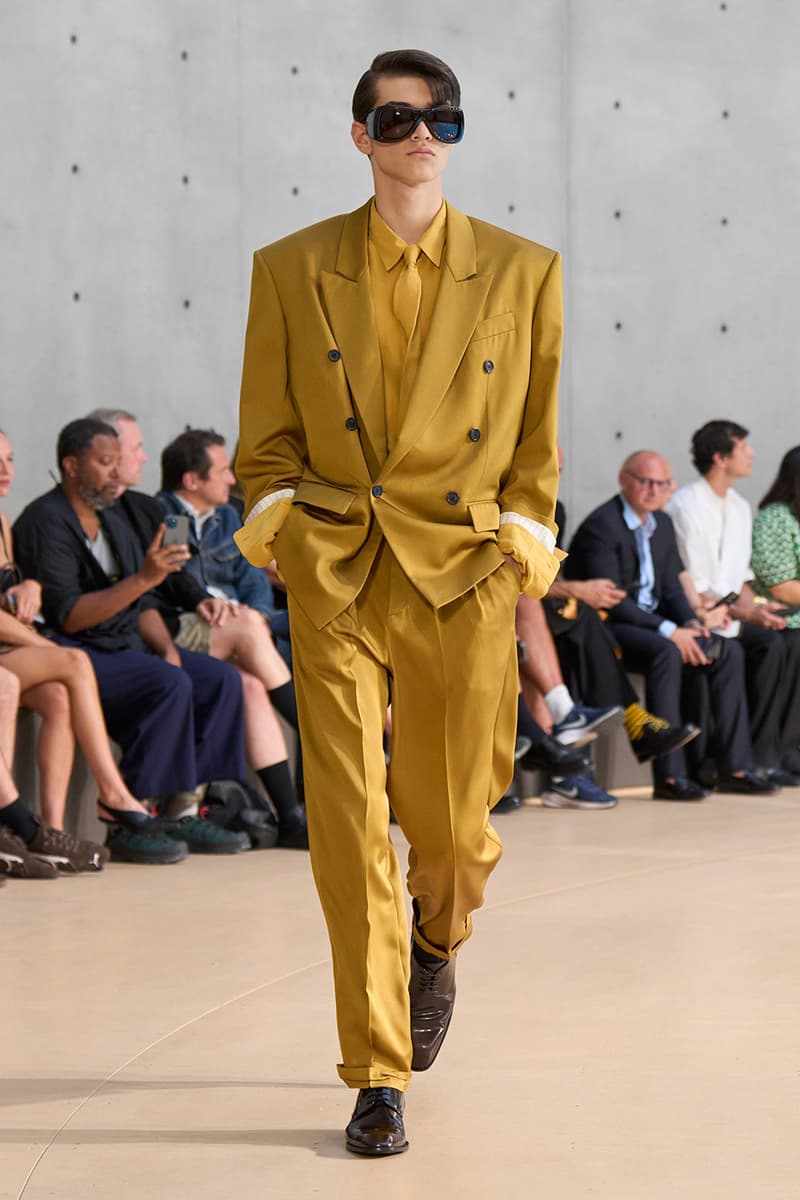
Drawing its soul from the pages of James Baldwin’s 1956 masterpiece, Giovanni’s Room, the collection navigated the complex intersections of intimacy and public exposure. Vaccarello sought to capture that specific, fragile moment when the private world of the night gives way to the harsh, uncompromising dawn. To translate this literary vulnerability into clothing, the designer abandoned the oversized trends that have long dominated menswear, opting instead for a silhouette that was lean, sinuous, and almost startlingly sharp. The models moved with a willowy grace, their forms defined by shoulders so structured they appeared as emotional armor against the outside world.
At the heart of the show was a reverence for the foundational codes of the house, specifically the enduring legacy of Le Smoking. The tuxedos presented were immaculate, stripped of any unnecessary flourish to highlight a mastery of cut that few others can claim. Yet, this traditionalism was balanced by a daring exploration of materiality that Vaccarello described as a texture paradox. In a striking visual juxtaposition, massive faux fur overcoats—imposing in their volume and warmth—were layered over delicate lace that had been coated in silicone. This treatment gave the fabric a haunting, wet-look sheen, as if the wearer had just stepped out of a humid, late-night encounter into the cold Paris air.
Related article - Uphorial Shopify
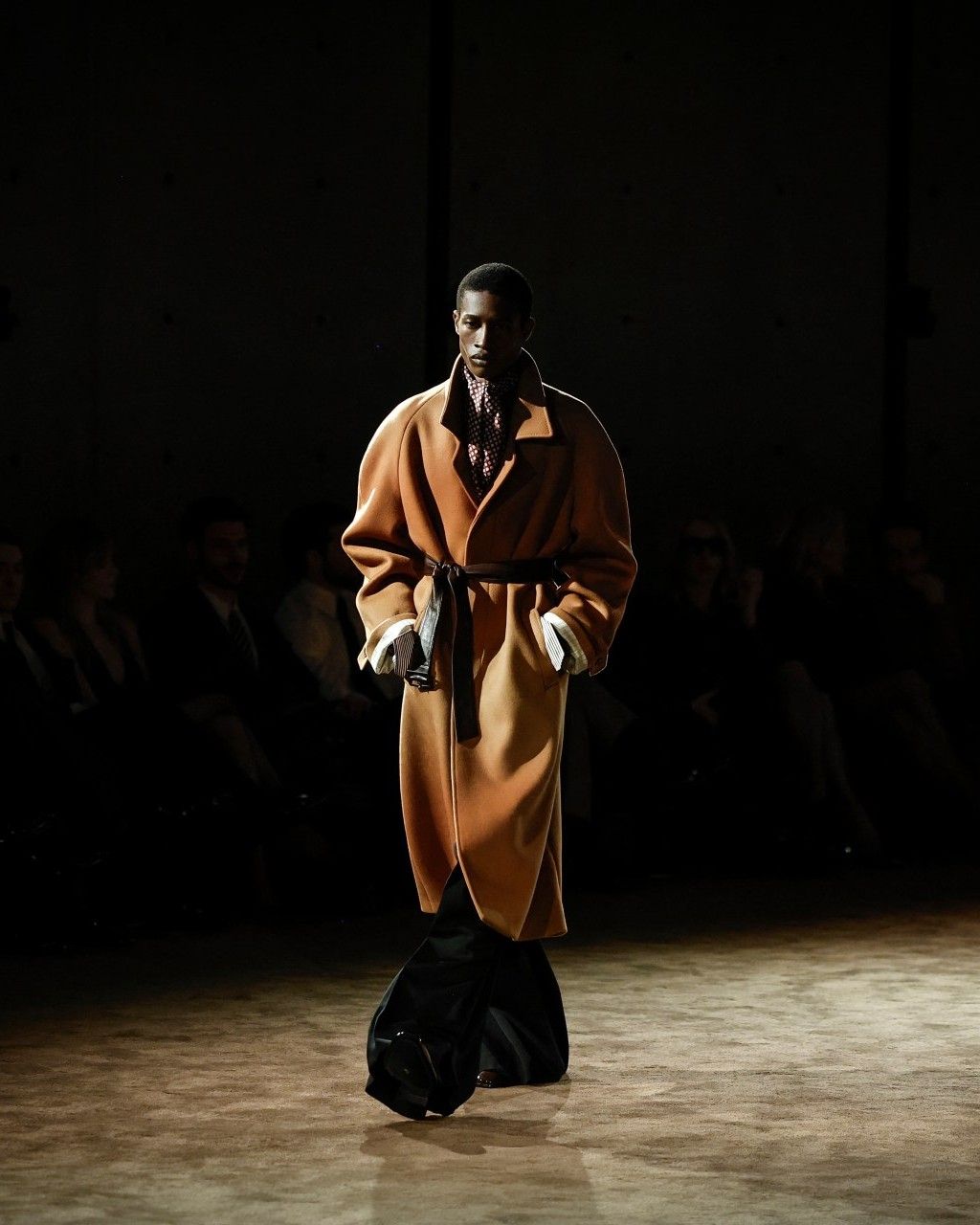
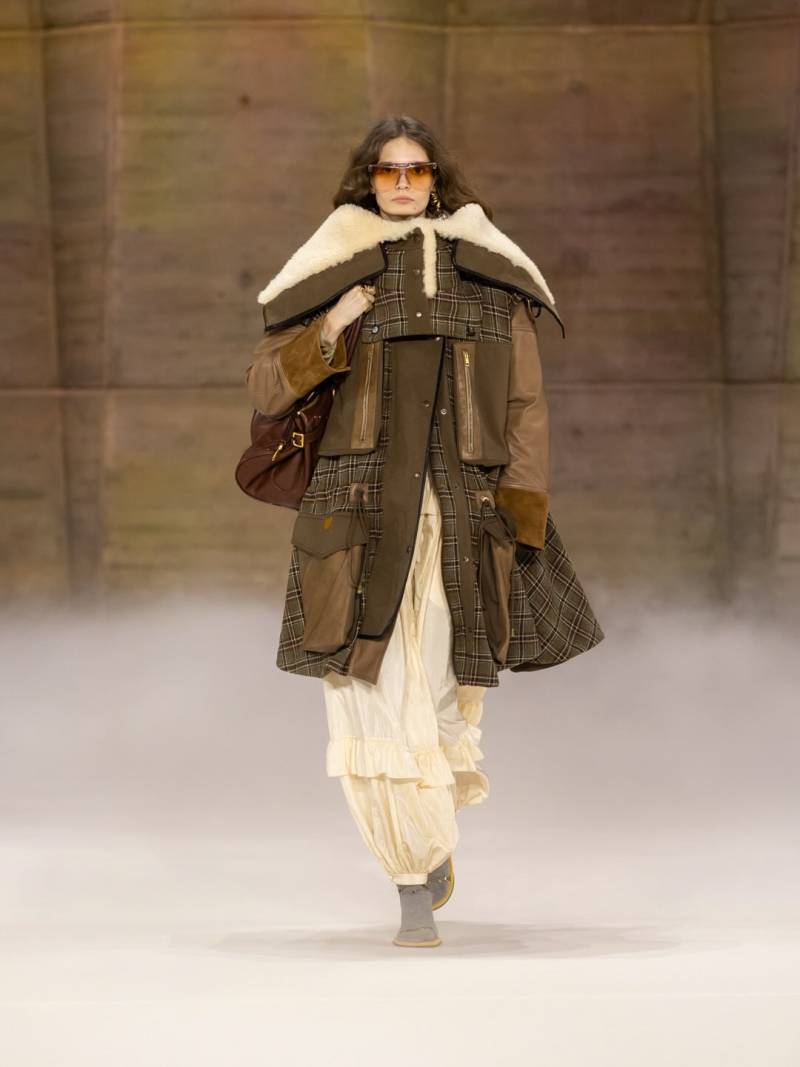
The outerwear furthered this narrative of protection and cocooning. Dramatic trench coats swept the floor, while heavy shearling jackets were cinched tightly at the waist to maintain the collection’s vertical integrity. The color palette remained anchored in the shadows, dominated by an obsidian black that felt both heavy and luxe. This darkness was occasionally interrupted by deep, moody tones of bitter chocolate, midnight blue, and terracotta, providing a somber but rich visual rhythm. These colors were punctuated by the accessories: high, polished boots that grounded the tailoring and big, bold jewelry that provided a flash of metallic defiance against the minimalist bags.

The atmosphere of the evening was heightened by the auditory and visual collaborations that have become hallmarks of Vaccarello’s tenure. The soundscape, composed by the producer SebastiAn, provided a rhythmic tension that mirrored the precision on the runway. Meanwhile, the visual identity of the season was further cemented by a presentation film directed by the provocative Gaspar Noé, ensuring that the collection’s cinematic undertones were felt long after the final model exited the floor.
As the industry reflects on the show, the consensus points to a rare level of unwavering consistency. In a season where many brands struggled to define their identity, Saint Laurent leaned into a quiet, focused precision. The Winter 2026 collection did not need to shout to be heard; instead, it whispered a story of vulnerability and strength, proving that even in the morning after, the Saint Laurent man remains impeccably composed. It was a masterclass in how a historic house can remain relevant not by chasing the new, but by refining the eternal.