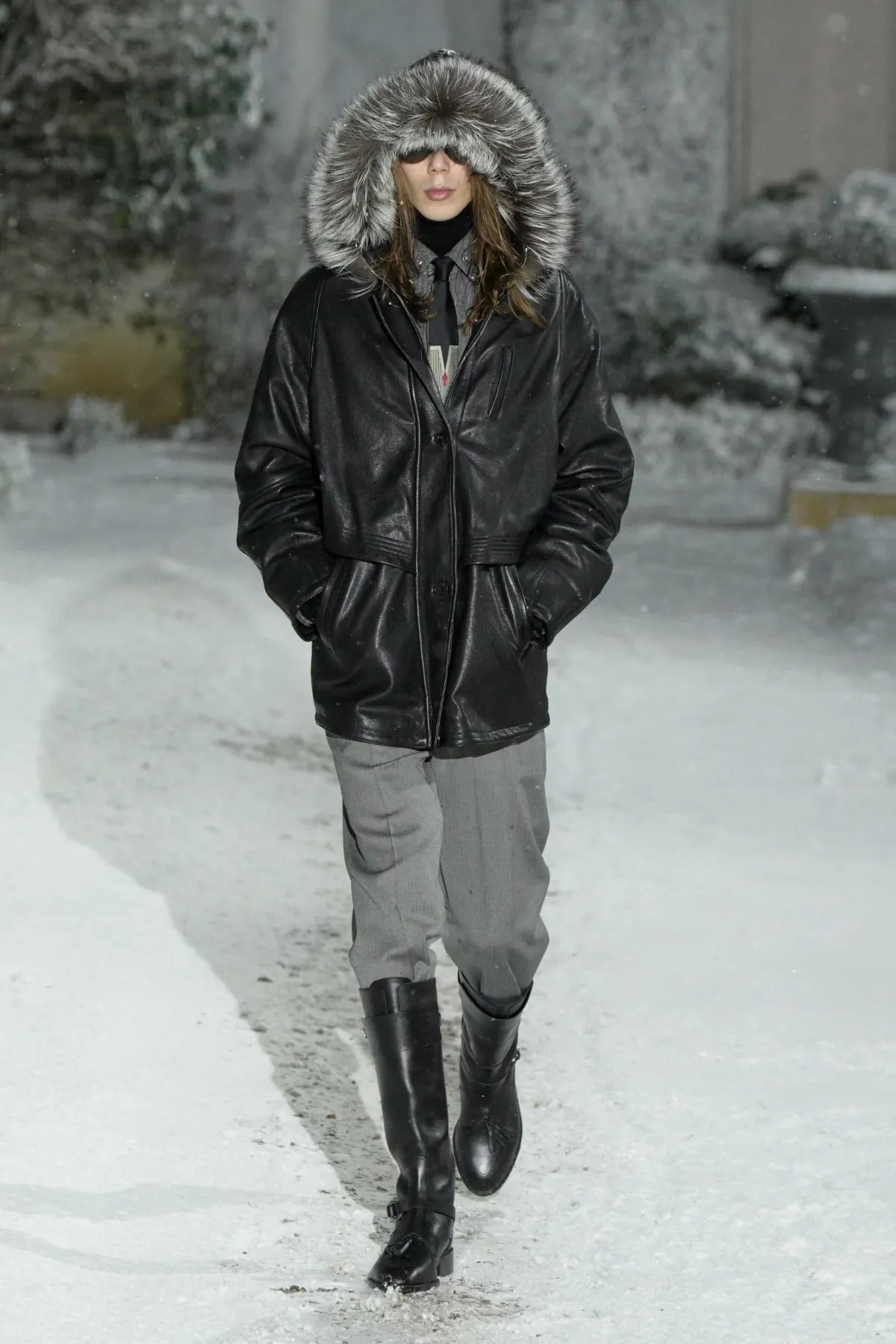
PARIS — The falling snow in the courtyard of a secluded Parisian estate did more than just set a scene for the Enfants Riches Déprimés Automne/Hiver 2026 runway; it served as a blurring agent between the audience and the icy nihilism that has become Henri Alexander Levy’s creative hallmark. This season, however, the frost seemed to have hardened the brand’s edges. Debuted in March 2026 at Paris Fashion Week, the collection signaled a sharp, structural evolution that moved decisively away from the raw, haphazardly distressed tropes of previous years toward a more severe and clerical precision. While the signature DNA of the label remains rooted in a sense of spiritual and social ruin, the execution has transitioned from the chaotic energy of a punk basement to the chilling authority of a cathedral.
The atmosphere was curated to evoke a sense of "luxury in ruins." As models emerged into the snowy courtyard, the air was thick with the heavy bass and cold reverberations of an industrial soundtrack that felt less like music and more like a cinematic atmospheric pressure. This setting provided the perfect backdrop for a collection that sought to explore the tension between command and collapse. The inclusion of Marilyn Manson as a runway walker acted as a pivotal emotional anchor for the show, grounding the aesthetic in the industrial-gothic culture of the 1990s and nodding to a specific brand of decadent rock bohemia that Levy has long championed.
Related article - Uphorial Shopify

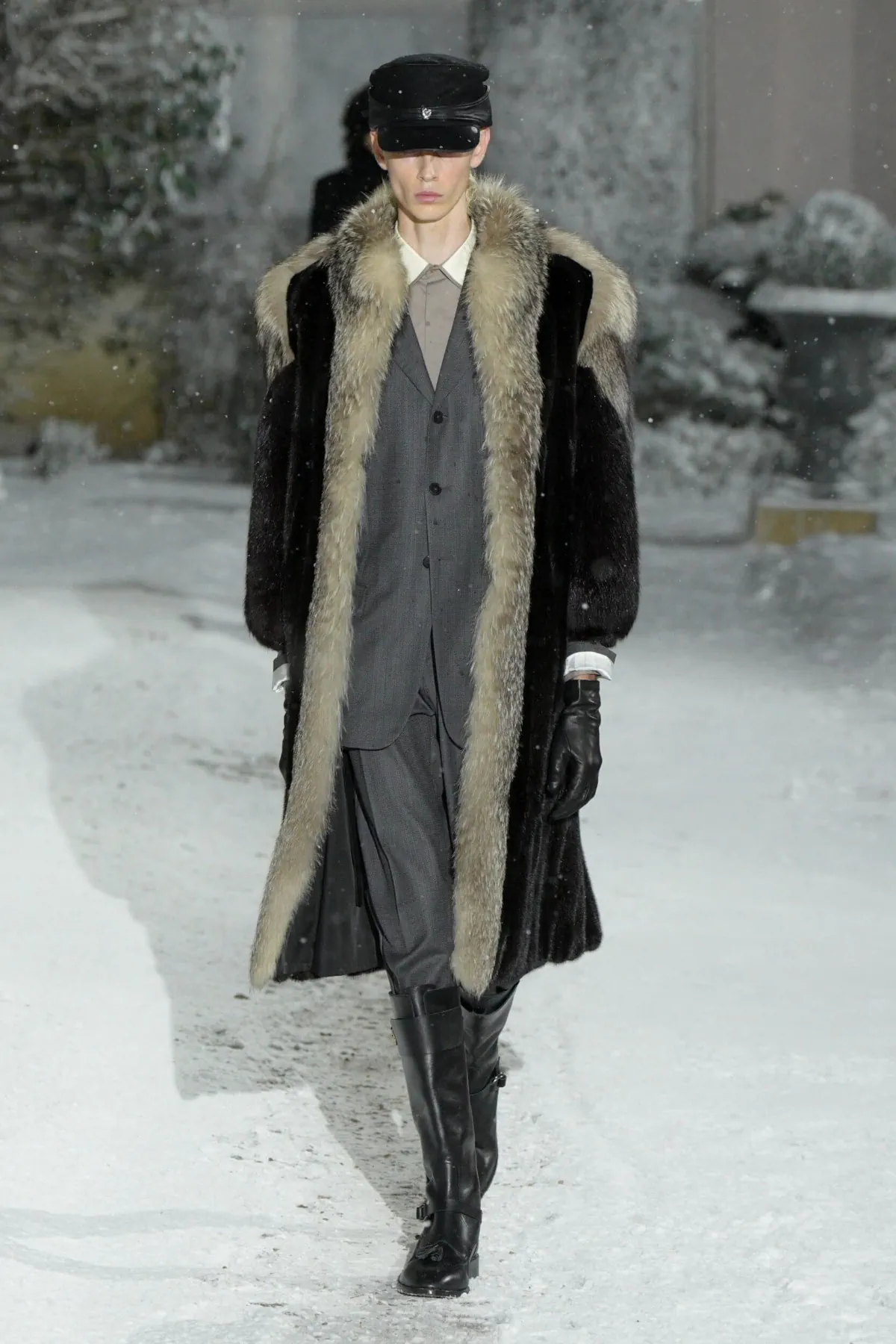
Architectural rigidity defined the silhouettes that marched through the flakes. The precision tailoring was perhaps the most jarring departure from the brand’s history of "broken" garments. Blazers and overcoats were constructed with a severity that felt almost militaristic, often styled with oversized eyewear that shielded the face and neckties cinched so tightly at the throat they appeared restrictive. This was a collection of high-contrast materialism, where the "propaganda" silhouette reigned supreme. Levy utilized buckles, straps, and exposed sleeve linings to create garments that looked both authoritative and fractured, suggesting a personage of power that is simultaneously coming apart at the seams.
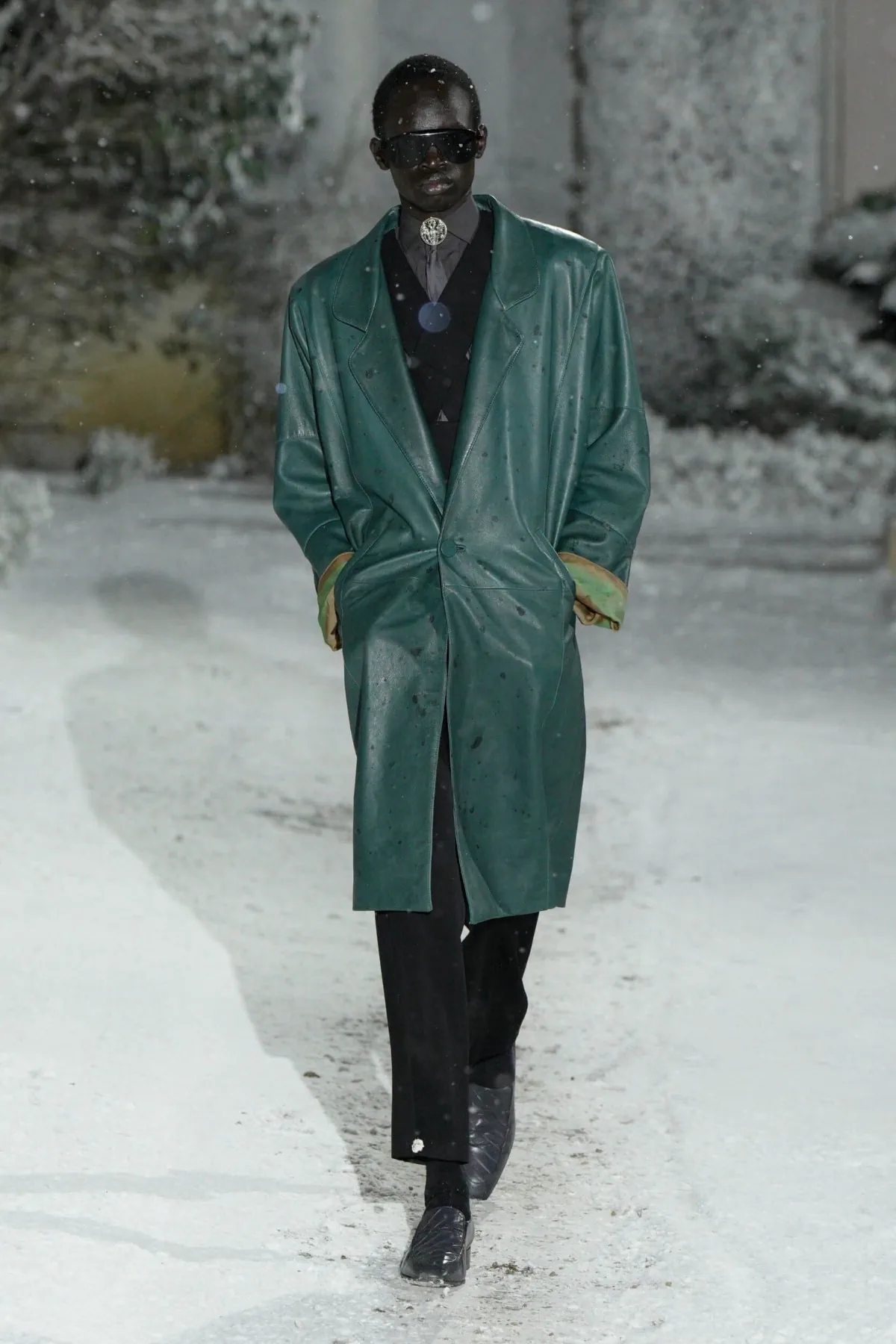
The interplay of textures further emphasized this duality. Rich, high-end fabrics were intentionally paired with denim, but the distressing this season was sculptural rather than accidental. Each tear and fray felt like a deliberate architectural choice, a way of mapping out the geography of ruin on a luxury canvas. The color palette remained anchored in a deep, signature "ERD Black" and charcoal, punctuated by icy pales that mimicked the winter light of the runway’s environment. This cold, composed aesthetic extended into the womenswear, which carried a profound sense of grief. Dark veils and cinched waists were combined with clerical-inspired buttoning, resulting in a look that was more elegant, aloof, and perhaps more dangerous than the brand’s earlier iterations.
Industry critics and observers noted that the AW26 cycle represents a subtle but significant shift for Levy. While the confrontational instincts that built the cult following of Enfants Riches Déprimés are still fully intact, the garments themselves revealed a designer leaning into stronger construction and a more permanent sense of craftsmanship. This is no longer just a wardrobe for the disaffected; it is a uniform for those who find a grim stability in the wreckage. This maturity in design coincides with a period of major commercial expansion, as the brand recently announced plans to open its first flagship store in New York. As ERD moves from the fringes of the underground into a more established position within the luxury landscape, the Automne/Hiver 2026 collection stands as a testament to the idea that even the most depressed aesthetic can be refined into something sharp, structured, and undeniably powerfu